Sustainability
71 results

How Do We Let Our Employees Know We’re Thankful for Them?
This Thursday, November 22, people across the United States will be celebrating Thanksgiving. Many businesses will be closed, and many of us will be taking stock of the people we’re thankful for. Our employees work hard for us year round, and our safety performance depends on them. We should certainly be thankful for their efforts […]

OSHA’s Top 10 Most Cited Violations of 2018
OSHA just named its Top 10 Most Cited Violations in 2018 at the National Safety Council Congress and Expo. Among the top risks worker health and safety, Hazard Communication continues to top the agency’s list, as it has for over six years. For those involved in chemical management, Hazard Communication ranking of the list’s No. […]

Anniversary of 9/11 is a Powerful Reminder of Importance of Emergency Planning
This week, the Unites States remembers the terrorist attacks of September 11, 2001. We’ve had 17 years now of grieving and lesson-learning, but the emotional scars will always remain. For many people who were near Ground Zero of the WTC attacks, especially first responders called to the scene and their loved ones, the pain of […]

The Key Components of Effective Emergency Planning
By Phil Molé Large scale emergencies, such as the flooding that devastated Texas’ Gulf Coast during Hurricane Harvey in 2017, are often worsened due to failures in emergency planning that place first responders, workers and the general public at risk for exposure to hazardous chemicals. Incomplete knowledge of the identities and hazards of chemicals on-site, […]
Chemical Spotlight: Ammonium Chloride
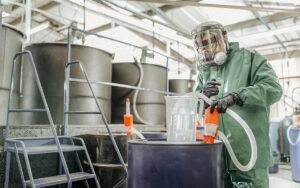
Note: OSHA has a substance-specific standard to protect employees from overexposure to Ammonium Chloride. Read on for an overview of the chemical’s health hazards and related safety information. Get access to the industry-leading database of MSDS / SDS documents by signing up for a free trial. Ammonium Chloride and its Uses A white crystalline chemical, ammonium chloride is […]

Sizable Fines Show OSHA is Serious about Silica
Since OSHA announced its new Final Rule to protect workers from exposure to respirable crystalline silica, the agency has handed down several citations for silica dust violations involving substantial fines. OSHA Silica Violations Can Carry Significant Penalties In May, a citation of $62,370 was leveled against a Wisconsin iron foundry that “overexposed three workers to […]

Sodium Carbonate Hazards & Safety Tips
What is Sodium Carbonate? Sodium carbonate is a white crystalline or powdered chemical that is odorless with an alkaline taste. This material comes from the ashes of plants that grow in sodium-rich soil. Also known as soda ash, sodium carbonate is sometimes produced synthetically from salt and limestone. Sodium carbonate can cause mild-to-severe health hazards and should […]

Safety with Sodium Bicarbonate
Sodium bicarbonate (better known to the world as baking soda) is a soluble white powder that is crystalline but often appears as a fine powder. It’s odorless, non-combustible and reacts with acids to release carbon dioxide gas and heat. The Versatility of Sodium Bicarbonate Sodium bicarbonate serves a variety of purposes, ranging from household uses such […]

Understanding the Hazards of Hexane
What is Hexane and Where Can it Be Found? Hexane is a chemical commonly extracted from petroleum and crude oil. It is a colorless liquid that gives off a subtle, gasoline-like odor. Hexane is highly flammable, yet it can be found in many household products such as stain removers for arts and crafts projects. Because […]

Hydrochloric Acid Hazards & Safety Tips
What Exactly is Hydrochloric Acid & Where is it Found? Hydrochloric acid hazards are serious. However, you may be surprised to learn that hydrochloric acid is commonly used in many types of industrial processes. Approximately 20 million tons of hydrochloric acid are produced globally each year, and you can even find it in your own […]