Safety
221 results
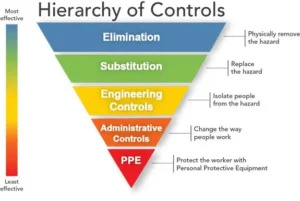
Using the Hierarchy of Controls to Maximize MSD Risk Reduction
Once a job task in a facility has been evaluated for the risk of developing a musculoskeletal disorder (MSD) and the risk has been quantified, it’s time to implement solutions. If you’re going to effectively reduce MSD risk, you need to understand which risk factors are contributing most to the overall score and utilize control […]

“The Bowtie Analysis Blog” — Part 4: Using Master Bowties to Manage Risk at Multiple Facilities
Welcome to the fourth installment of our “Bowtie Analysis Blog” series. In our first installment, we talked about the usefulness of risk bowties for training employees on workplace risks, our second installment explored the way they can pull together information from many different types of assessments, and our third post discussed how bowties help visualize and manage risk […]
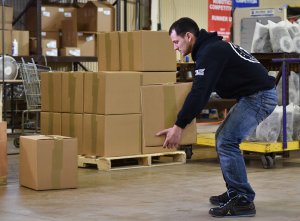
Hierarchy of Controls Examples that Address Manual Lifting
When it comes to ergonomics and musculoskeletal disorder (MSD) risk factors, force plays the biggest role. This issue has been clearly reflected in workplace injury data throughout the United States. In 2021, Liberty Mutual reported that “disabling workplace injuries cost businesses more than $58 billion every year,” with the number one contributing category being overexertion […]

What is Industrial Hygiene?
Everyone knows that when we talk about “hygiene” we’re talking about cleanliness and health, but what does hygiene mean when it’s paired with “industrial”? Having good hygiene means consistently performing habits and practices to preserve health. The same goes for industrial hygiene – a series of habits to keep a facility and its employees in […]

“The Bowtie Analysis Blog” – Part 3: Using Risk Bowties to Visualize and Manage Risk Controls
Welcome to the third installment of our “Bowtie Analysis Blog” series. In our first installment, we talked about the usefulness of risk bowties for training employees on workplace risks, and our second installment explored the way risk bowties can pull together information from many different types of assessments. In this post, we’ll be looking at […]

Respirator Fit Test Overview & Guide
Respirators are the last line of defense between workers and harmful air contaminants, irritants and other workplace respiratory hazards, but simply putting on a respirator doesn’t mean you’re protected. Whether it’s an N95 filtering facepiece respirator that we’re all so familiar with now or a full self-contained breathing apparatus (SCBA), if respirators don’t fit properly, […]

Who’s My “Safety Hero?” A Story About Fatherhood, Courage and Safety
by Phil Molé, MPH National Safety Council (NSC) designates June of each year as National Safety Month (NSM), and as part of NSM this year, they’re inviting us to name our safety hero: the person who most inspired us by their example. For me, that’s an easy one. My safety hero is my dad, the […]

New Series! “The Bowtie Analysis Blog” – Part 1: Using Bowtie Analysis to Train Workers About Risk
Many EHS professionals know they struggle with managing workplace risks, whether it’s accurately assessing them, controlling them, or getting the entire workplace involved in the process. In our new series, “The Bowtie Analysis Blog,” we’ll tell you about how a risk assessment tool called bowtie analysis can help. In this first installment, we’ll talk about […]

Prevention through Design: How Ergonomics Helps
One of the best ways to prevent and control workplace injuries and incidents is to “design out” hazards and risk early in the design phase. This is known as Prevention through Design (PtD), a national initiative led by National Institute of Occupational Safety and Health (NIOSH) and Center for Disease Control and Prevention (CDC). World-class […]

Prevent Incidents Before They Happen: Using a Prevention through Design Framework
Ask most safety professionals, and they’ll tell you: Our goal should be to prevent incidents before they happen. But ask them how, and you’ll probably get many different opinions. It’s fair to say that in the absence of a coherent strategy, many fall back on the reactive approach of addressing risks only after incidents have […]