Ergonomics
186 results

What is Total Worker Health (TWH)?
In recent years, the field of safety has evolved from its traditional focus on preventing workplace injuries to a broader focus on protecting employee health and well-being, including their psychological safety. *The Total Worker Health® (TWH) initiative by National Institute of Occupational Safety and Health (NIOSH) has emerged as a powerful framework for driving new […]

Ergonomics in the Pharmaceutical Industry
The pharmaceutical manufacturing industry is a unique environment in a number of ways, but especially when it comes to ergonomics and musculoskeletal disorder (MSD) risk. There are the typical manual material handling (MMH) tasks like lifting and moving product in a warehouse, but many injuries in this industry are actually from lab tasks. And while […]

Tips for Properly Positioning Your Monitor to Reduce Neck Discomfort
Many office workers struggle with neck discomfort throughout the day. This can often stem from improper monitor setup, which can cause frequent or prolonged awkward neck postures. For example, if a monitor is too high it can cause prolonged neck extension, if a monitor is too low or too far away it can cause prolonged neck flexion, and if a primary monitor is off-center, it can cause frequent neck twisting. These awkward postures may not seem like much, but over time they can lead to discomfort and possibly a musculoskeletal disorder. The good […]
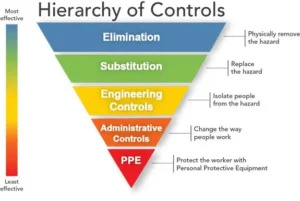
Using the Hierarchy of Controls to Maximize MSD Risk Reduction
Once a job task in a facility has been evaluated for the risk of developing a musculoskeletal disorder (MSD) and the risk has been quantified, it’s time to implement solutions. If you’re going to effectively reduce MSD risk, you need to understand which risk factors are contributing most to the overall score and utilize control […]
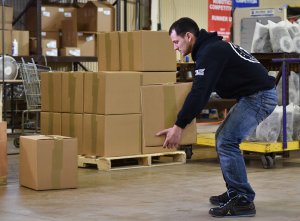
Hierarchy of Controls Examples that Address Manual Lifting
When it comes to ergonomics and musculoskeletal disorder (MSD) risk factors, force plays the biggest role. This issue has been clearly reflected in workplace injury data throughout the United States. In 2021, Liberty Mutual reported that “disabling workplace injuries cost businesses more than $58 billion every year,” with the number one contributing category being overexertion […]
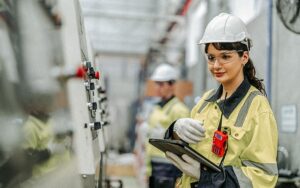
What is Industrial Hygiene?
Everyone knows that when we talk about “hygiene” we’re talking about cleanliness and health, but what does hygiene mean when it’s paired with “industrial”? Having good hygiene means consistently performing habits and practices to preserve health. The same goes for industrial hygiene – a series of habits to keep a facility and its employees in […]

Prevention through Design: How Ergonomics Helps
One of the best ways to prevent and control workplace injuries and incidents is to “design out” hazards and risk early in the design phase. This is known as Prevention through Design (PtD), a national initiative led by National Institute of Occupational Safety and Health (NIOSH) and Center for Disease Control and Prevention (CDC). World-class […]
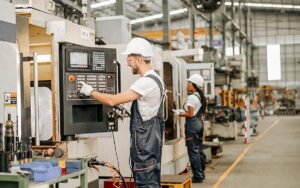
Prevent Incidents Before They Happen: Using a Prevention through Design Framework
Ask most safety professionals, and they’ll tell you: Our goal should be to prevent incidents before they happen. But ask them how, and you’ll probably get many different opinions. It’s fair to say that in the absence of a coherent strategy, many fall back on the reactive approach of addressing risks only after incidents have […]

IH 101 Part 6: Medical Surveillance – Strengthening Your Last Line of Defense for Worker Health
In Part 5 of our IH 101 blog series “Data Analysis – Defining Your Goals & Selecting the Best Metrics“ we learned about effective tools for analyzing your IH data, and the critical importance of defining the purpose of your data analysis. Just generating a lot of statistics that don’t provide valuable insights is a […]

Manual Material Handling Equipment: What to Use and When
Manual material handling has been part of hands-on work since work has existed. With wear-and-tear on the body being inherent with hands-on work, musculoskeletal disorders (MSDs) have been around for just as long. MSDs occur when the physical and/or mental demand to the worker repeatedly exceeds those capabilities, and inadequate recovery time results in less […]