On-Demand Webinar
165 results
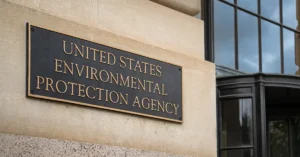
EPA Enforcement: Maintaining Compliance in 2023 & Beyond
Register today! Environmental Protection Agency (EPA) enforces a broad spectrum of regulations under more than 30 environmental laws covering nearly 800,000 facilities across the US. If your business manufactures or uses large volumes of chemical products, emits any type of air or wastewater pollutants, or generates and handles hazardous waste, you very likely have a […]

Integrating Risk Assessments for Effective Management of Change
This webinar explores the dynamic relationship between Management of Change (MOC) and risk assessments, focusing on the types of assessments required for different change scenarios: process changes, design changes, and personnel changes. Aligning the appropriate risk assessment types with the corresponding changes helps to ensure comprehensive, effective risk mitigation at your organization. We will examine the […]

Using Chemical Management & Green Chemistry to Improve Your ESG Maturity & Value Chain Relationships
While corporate leadership is increasingly focused on Sustainability and Environmental, Social, and Governance (ESG), it is easy to overlook the key role that effective chemical management plays in shaping ESG maturity. Chemical choices can pose safety and environmental compliance risks, increase air pollutants, and some may create hazardous waste. But chemical choices also impact sustainability […]

Canada’s Updated WHMIS Requirements: How to Ensure Compliance
If you’re a supplier or user of hazardous products in Canada, challenging times are ahead. In January 2023, Health Canada published a final rule in the Canada Gazette to update the Hazardous Product Regulations (HPR) to align with more recent editions of the UN’s Globally Harmonized System of Classification and Labeling of Chemicals (GHS). These […]

Why Your Ergonomics Software Should Follow a Plan, Do, Check, Act Process
The Shewhart cycle, or Plan-Do-Check-Act (PDCA) as it is more commonly known, is an effective management system for improving programs in a variety of disciplines, including EHS. Successful ergonomics programs use PDCA for both the Job Improvement Process and overall program management. Organizations that struggle to maintain an effective ergonomics program typically stall in the […]

Weathering the Storm: How ESG Maturity Helps You Maintain EHS Compliance in Challenging Times
Many discussions of Environmental, Social and Governance (ESG) correctly talk about benefits like operational excellence, return on investment (ROI), and positive brand identity, but those can seem remote to the average EHS professional struggling to maintain compliance with EHS regulations. Perhaps you’re one of the many EHS professionals wondering how ESG can benefit you, and […]

Dangers of Using Spreadsheets to Manage your IH Data
Spreadsheets offer an inexpensive and easy to use option to collect and store IH data. These benefits are useful for a small amount of data when starting up your IH program, however, carry significant risks and limitations when you have a lot of data. There are many cases where companies have lost or corrupted their […]

The EHS to ESG Journey: Why You Should Care
Traditional EHS management has focused on goals such as identification and reduction of workplace risks resulting in threats to the safety and health of employees and the environment, or in violations of major regulations. However, that’s all changing due to the rise of an Environmental, Social and Governance (ESG) approach. ESG is gaining ground because […]

Control of Work Software Implementation: Tips and Tools to Ensure Long-term Success
Register today for this webinar “Control of Work Software Implementation: Tips and Tools to Ensure Long-term Success”. Reliance on contractors and temporary employees has risen steadily over the past decade and shows no signs of slowing as shifting labor and market conditions are forcing employers to maintain an agile and flexible workforce. With this increased […]

Scope 3 GHGs – Determining Materiality and Quantification Tools
Due to stakeholder demands, competitor pressures, and proposed legislation and rulemakings, companies are now being pulled into quantifying the full range of value chain emissions (Scope 3). Scope 3 GHG emissions consist of a company’s indirect emissions up and down the value chain and provide a more complete picture of an organization’s GHG footprint to […]