On-Demand Webinar
165 results

NAEM Webinar: Severe Risks of Climate Change on Worker Health
Register today. Buildings account for nearly 40% of the world’s greenhouse gas (GHS) emissions. Curbing carbon emissions by 2050 cannot be achieved without decarbonizing buildings. To match the scale of this opportunity, Trane Technologies has established the Gigaton Challenge, the first-of-its-kind climate commitment related to customer product use, and has committed to reduce one billion […]

Ergonomics for Manual Material Handling: How to Identify, Prioritize and Improve Problem Tasks
Register today! Manual material handling (MMH) is encountered in nearly every organization, with most operators participating in it throughout their daily activities. How do you determine if these tasks, such as lifting, pulling, and carrying, contribute to an increased risk of musculoskeletal disorders (MSDs)? After identifying if there’s a problem, it’s often a challenge to […]

OSHA’s Most Recent National Emphasis Programs (NEPs): What You Need to Know
Register Now! OSHA’s been busy over the last couple of years, and most discussion of their activity has focused on their rulemaking. But OSHA’s mission encompasses enforcement as well as regulatory action, and National Emphasis Programs (NEPs) comprise an important part of their strategy to plan and conduct enforcement inspections. OSHA has also been busy […]

Sims Limited: Tactical Safety
As environmental, health and safety professionals work to manage workplace safety and risk reduction efficiently and effectively, many seek tools and systems to aid in the process. During this 30-minute webinar, EHS experts from Sims Limited, Brian Maeck, Head of Global EHS, and Ben Redd, EHS Global Systems Manager, will share best practices for implementing […]
What You Need to Know About REBA & RULA Ergonomics Assessment Tools
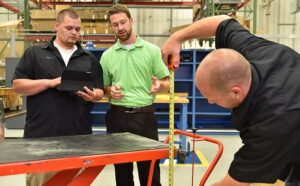
While REBA (Rapid Entire Body Assessment) and RULA (Rapid Upper Limb Assessment) are publicly available ergonomics assessment tools that have been used for decades, they have many limitations. Some organizations have gone a step farther to support their process with ergonomics apps that use motion capture technology, while still employing REBA and RULA to assess […]

The Benefits of Integrating Your Contractor Qualification Data with a Comprehensive Control of Work Program
Companies across virtually every industry are increasingly dependent on contractors and temporary workers to maintain operational flexibility and keep labor costs low. Finding the right contractor or temporary employee provider can be tough, and many companies spend big bucks on third-party contractor qualification services to ensure they’re bringing reputable, safe, and qualified companies into their […]

Why Your Ergonomics Software Should Provide Training for Your Team
Training your ergonomics team, and those who will support them, is an essential part of an ergonomics process. Without effective training, your process will be unsustainable and your efforts to improve the health, safety and productivity of your workplace will be very limited. While traditional, in-person ergonomics training still has its place, the software you use […]

Building the Foundation: How Mastering the EHS Essentials Helps You Ensure Compliance and Pursue ESG Maturity
An EHS professional’s job is never done. You have many safety and environmental compliance obligations to track related to widely applicable regulations. These challenges compound during times of fast regulatory change and expanding responsibilities. To move beyond compliance, you must develop programs and management systems that establish leading indicators and embed EHS into existing programs […]

ESG for New Sustainability Managers: How to Excel in Your Role by Building Connections to EHS
In recent years, ESG (Environmental, Social, and Governance) has moved from the margins of business management to the center. Stakeholders, including boards of directors, investors, and value chain partners, increasingly use ESG as a lens to judge how well an organization is addressing risks and opportunities, including those related to climate change, energy management, and […]

Pitfalls to Avoid When Building Your Risk Matrices: An Honest Discussion with a VelocityEHS Risk Expert
For more than ten years as a technical safety and risk expert, Dana Garber has seen many corporate leaders struggle to implement risk management systems. The reason: the use of poorly built risk matrices. Often, they were built without end goals in mind, or were copied from someone’s previous project or work experience. During this […]