Regulations & Compliance
164 results

What Are My Ergonomics Assessment Results Telling Me?
I have been working in the field of ergonomics for the past five years. During this time, I have had the opportunity to work with many clients to help them establish an ergonomics process; to do this you must understand what issues you are trying to solve and how to interpret the results. As an […]

Workplace Accidents Don’t “Just Happen”: Using Root Cause Analysis to Improve Safety Culture
Many company managers, and even some experienced safety professionals still maintain the view that some workplace accidents ”just happen” — that not all workplace incidents are preventable, and that we therefore shouldn’t always expect to find root causes for why they occurred. The reasons behind this attitude vary, with some individuals claiming that such ambitious […]

How to Use Design Guidelines to Create a Successful Ergonomics Process
During the launch and management of any ergonomics program, multiple tools are available for measuring risk levels and tracking data, but nothing is more critical to the success of a company-wide ergonomics program than the effective implementation of a set of design guidelines for ergonomics. These standards apply to all levels of development and all […]

How to Use the Rapid Entire Body Assessment
What is the REBA? The Rapid Entire Body Assessment (REBA) is a tool used to evaluate the risk of musculoskeletal disorders (MSDs) associated with specific tasks within a job. It is a whole-body screening tool that follows a systematic procedure to assess biomechanical and postural loading on the body. The benefits of this tool are […]

Root Cause Analysis in Ergonomics: Traps and Tips
Whether you are conducting an injury investigation or seeking countermeasures to address a hazard, the quality of your root cause analysis will have a direct bearing on the effectiveness of your solution. Unfortunately, many root cause analyses go off course and pursue ineffective paths. For example, a few years ago I was reviewing data on […]
A How-To Guide: The NIOSH Lifting Equation
The National Institute of Occupational Safety and Health (NIOSH) has developed many useful tools and documents to aid industries in developing an ergonomics program. A commonly-used tool that NIOSH developed is the NIOSH Lifting Equation. The NIOSH Lifting Equation is used to determine the risk of a low back injury while performing lifting tasks. What […]

OSHA Recordkeeping: Causes and Consequences of Underreporting Workplace Injuries & Illnesses
OSHA workplace injury and illness reporting season is already upon us, and there’s no better time for employers to take a step back and review their injury and illness recordkeeping practices — not only to make sure you’re in compliance, but to evaluate whether you’re capturing the most accurate possible injury and illness data in […]
Musculoskeletal Disorders: Stop Them Before They Start
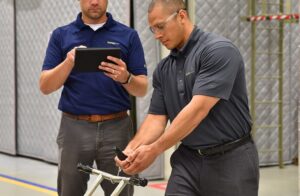
The term musculoskeletal disorder (MSD) is widely accepted in the world of ergonomics to indicate damage associated with conditions that ergonomics guidelines seek to prevent. But what is a musculoskeletal disorder, and how does it occur? In a study by Barbe et al., the extent of the MSD development process in muscles, tendons, bones, ligaments […]

Lessons Learned: Improving HazCom and Avoiding the Dangers of Incompatible Chemicals
by Phil Molé An employee at a popular chain restaurant recently died due to chemical exposures from a reaction between common, but incompatible, cleaning compounds. This incident, like many others before it, is disturbing because the chemicals used are so common, and tragic because it is avoidable. It’s an unfortunate reminder that HazCom management is […]

Managing Multi-Employer Worksite Responsibilities for HazCom
Today’s workplace is far different than it was in the past. Workers from multiple employers are increasingly working side-by-side at the same worksites, and employers are sharing responsibility for worker safety more and more. When chemicals are involved, confusion can arise over who has obligations under OSHA’s HazCom Standard. We know that, because people often […]