By Phil Molé, MPH
Turning off a machine doesn’t necessarily make it safe.
Machines and equipment can contain electrical, mechanical, hydraulic, pneumatic, thermal, chemical and other forms of hazardous energy. During servicing or maintenance, the unexpected startup of equipment, or release of stored energy, can seriously injure or kill the people doing the work.
That’s where lockout/tagout (LOTO) comes in.
What Is Lockout/Tagout (LOTO)?
Lockout/tagout refers to practices and procedures designed to protect employees from the unexpected energization or startup of machines and equipment, or the release of hazardous energy, during servicing and maintenance.
In the United States, OSHA addresses LOTO under its Control of Hazardous Energy Standard, 29 CFR 1910.147. The standard is designed to prevent injuries caused by unexpected energization, startups, or the release of stored energy while employees perform covered service and maintenance activities.
There are two important terms to understand.
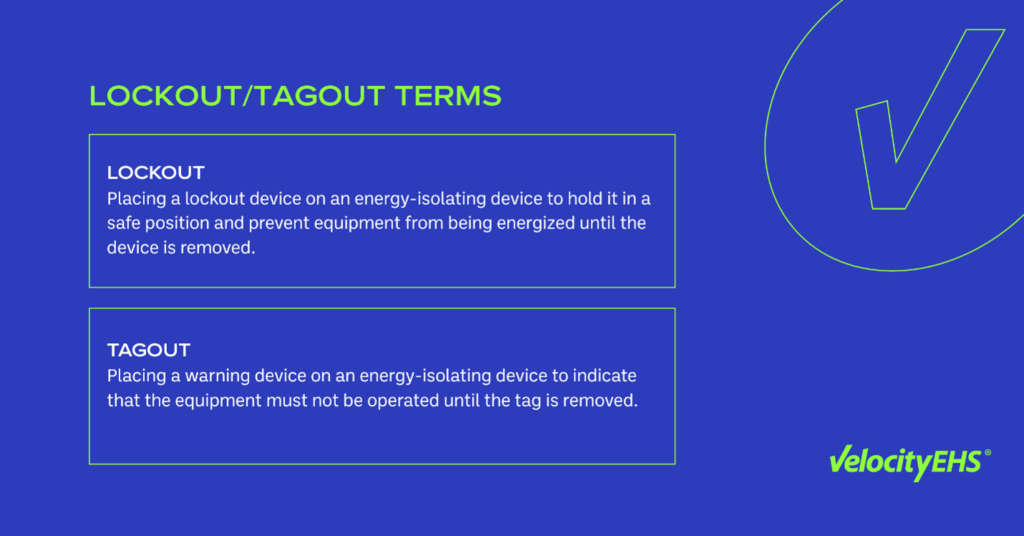
Despite the name lockout/tagout, the two terms aren’t simply interchangeable.
If an energy-isolating device can be locked out, OSHA generally requires employers to use lockout unless they can demonstrate that a tagout system provides an equivalent level of employee protection.
Hazardous Energy Is More Than Electricity
When people hear “hazardous energy,” they may immediately think about electricity. That’s understandable because electrocutions from unanticipated or unsafe startup are commonly reported, so we’re aware of electrical hazards, even if we collectively don’t always prevent them.
But LOTO can involve many different energy sources, including:
Mechanical: Energy associated with an object’s motion, position, or physical condition. Examples include moving or rotating parts, compressed or stretched springs, raised equipment, flywheels, and suspended loads.
Hydraulic: Energy stored in or transmitted through pressurized liquid in a hydraulic system, including hydraulic cylinders, presses, lifts, jacks, excavator arms, and other equipment that uses pressurized hydraulic fluid. Pressure can potentially cause mechanical parts to move even if electrical energy is isolated. For example, stored pressure can cause a raised hydraulic lift to move and possibly cause a “struck by” injury if the energy isn’t properly isolated and controlled.
Pneumatic: Energy stored in or transmitted through compressed air or gas in a pneumatic system. The pressure can create force and cause equipment or components to move, even after the equipment’s primary power source has been shut off. Examples include pneumatic cylinders, air-powered tools, actuators, valves, presses, and compressed-air lines or tanks. A pneumatic cylinder is a good example: compressed air trapped in the system can cause the cylinder to move unexpectedly unless the pressure is properly isolated and released.
Gravitational: Stored energy associated with an object’s elevated position that can be released if the object falls or moves downward. Examples include raised machine components, suspended loads, elevated dump beds, lift platforms, crane loads, and raised forklift forks.
Thermal: Energy associated with heat or temperature extremes, which can remain in equipment or materials even after the primary energy source has been shut off, creating potential for burn injuries and other hazards. Thermal hazards can also involve exposure to severe cold, such as cryogenic systems or refrigerated equipment.
Chemical: Energy stored in chemical substances that can be released through a reaction, potentially causing fire, explosion, burns, or exposure to hazardous materials. Asphyxiation risks from inert gases like nitrogen are also considered a chemical energy hazard.
Radiation: Energy transmitted through electromagnetic waves or particles that can create an exposure hazard if the source is not properly isolated or controlled. Examples include X-ray equipment, lasers, ultraviolet (UV) systems, microwave or radiofrequency equipment, and equipment that uses radioactive materials.
One big takeaway here is that a machine can be switched off and still present a serious hazard. Think about examples for each of the energy categories above. A raised machine component that could fall. Pressure remaining in a hydraulic or pneumatic system. Residual heat. Stored electrical energy. Simply stopping or cutting off electrical energy to the equipment doesn’t necessarily control those hazards.

In fact, OSHA specifies that push buttons, selector switches and other control-circuit devices are not energy-isolating devices. Effective LOTO requires employees to isolate the machine or equipment from its energy sources and address potentially hazardous stored or residual energy before work begins.
When Is LOTO Required?
OSHA’s LOTO standard generally applies when employees perform servicing or maintenance on machines or equipment where unexpected energization, startup or release of stored energy could cause injury.
Servicing and maintenance can include activities such as:
- Installing or setting up equipment
- Adjusting or inspecting equipment
- Modifying machinery
- Performing maintenance or repairs
- Cleaning or unjamming machines
- Making certain adjustments or tool changes
LOTO requirements can also apply to some servicing activities performed during normal production operations.
For example, the standard covers certain servicing during normal production when an employee must remove or bypass a guard or other safety device, or place part of their body into a point of operation or an associated danger zone during the machine’s operating cycle.
There are exceptions and additional requirements for specific circumstances, so employers need to understand which requirements apply to their operations.
What Does an Effective LOTO Program Require?
An effective LOTO program involves much more than handing employees locks and tags.
OSHA’s requirements can be grouped into five core areas:
- Energy control program
- Energy control procedures
- Protective materials and hardware
- Periodic inspections
- Training and communication
The energy control program provides the overall framework, while documented procedures tell employees how hazardous energy should be controlled for covered servicing and maintenance. Those procedures also need to translate into what happens at the equipment.
OSHA prescribes a sequence for applying energy control that includes preparing for shutdown, shutting down the equipment, isolating energy sources, applying lockout or tagout devices, controlling stored energy and verifying isolation before work begins.
That last step deserves special attention: verification.
Before starting work, the authorized employee must verify that isolation and de-energization of the machine or equipment have been accomplished.
Putting a lock on equipment isn’t the finish line. The point is making sure hazardous energy has been fully controlled.
Putting It All Together: Why Is LOTO So Important?
At its heart, LOTO is about protecting people.
Employees who perform service and maintenance may work directly in areas where unexpected movement, startup or energy release could put them in harm’s way.
An effective LOTO program helps make sure those employees can do their jobs without hazardous energy reaching them.
But maintaining those protections takes ongoing work.
Employers need equipment-specific procedures. Employees need appropriate training. Energy control procedures need periodic inspections. Locks, tags and other hardware need to meet OSHA requirements.
And employers need processes for more complex situations involving contractors, groups of employees, shift changes and temporary re-energization for testing or positioning.
In other words, understanding LOTO is one thing. Making sure it happens correctly and consistently every time is another. That’s where many of the practical challenges begin.
OSHA maintains a useful page of resources related to LOTO, including an interactive training program, case studies, and fatality and catastrophe investigation summaries, and a small business health and safety handbook, to help both employers and employees understand LOTO and prevent serious accidents.
What’s Next?
The basic principles of LOTO are relatively straightforward: identify hazardous energy, isolate it, control it and verify that the equipment is safe before work begins.
Putting those principles into practice across different machines, employees, contractors, shifts and facilities can be much more complicated.
In Part 2 of this series, we’ll look at some of the most common LOTO challenges employers face, and practical ways to overcome them.
Let VelocityEHS Help
VelocityEHS understands the crucial role of LOTO management in maintaining regulatory compliance and protecting employees from major workplace risks and also understands that something so central to safety management should be easier. That’s why our LOTO capability, available as part of our Contractor Safety solution, simplifies key aspects of isolation management and procedure management, so you always have the visibility needed that relevant equipment is locked out and procedures are being followed.
Set up a meeting today to see our LOTO software in action for yourself!