Regulations & Compliance
164 results

OSHA’s Top 10 List of Most Frequently Cited Standards: Control of Hazardous Energy (lockout/tagout)
The countdown continues in the VelocityEHS Blog series on OSHA’s Top 10 Most Frequently Cited Standards for 2023! We’re down to #6 on the list with the Control of Hazardous Energy Standard, better known as Lockout/Tagout or LOTO. Employees servicing or maintaining machines or equipment are at risk of life altering injuries or death if […]
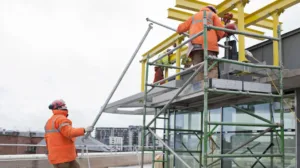
OSHA’s Top 10 List of Most Frequently Cited Standards: Scaffolding
Continuing our rundown of OSHA’s Top 10 List of Most Frequently Cited Standards for 2023, we’ve reached number four, OSHA’s Scaffolding Standard. Working at heights is serious business. The safety risks are higher…quite literally. That’s why the OSHA Scaffolding Standard is such a technically detailed regulation. OSHA defines a scaffold as, “an elevated, temporary work […]

OSHA’s Top 10 List of Most Frequently Cited Standards: Ladder Safety
Welcome to the third installment in our VelocityEHS Blog series on OSHA’s Top 10 Most Frequently Cited Standards for 2023! We started with OSHA’s #1 most frequently cited standard Fall Protection, followed by #2 Hazard Communication (HazCom). Now, as we work our way down OSHA’s Top 10 List, we arrive at #3—Ladder Safety. This particular […]

OSHA’s Top 10 List of Most Frequently Cited Standards: Fall Protection
Welcome to the first installment of our new VelocityEHS Blog series on OSHA’s Top 10 Most Frequently Cited Standards! Each year at the National Safety Council (NSC) Congress & Expo, EHS professionals eagerly await OSHA’s release of their Top 10 List of Most Frequently Cited Standards. The list offers valuable insights into the current state […]

Solutions from the Hierarchy of Controls to Reduce MSD Risk
By Amanda Morton, VelocityEHS Consultant The hierarchy of controls is the framework that safety professionals use to determine the most effective improvements to reduce exposure to hazards in the workplace. Exposures include chemical hazards, physical hazards, biological hazards, and musculoskeletal disorder (MSD) risk factors such as heavy lifting and repetitive motion (OSHA). One of the […]

Simplifying EPA Air Emissions Compliance
By Greg Duncan, MELP, ASP, Sr. EHS & ESG Content Manager, VelocityEHS Compliance with US EPA air emissions regulations is complex, to put it mildly. Depending on your facility’s industrial operations and processes, locations, dates of construction or modification, and potentially numerous other factors, you may be obliged to comply with dozens of air emissions […]

Understanding Lock-Out/Tag-Out
What is Lockout/Tagout? The term Lock Out Tag Out (LOTO, or Lockout/Tagout) refers to the safety practice and procedures that are necessary for employees to disable machinery or equipment to prevent the release of hazardous energy and prevent start-up until maintenance or repair work is completed. In a nutshell, it falls under the umbrella of […]

Ergonomics in the Automotive Industry to Reduce MSD Risk
The main goal of ergonomics is to optimize the safety well-being of workers and increase productivity in various work settings, such as in the automotive industry. Job tasks in the automotive industry generally involve constantly moving equipment, heavy lifting and repetitive work, which can result in a high risk of employees developing musculoskeletal disorders (MSDs). […]

ISSB’s First Two Finalized ESG Standards: What You Need to Know
by Phil Molé, MPH On June 26, 2023, International Sustainability Standards Board (ISSB) issued its first two finalized ESG standards, after review and incorporation of significant stakeholder feedback that followed publication of the standards as drafts for public comment last year. Business leaders, investors, non-governmental organizations (NGOs) and other stakeholders will likely welcome these standards […]

Benefits of the VelocityEHS Control of Work Contractor Self-Service Portal
One of the biggest pain points when it comes to control of work for contractors and temporary workers is the amount of administrative work to verify that contractors coming on-site meet our stringent safety standards. From submitting required documentation and pre-qualification responses to completing worksite training and induction, it can take days, even weeks’ worth […]