








Operational Risk
173 results
In Case You Missed It: Week Three of the Open Table Conference
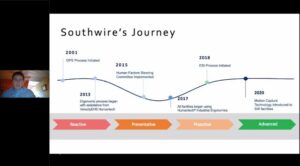
VelocityEHS recently hosted its third gathering of the three-part Open Table Conference series. During the first three Thursdays of November, we brought our customers, partners, and VelocityEHS subject matter experts together to discuss trending EHS topics, best practices, and innovative technologies. In case you missed it, here’s a summary of our Thursday, November 19th event […]

NAEM Summary: Danfoss Demonstrates Benefits of Motion-Capture Technology
The ergonomics team at Danfoss Power Solutions exceeded its ergonomics risk assessment goal by nearly 300 percent in 2019. Senior EHS Manager Jeff Mann highlighted the company’s transition from a more manual risk assessment process to VelocityEHS’ sensorless motion-capture technology during the session, “How Technology is Transforming EHS” at the 2020 NAEM EHS & Sustainability […]

How ISO 45001 Can Help Manage Psychosocial Risks in the Workplace
Safety managers have many different workplace risks to assess and control, but they don’t always adequately identify and address psychosocial risks. These are sources of anxiety for workers that result from a multitude of factors including the ways that work is organized (e.g. length of shifts, numbers of consecutive days worked), ways that job tasks […]
COSHH: A Key Framework for Hazardous Chemical Risk Assessment
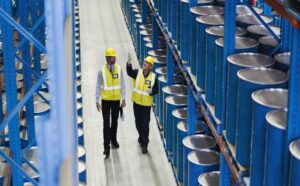
COSHH, or Control of Substances Hazardous to Health, is a set of regulations under the U.K.’s Health and Safety Executive (HSE) to protect workers from health hazards when working with specific substances and materials. COSHH includes a Risk Assessment component that, while a regulatory compliance requirement for some, is increasingly becoming a best practice around […]
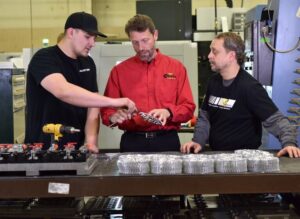
Ergonomics for Manufacturing: Ask the Operator is Still the Best Practice
By Rick Barker, CPE, CSP, Principal Solutions Strategist Technological advances in MSD risk assessments, like the sensorless computer vision (motion capture) found in VelocityEHS Industrial Ergonomics, enable ergonomics team members to perform accurate assessments in minutes instead of hours. Today’s technology-aided assessments allow non-experts to evaluate jobs with a level of detail formerly reserved for […]

IAF Extends Deadline for Businesses to Migrate to ISO 45001
[vc_row][vc_column][vc_column_text]Due to widespread business impacts from the ongoing global COVID-19 pandemic, the International Accreditation Forum (IAF) has extended the deadline for migration to ISO 45001 by six months from the original timeline, to September 11, 2021. The current international standard for occupational health and safety (OHS) management systems, ISO 45001, was published in Spring 2018 […]

Workplace Accidents Don’t “Just Happen”: Using Root Cause Analysis to Improve Safety Culture
Many company managers, and even some experienced safety professionals still maintain the view that some workplace accidents ”just happen” — that not all workplace incidents are preventable, and that we therefore shouldn’t always expect to find root causes for why they occurred. The reasons behind this attitude vary, with some individuals claiming that such ambitious […]

Top 3 Things To Do After Launching an Ergonomics Process
Launching an ergonomics process at an established facility can be a daunting task. There are so many jobs to assess and an exponentially growing list of improvements to implement, but resources are limited. Most ergonomics teams do not have enough dedicated time to efficiently perform risk assessments for every job within a site, let alone […]

How to Use Design Guidelines to Create a Successful Ergonomics Process
During the launch and management of any ergonomics program, multiple tools are available for measuring risk levels and tracking data, but nothing is more critical to the success of a company-wide ergonomics program than the effective implementation of a set of design guidelines for ergonomics. These standards apply to all levels of development and all […]

Are There Gaps in Our EHS Management System?
The global COVID-19 pandemic has had a massive impact on workplaces, as levels of operation change or even cease due to lockdown measures, and employees find themselves more geographically spread out than ever. Unfortunately, these challenges may also reveal gaps in our EHS management system that we didn’t know about before. During “normal” times, we […]