






Operational Risk
182 results
Insights from Our Recent Webinar on Major Chemical Accidents
by Phil Molé VelocityEHS recently presented the webinar “Major Chemical Safety Incidents- A Review of Common Causes” with EHS Today. The webinar reviewed investigations of major chemical incidents by the Chemical Safety Board (CSB), looking into the details of each for takeaways about common failings of risk management, and how we can address them. In […]
“The Bowtie Analysis Blog” — Part 4: Using Master Bowties to Manage Risk at Multiple Facilities
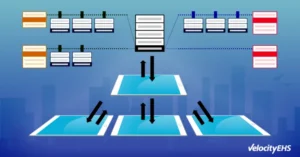
Welcome to the fourth installment of our “Bowtie Analysis Blog” series. In our first installment, we talked about the usefulness of risk bowties for training employees on workplace risks, our second installment explored the way they can pull together information from many different types of assessments, and our third post discussed how bowties help visualize and manage risk […]
“The Bowtie Analysis Blog” – Part 3: Using Risk Bowties to Visualize and Manage Risk Controls
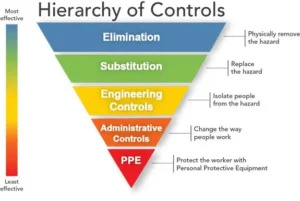
Welcome to the third installment of our “Bowtie Analysis Blog” series. In our first installment, we talked about the usefulness of risk bowties for training employees on workplace risks, and our second installment explored the way risk bowties can pull together information from many different types of assessments. In this post, we’ll be looking at […]

The Danger of Deference in Risk Management
When you don’t know how to do something, it’s usually best to defer to the experts and let them take care of it. But what if the people you thought to be the experts actually aren’t? What if they’re not qualified at all? The Danger of Deference Blindly deferring to another party to solve a problem can create enormous issues that have catastrophic results. This is exactly what happened in Hawaii in 2011. A tragic explosion occurred when five employees […]

CEU Conference Session Summary – Industrial Hygiene Governance Workshop
Recently, VelocityEHS hosted its CEU Conference, which included six sessions, all of which qualify for continuing education unit (CEU) credits. Principal Solutions Strategist, Dave Risi, CSP, CIH, presented “Industrial Hygiene Program Governance Workshop” and provided the framework to establish, monitor, and communicate (to managers and workers) the status of your Industrial Hygiene program. If you […]

CEU Conference Summary: Using Quality Tools for Ergonomics & Safety
Last week, VelocityEHS made it possible for attendees of its CEU Conference to be eligible to receive continuing education unit credits (CEU) at each of its six sessions. Principal Solutions Strategist Rick Barker conducted the session “Using Quality Tools for Ergonomics and Safety,” where he highlighted tools and tips for improving operator interviews and team […]

Risk Management Illustrated: Bowling – What Could Possibly Go Wrong?
No one likes a killjoy. It’s no fun when someone is always pointing out what could go wrong or never looking on the bright side. No one likes that person—unless they’re in risk management. A necessary aspect of environmental health & safety (EHS), risk management is a proactive method of protection, looking at an environment […]

Get CEUs at Our Next Virtual Conference on July 21
It’s summer and the pool is open, which means…vacation time! After quarantining at home all year from COVID-19, I’m certain most of you will be going on vacation, or spending extra hours at the pool. So, wherever your travels take you, you can still learn with us, and be eligible to receive free continuing education […]

New Series! “The Bowtie Analysis Blog” – Part 1: Using Bowtie Analysis to Train Workers About Risk
Many EHS professionals know they struggle with managing workplace risks, whether it’s accurately assessing them, controlling them, or getting the entire workplace involved in the process. In our new series, “The Bowtie Analysis Blog,” we’ll tell you about how a risk assessment tool called bowtie analysis can help. In this first installment, we’ll talk about […]

Prevention through Design: How Ergonomics Helps
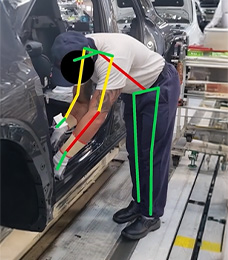
One of the best ways to prevent and control workplace injuries and incidents is to “design out” hazards and risk early in the design phase. This is known as Prevention through Design (PtD), a national initiative led by National Institute of Occupational Safety and Health (NIOSH) and Center for Disease Control and Prevention (CDC). World-class […]