












Optimizing EHS Programs
530 results

3 Tips for Evaluating Non-Cyclical Work
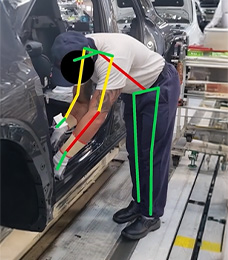
The ideal scenario for any professional ergonomist starting an ergonomics process is to assess a set list of jobs that are “cyclical”, or take place on a consistent, regimented schedule within a controlled facility. Creating a plan for completing baseline risk assessments and allowing that data to guide all your improvement decisions is always easy […]
New VelocityEHS Infographic Shows How Risk Bowties Enhance Visualization of Operational Risk
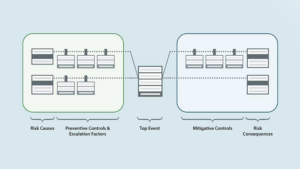
Risks come at us from all sides, and it can be a real challenge to gain a comprehensive understanding of how those risks interact with one another and impact your business. If you’re relying solely on spreadsheets or simple risk registers to document and track risk assessment findings, it can feel all but impossible to […]

OSHA Hints at New Timeline for HazCom Final Rule on SCHC Call
By Phil Molé On November 1 through 5, 2021 the Society for Chemical Hazard Communication (SCHC) hosted their Fall Meeting with OSHA officials to bring stakeholders up-to-speed on the proposed changes to OSHA’s Hazard Communication Standard (HazCom) published by OSHA earlier in 2021. Janet Carter, Senior Health Scientist at USDOL/OSHA, and Sven J. Rundman III, Supervisory Industrial […]

ESG Virtual Conference Summary – “CEO ESG Checklist”
Last Thursday’s VelocityEHS ESG Virtual Conference featured a variety of sessions on ESG topics hosted by VelocityEHS experts alongside ESG leaders representing both industry and the investor community. Here, we’ll re-cap the final session of the conference, CEO Checklist for ESG, which provided valuable guidance for business leaders who may be new to ESG, or […]

ESG Virtual Conference Summary – “Practical Steps to Implementing an ESG Program”
By Phil Molé VelocityEHS recently held a virtual conference on Environmental and Social Governance (ESG) which included many presentations to help EHS professionals and business on their ESG journey. During the conference, Brad Micheel and I presented “Practical Steps to Implementing an ESG Program,” about the reasons for the increased industry focus on ESG, and […]

ESG Virtual Conference Summary – “EHS to ESG: Making the Pivot”
In the “EHS to ESG: Making the Pivot” session of the 2021 VelocityEHS ESG Conference, presented by David Staples, Senior Solutions Strategist, ESG, VelocityEHS, and moderated by Roger Bottum, Senior Vice President of Product, VelocityEHS, attendees were given a (refreshingly real) lowdown on what ESG really means, how it differs from EHS, and how organizations […]

What is LOPA? (Workplace, Don’t Hurt Me)
Like HAZOP, LOPA is an environmental, health and safety (EHS) term that a lot of people have heard thrown around that sounds like a big, scary deal because it’s an acronym. But also like HAZOP, LOPA isn’t anything to be intimidated by— it’s a simple, straightforward way of assessing and addressing risks that has a big impact. What is LOPA? What […]

ESG Virtual Conference Summary – “The Value of ESG to the Financial Community”
Today, businesses around the world are being held to higher standards in Environmental, Social, and Governance (ESG). While some of it comes from a regulatory perspective, much is driven by investors. During the VelocityEHS ESG Conference, Blake McGowan, Director of Ergonomics Research at VelocityEHS sat down with Chloe Sanders, Head of ESG at CVC Capital […]

Are You Caught Up with Your EHS Training and Learning?
by Phil Molé We’re nearing the end of the year, which is usually a time for EHS professionals to take stock of their EHS management systems including their workplace training programs to see what’s working, what’s not, and where things can be improved. With many EHS professionals are also currently planning their budgets for 2022, […]

Ergonomics ROI Webinar and New Calculator Tools from VelocityEHS
Having solid estimations of costs and return-on-investment for a new program are crucial for getting executive buy-in and consistent support. Some programs, like ergonomics, can be difficult to get approved because they would be implemented to rectify a long-term issue. When determining whether to invest in a program, decision-makers want to know if they’ll get money back, when they’ll get it, and how much […]