










Sustainability
242 results
U.S. Chemical Safety Board Cites Safety Culture in Chevron Fire
Last week, the U.S. Chemical Safety Board (CSB) announced in a final investigation report that a fire at a Richmond, California Chevron refinery in 2012 was the result of a flawed safety culture within the corporation. The large fire endangered 19 Chevron workers, and sent over 15,000 local residents to the hospital for medical attention. […]

Understanding the Hazards of Hexane
What is Hexane and Where Can it Be Found? Hexane is a chemical commonly extracted from petroleum and crude oil. It is a colorless liquid that gives off a subtle, gasoline-like odor. Hexane is highly flammable, yet it can be found in many household products such as stain removers for arts and crafts projects. Because […]
Hydrochloric Acid Hazards & Safety Tips
What Exactly is Hydrochloric Acid & Where is it Found? Hydrochloric acid hazards are serious. However, you may be surprised to learn that hydrochloric acid is commonly used in many types of industrial processes. Approximately 20 million tons of hydrochloric acid are produced globally each year, and you can even find it in your own […]

5 Stories on Why Managing Hazardous Chemicals in the Workplace is so Important
Here are 5 stories, with 5 lessons, that illustrate why chemicals in the workplace, no matter the size of the company or the number of employees, are serious business. As demonstrated below, how chemicals are used, stored, labeled, and disposed of, and how employees are trained on chemical hazards, affects workers, customers, and in some […]
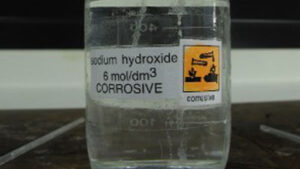
Sodium Hydroxide (Lye) Safety
Used many years ago in soaps, sodium hydroxide – also known as lye – is still a widely used chemical today. Its uses range from food processing to petroleum refining, but it can be a very dangerous chemical. Here we’ll examine its usual uses, and the specific properties that make sodium hydroxide a threat to […]

Ethanol: Versatile, Common and Potentially Dangerous
We have all heard of ethanol, somehow, somewhere. But what is it, exactly? How is it used? And most importantly – how can ethanol be dangerous in the workplace and beyond? (Photo: Corn and Cornier by Seth Anderson) In this information post from the experts at VelocityEHS, we’ll take a look at what ethanol is, […]

OSHA Embracing Sustainability & Chemical Substitution, Employers Wise to Follow Suit
Today sustainability is not just a buzzword. Captains of commerce, like Wal-Mart, Target, Virgin, and Apple are championing the drive to improve the chemical footprints of entire supply chains. In the past, the word “sustainability” conjured images of extreme environmentalism at the cost of all else; today it encompasses a wide-angled view of the relationships […]

From the Ground Up: Supply Chain Compliance
This second post in a series on the NAEM Report, “Planning for a Sustainable Future,” focuses on the growing challenge of enforcing supply chain compliance in a tangled and constantly fluctuating regulatory environment. Supply chain compliance is an ever-evolving global issue. Unless all materials right down to chemical makeup or raw minerals are sourced locally, […]

What Do Executives Need from EHS & Sustainability Managers
I had the privilege this week to join our VP of Customer Experience, Laura Murphy and our Director of Operations, Chris Robinson in a half-day meeting with the senior EHS & sustainability leadership team for one of our clients. Doing this is one of the parts of my job that I love the most. We were […]

5 Reasons Why Managing Safety Data Sheets Electronically is Good for Business
1. Saves Time 2. Saves Money 3. It’s Efficient 4. Sustainability 5. Risk Reduction It would be easy to think that most companies choose to manage their safety data sheets (MSDSs and SDSs) electronically because they are concerned with OSHA compliance or the transition to GHS. However, the truth is, most companies choose electronic management […]