








Operational Risk
173 results

Prevention through Design: How Ergonomics Helps
One of the best ways to prevent and control workplace injuries and incidents is to “design out” hazards and risk early in the design phase. This is known as Prevention through Design (PtD), a national initiative led by National Institute of Occupational Safety and Health (NIOSH) and Center for Disease Control and Prevention (CDC). World-class […]

Prevent Incidents Before They Happen: Using a Prevention through Design Framework
Ask most safety professionals, and they’ll tell you: Our goal should be to prevent incidents before they happen. But ask them how, and you’ll probably get many different opinions. It’s fair to say that in the absence of a coherent strategy, many fall back on the reactive approach of addressing risks only after incidents have […]
NAEM EHSTech 21: “Goodyear Tire & Rubber Company Reduces Injuries with Formal Ergonomics Program” – A Summary
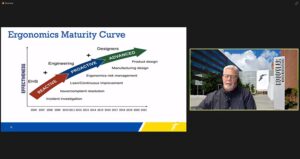
The recent “Goodyear Tire & Rubber Company Reduces Injuries with Formal Ergonomics Program: A User Case Study” session for the National Association for EH&S Management (NAEM) EHSTECH21 Conference gave an in-depth look into the company’s workplace ergonomics program. Presented by Roger Tynes, Ergonomic Consultant & Program Specialist for Goodyear Tire & Rubber Co., and moderated […]
IH 101 Part 7: Evaluating & Communicating Performance – The Keys to Engagement with Your IH Program
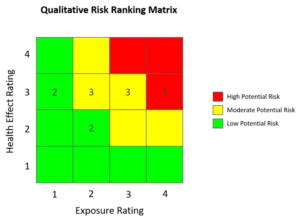
Welcome to our seventh and final installment in our IH 101 series! It’s been quite a journey so far, but we definitely saved the best for last. Last time, in Part 6 of our IH 101 blog series “Medical Surveillance – Strengthening Your Last Line of Defense for Worker Health,” we learned the basics of […]
The Short Conference: “W.L. Gore and Associates, Inc. Systems Approach Built to Stand the Test of Time” – A Summary
When the W. L. Gore company realized that its ergonomics program needed a massive overhaul, it dedicated the time and effort to developing a strong, sustainable one, and partnered with VelocityEHS Industrial Ergonomics to get it done right. In the “W.L. Gore and Associates, Inc. Systems Approach Built to Stand the Test of Time” session of the […]

How Do You Know You Need an Ergonomics Program?
Ergonomics often comes up as an uncertain and vague topic, where musculoskeletal disorder (MSD) risks aren’t clearly identified and solution effectiveness is difficult to gauge. Most ergonomics discussions begin after an MSD occurs, or when someone shows up with a sore back. But how do you know that you need to implement an ergonomics program before […]

A Better Risk Assessment Isn’t Enough
Having an accurate, easy-to-use ergonomics assessment tool for evaluating the risk of musculoskeletal disorders (MSDs) is valuable—requiring less time for training, mastery, and ongoing use. Historically, MSD risk assessment tools designed by non-ergonomists had to trade off accuracy and specificity to be viable for cross-functional ergonomics teams. Recent advances in artificial intelligence and sensorless motion […]

IH 101 Part 2: QEAs – Essential Risk Assessment Methodologies for Industrial Hygiene Program Management
In Part 1 of our blog series on Industrial Hygiene Program Management, “SEGs: The Foundation of a Great Industrial Hygiene Program”, we learned how to create similar exposure groups (SEGs). This step of characterizing your workplace and forming SEGs is a prerequisite for performing qualitative exposure assessments (QEAs). If you haven’t already, we recommend reviewing […]
IH 101: Introduction to IH Program Management Part 1 – SEGs
SEGs: The Foundation for a Great IH Program For this first session of our IH 101: Introduction to Industrial Hygiene Program Management series, we’re going to take an in-depth look at similar exposure groups (SEGs) to help you understand their critical importance to your IH program. We’ll also offer common-sense guidelines for how to set […]
4 Characteristics of an Effective Root Cause Statement
The hardest part of any continuous improvement process is accurately identifying the reason that risk is present in the system to begin with. This is also the most critical step when implementing improvements. There are four key characteristics that every root cause statement should include to provide quality data that can result in effective solutions. […]