









Operational Risk
173 results
Bowties, Fault Trees and Event Tree Analysis
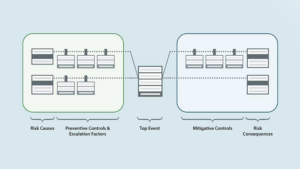
Bowtie analysis is a risk analysis methodology that focuses on risk interactions. We’ve covered a lot about it in our blog, but how does bowtie analysis compare to other analysis methods based on probability, like event tree and fault tree analysis? The bowtie analysis method can be based on qualitative, semi-quantitative or quantitative risk calculations. […]
Using Leading Indicators to Improve Safety Management
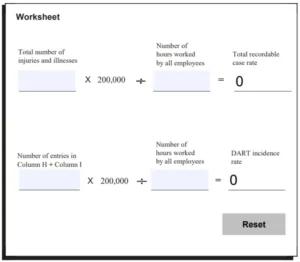
There are many articles and webinars on leading indicators at safety conferences and in EHS publications, and everyone rightly agrees they’re good things. But it’s not always clear to the average EHS professional what leading indicators actually are, how they improve safety, and what kinds of factors you need to consider if you’re going to […]
ISO 14001 Overview, Pt. 2: Maintaining Environmental Compliance and Measuring Performance
Welcome to the second and final installment of our two-part series “An Overview of ISO 14001.” In our first installment, we talked about what an environmental management system is (and isn’t) and how ISO 14001 can help you determine the key environmental aspects of your business. In what follows, we’ll break down some of the […]
Introduction to EHS Risks, Part One: You Don’t Need to Be Big to Benefit from Better Risk Management
Not everyone who manages workplace risk is a professional risk manager, or needs to be one. If you’re an EHS manager at a facility of any size, you need to get a good handle on identifying and controlling all of your EHS risks. You may have trouble finding the guidance you need, especially given the […]

The 5 Whys of Risk Analysis
What is the 5 Whys method of risk analysis? The best way to understand it might be by thinking about the famous (but true) trope of a child asking an adult “Why?” repeatedly, even after they’re given an answer. “Tie your shoes.” “Why?” “Because otherwise you’ll trip.” “Why?” “Because when shoelaces are left untied and […]

Key Processes Covered in “Ensuring 100% Certainty with Contractor Safety & Compliance”
Using contractors offers many benefits. You can offset labor costs, increase operational flexibility, and get quick access to highly-skilled workers, to name a few, but managing these contractors also creates challenges. It often involves extra administrative work and adds increased levels of uncertainty as to whether the people working at your site possess the training, […]

What Do Contractor Safety, Permit to Work and Control of Work Really Mean?
What is Control of Work? When contractors lack the proper qualifications, the results can be catastrophic, leading to serious accidents or fatalities. Control of Work is a system of safety management that acts as a gate for your workplace, mitigating risks by verifying the contractor’s documentation before they are allowed on-site. This proactive approach ensures […]

3 Tips for Evaluating Non-Cyclical Work
The ideal scenario for any professional ergonomist starting an ergonomics process is to assess a set list of jobs that are “cyclical”, or take place on a consistent, regimented schedule within a controlled facility. Creating a plan for completing baseline risk assessments and allowing that data to guide all your improvement decisions is always easy […]
New VelocityEHS Infographic Shows How Risk Bowties Enhance Visualization of Operational Risk
Risks come at us from all sides, and it can be a real challenge to gain a comprehensive understanding of how those risks interact with one another and impact your business. If you’re relying solely on spreadsheets or simple risk registers to document and track risk assessment findings, it can feel all but impossible to […]

OSHA Hints at New Timeline for HazCom Final Rule on SCHC Call
By Phil Molé On November 1 through 5, 2021 the Society for Chemical Hazard Communication (SCHC) hosted their Fall Meeting with OSHA officials to bring stakeholders up-to-speed on the proposed changes to OSHA’s Hazard Communication Standard (HazCom) published by OSHA earlier in 2021. Janet Carter, Senior Health Scientist at USDOL/OSHA, and Sven J. Rundman III, Supervisory Industrial […]