










Chemicals
396 results
Get CEUs at Our Next Virtual Conference on July 21
It’s summer and the pool is open, which means…vacation time! After quarantining at home all year from COVID-19, I’m certain most of you will be going on vacation, or spending extra hours at the pool. So, wherever your travels take you, you can still learn with us, and be eligible to receive free continuing education […]

NSC National Safety Month 2021: Week 2 – Addressing Ongoing COVID-19 Safety Concerns
VelocityEHS is proud to be the exclusive sponsor of the National Safety Council’s National Safety Month 2021. National Safety Month (NSM) is a time for everyone, from EHS professionals and managers to frontline workers, to renew their focus on how we can help build a safer workplace. At the same time, we’re reminded that for […]

Prevent Incidents Before They Happen: Using a Prevention through Design Framework
Ask most safety professionals, and they’ll tell you: Our goal should be to prevent incidents before they happen. But ask them how, and you’ll probably get many different opinions. It’s fair to say that in the absence of a coherent strategy, many fall back on the reactive approach of addressing risks only after incidents have […]
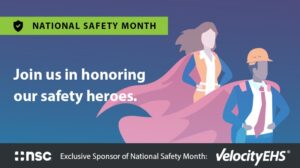
VelocityEHS: The Exclusive Sponsor of National Safety Month
This June marks the 25th anniversary of the National Safety Council’s National Safety Month, an annual observance created to inspire people to keep each other safe. A variety of materials will be provided to NSC members and nonmembers at nsc.org/nsm. To celebrate this momentous year as the exclusive sponsor, we’ll be sharing complementary content on […]

OSHA’s Proposed Changes to the HazCom Standard
Ever since OSHA published its Notice of Proposed Rulemaking (NPRM) earlier in the year to update the HazCom Standard to align with Revision 7 of the UN’s Globally Harmonized System of Classification and Labelling of Chemicals (GHS), VelocityEHS has received many questions. This is understandable, since this NPRM would bring the first formal revision of […]

The Short Conference: “How Technology is Transforming EHS” – A Summary
Exciting news shared by VelocityEHS at this year’s Short Conference included the acquisition of OneLook Systems, the premiere permit to work software provider, and a sneak peek at the upcoming launch of the new VelocityEHS Accelerate® Platform. The Short Conference is an annual virtual conference for VelocityEHS customers and industry professionals featuring intimate conversations and […]

IH 101 Part 6: Medical Surveillance – Strengthening Your Last Line of Defense for Worker Health
In Part 5 of our IH 101 blog series “Data Analysis – Defining Your Goals & Selecting the Best Metrics“ we learned about effective tools for analyzing your IH data, and the critical importance of defining the purpose of your data analysis. Just generating a lot of statistics that don’t provide valuable insights is a […]

ERS “Frontline Stories” Volume 1: Mother’s Day Brings Fresh Flowers – and Fresh Emergency Response Service Calls
It happens every year, like clockwork. With Mother’s Day come plenty of colorful fresh-cut flowers, so that moms can display them on their kitchen or coffee tables. Attached to the stalks of those flowers by rubber band, there are little packets of flower food, and sometimes, the contents of those packets lead to accidental ingestion, […]

Now More Than Ever, We Need Simpler, More Pro-Active Safety Management
Ask EHS professionals about their biggest challenges and they’ll probably tell you they always seem to be asked to do more with less. Completing key safety tasks, often singlehandedly, and hunting down and communicating the data they and other stakeholders need to assess safety performance, all while trying to convince management of the value of […]

Webinar Summary: “The Future of Work for EHS Professionals”
There have been many changes to the ways that we work over the past year, which will impact the next phase of how the workplace environment operates. Our most recent webinar, “The Future of Work for EHS Professionals”, discussed the specific factors that will influence how employers manage their employees’ health and satisfaction in the […]