










Blog
404 results

6 Ways to Manage Ergonomics with Technology
Humantech (now VelocityEHS Ergonomics) ergonomist, Jennie Gober, spoke at the 2014 Michigan Safety Conference this week on how to effectively manage ergonomics using technology. In this video, Jennie shares six ways to move your ergonomics process from reactive to proactive by working smarter, not harder. In summary, here are the six ways: 1. Force measurement […]

Bleach (Sodium Hypochlorite) Safety Tips: Bleach Safety Instruction
Sodium Hypochlorite (Bleach) Safety Information It whitens your whites, cleans your floors and acts as a great sanitizer. But bleach, (also known as its chemical name, sodium hypochlorite) can be quite hazardous when not handled properly. What Is Bleach AKA Sodium Hypochlorite? Sodium hypochlorite is a green/yellow liquid that smells like chlorine. It is a […]

Ergonomics for Delivery Drivers
Delivery drivers are a very important part of everyone’s lives. When was the last time you had a package delivered, your yard serviced, or purchased something from a store? Goods are moved all over the world every day. Along with these jobs come a lot of manual material handling (MMH) and other workplace risks. Here […]
The Psychological Side of Ergonomics
by Matt Gilliam, AEP The physical factors of ergonomic risk can often be easily identified in the workplace. High forces and awkward postures can be observed, as well as the potentially harmful effects they have on workers (pain, WMSDs, lost time injuries). However there is another side of ergonomics worth noting: the psychological effects. Ergonomics […]

Latex Painting Safety Tips: Commercial & Residential
Latex Painting Safety Tips As we continue our too-fast cruise through fall, house painting is the focus for many homeowners, particularly for those looking to place their home for sale during the robust upcoming winter market. Whether you are painting your home yourself or are a house painting contractor, we at VelocityEHS would like to […]

The Top 10 OSHA Violations of 2013
Today OSHA unveiled the Top 10 OSHA violations of 2013 at this year’s National Safety Council Congress and Expo in Chicago. Sponsored by Safety+Health magazine and The top ten list presentation drew a big crowd of attendees in the Expo hall. Most hazards carried over from the 2012 list, with a couple gaining ground and […]
The Challenges of User Adoption in Implementing EHS Software
“Thus times do shift, each thing his turn does hold new things succeed, as former things grow old” -Robert Herrick The Challenges of User Adoption in Enterprise Software Getting people to try new things is tough. Getting people to stick with new things over the longer term is even tougher. And trying to accomplish this […]

Product Review: Spider Mower
Product Name: Spider ILD 02 Mower Description: The Spider ILD 02 is a radio-controlled slope mower. This radio-controlled machine is designed to maintain uneven and inaccessible terrain; the mower is able to drive onto slopes of up to 40˚ cutting foliage up to 10 ft tall with high-quality cuts. The Spider ILD is not only […]

OSHA Clarifies the Use of HMIS and NFPA Labels Under GHS Adoption, and Small Container Labeling, During Webinar on HazCom 2012
OSHA discussed the use of HMIS and NFPA labels during a Webinar on HazCom 2012 today. The main focus of the presentation was preparing employers for meeting the Dec. 1, 2013 training deadline and answering implementation questions OSHA’s received in the last year since the HazCom Standard was revised first implemented. Jennifer Lawless, directorate of […]
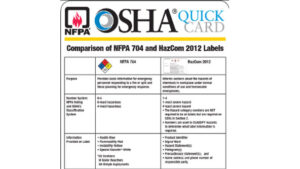
New NFPA and OSHA HazCom 2012 Quick Card
The NFPA has posted a new Quick Card to its website to help users quickly compare NFPA 704 with OSHA’s HazCom 2012. Made in partnership with OSHA, it provides side by side information about the two systems. The need for the card grew out of OSHA’s adoption of GHS in March of 2012 which concerned […]