





Workplace Culture
276 results

Are Your JSAs Good Enough? Don’t Wait for a Workplace Incident to Find Out
You already know that workplace accidents can have devastating consequences. You understand that effective EHS management must involve active identification and control of hazards, which is the primary intention behind risk assessments. You may even use job safety analysis (JSAs), to perform formal risk assessments that break down jobs into their constituent tasks in order […]

Is Stretching Effective in Preventing MSDs?
Some organizations rely on stretching, exercise, and conditioning programs (alone or in combination with other interventions) to prevent musculoskeletal disorders (MSDs). This relies on changing the physical condition and capabilities of each individual employee and is heavily dependent on many variables that are outside an employer’s control, including employee willingness, interest, and participation; an individual’s […]

OSHA Amputation Data and Anti-Retaliation Guidelines Highlight Need for Proactive Management
OSHA Amputation Data and Anti-Retaliation Guidelines Highlight Need for Proactive Management OSHA has just released some startling new data regarding workplace amputation injuries. The agency has also recently published a new set of guidelines for workplace anti-retaliation programs, to help employers comply with its new electronic recordkeeping rule which went into effect on January 1. […]
Participatory Ergonomics Programs – 9 Keys to Success
Participatory ergonomics (PE) programs are a common way to reduce musculoskeletal disorders (MSDs) in the workplace. These programs generally involve developing an ergonomics team that includes members from various departments and levels within the organization. But most importantly, they include those who have first-hand experience with the ergonomic issues: the workers. These teams also include […]
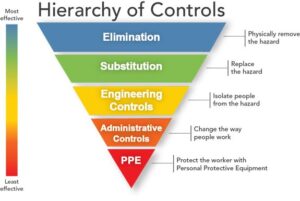
Hierarchy of Controls for MSDs
All good safety professionals know to pursue the hierarchy of controls when eliminating or reducing exposure to safety hazards. The same hierarchy can be applied to managing and controlling the risk factors which cause musculoskeletal disorders (MSDs). The proof and effectiveness has been demonstrated in several recently-published studies. It is interesting to note that there […]

New OSHA Fact Sheet Highlights Importance of Metrics to Process Safety Management
The Occupational Safety and Health Administration (OSHA) recently published a fact sheet to help employers develop effective strategies for Process Safety Management (PSM). The fact sheet identifies and discusses the ways that facilities enrolled in OSHA’s Voluntary Protection Program (VPP), and who therefore have been recognized by OSHA for safety performance above industry average, use […]

Ergo Tips: Engineering Controls for Shift Work
In our 24/7 world, shift work is common. Shift workers are susceptible to sleep deprivation and fatigue, leading to decreased physical and mental capabilities, increased incident rates, and negative health consequences. Many strategies used to manage shift work focus on administrative controls (such as work scheduling and breaks) and employee behavior (sleep strategies and schedules […]

VelocityEHS Makes Annual List of Chicago’s Top Digital Companies by Built In Chicago
VelocityEHS continues to hold its top ranking on the Top 100 Digital Companies in Chicago list. The annual list from Built In Chicago, an online community of startups, entrepreneurs, and innovators, ranks top tech companies based on full-time employees in the Chicagoland area. This is VelocityEHS’ third consecutive year on the Top 100 list, a […]

Deepwater Horizon: An Ongoing Lesson in Safety
This weekend, the feature film “Deepwater Horizon” hits movie theaters across the country. It tells the true story of the ill-fated semi-submersible offshore oil drilling rig that exploded after the well it was drilling erupted, killing 11 workers and injuring dozens more. Following the explosion, more than 200 million US gallons of oil gushed into the Gulf […]

Office Dangers: Just Because You Sit in a Chair All Day, Doesn’t Mean You’re Safe
Workplace safety is often focused on workers doing rigorous tasks in industries with the perceived highest occupational risk, such as construction, mining, oil and gas, and manufacturing. However, one of the leading causes of workplace injuries, and one of the most costly to employers, affects those workers whose time is spent in offices and laboratories […]