











Regulations & Compliance
715 results

Evaluating Your Chemical Safety Training to Make it More Effective
As one of the main pillars of OSHA’s Hazard Communication (HazCom) Standard, employee training is a critical part of your company’s workplace safety and regulatory compliance. Yet, HazCom training is also one of the most commonly overlooked elements of safety programs, as many employers struggle to make it effective, engaging, and relevant. In our article […]

Managing Multi-Employer Worksite Responsibilities for HazCom
Today’s workplace is far different than it was in the past. Workers from multiple employers are increasingly working side-by-side at the same worksites, and employers are sharing responsibility for worker safety more and more. When chemicals are involved, confusion can arise over who has obligations under OSHA’s HazCom Standard. We know that, because people often […]

SCHC Fall 2019 Meeting Covers Latest Updates on OSHA HazCom, WHMIS, GHS & TSCA
VelocityEHS was in attendance Tuesday morning at the Society for Chemical Hazard Communication’s Fall 2019 Meeting in Arlington, Virginia. Representatives from OSHA and Health Canada, along with industry subject matter experts convened to deliver important regulatory updates, and lend their expertise on a wide range of hazard communication and chemical safety topics including OSHA’s Hazard […]

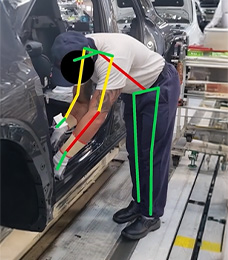
Ergo Myth: Job Rotation Reduces Musculoskeletal Disorders
Job rotation is defined as a systematic procedure that relocates workers between two or more jobs in a workplace. One of the perceived benefits of job rotation is that it will decrease workplace musculoskeletal disorders (MSDs) by reducing the operator’s exposure to high forces, awkward postures, and high frequencies. Today, many safety professionals rely on […]

WHMIS 2015 Updates: Health Canada Publishes Guidance Documents for Canadian Hazardous Products Suppliers
Earlier this summer, Health Canada published a number of formal guidance documents and other resources intended to help Canadian hazardous products suppliers navigate their requirements under the recently implemented Hazardous Products Act (HPA), Hazardous Products Regulations (HPR) and other WHMIS 2015 legislation. Below, we’ll provide a little background on each of these guidance documents and […]

OSHA Seeks Input on Silica Dust Hazards and Issues Reminder About Delinquent Recordkeeping Forms
OSHA is currently requesting action on two concerns that affect employers. OSHA Seeking Silica Standard Feedback OSHA is considering potential revisions to Table 1 of its Respirable Crystalline Silica Standard for Construction, and requesting input on additional engineering and work practice control methods to effectively limit exposure to silica for the equipment and tasks currently listed. […]

OSHA’s Top 10 Most Cited Violations of 2019
OSHA just announced its preliminary list of Top 10 Most Cited Violations in 2019 at the National Safety Council Congress and Expo. Among the top risks worker health and safety, Hazard Communication once again lands near the top of the agency’s list, as questions and confusion resulting from its adoption of GHS and the changes […]

Are You Managing Your EHS Actions, or are They Managing You?
The job of an EHS professional is never over. There’s always work that needs doing, including an ever-growing list of tasks we need to complete to address risks and maintain effective workplace safety programs. Making life more difficult, the work has a way of multiplying. Sometimes, it seems that for every item we cross off […]

VelocityEHS Offers HazCom Support for Emergency Responders, Businesses and Others Affected by Hurricane Dorian
VelocityEHS will once again provide disaster relief to organizations, emergency responders and local businesses affected by Hurricane Dorian through access to its VelocityEHS safety data sheet (SDS) library at no cost. For a limited time, all customers and non-customers located in the storm’s path can visit www.EHS.com/disaster and search through the millions of safety data […]
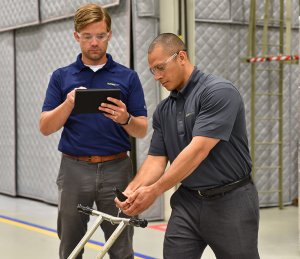
Force Matching: An Alternative Method to Measure Force
The physical risk factors that have been consistently linked to the development of musculoskeletal disorders (MSDs) are posture, frequency, duration of exertion, and force. Recent research indicates that force has the greatest impact on MSD development. This can make it challenging to accurately quantify MSD risk, since force can be the most difficult risk factor […]