By Phil Molé, MPH
Welcome to Part 2, highlighting EHS in an era of transition and featuring findings from the 2026 EHS 360 Benchmark Report.
In Part 1 of this series, you learned that EHS professionals are increasingly optimistic about the future of EHS within their organizations. At the same time, they’re facing rising stress levels, growing regulatory complexity, persistent resource constraints, and ongoing struggles with data quality and accessibility.
It’s a challenging combination. EHS professionals are getting a seat at the table in strategy and decision making, but it comes with increased expectation. Organizations expect EHS teams to support compliance, strengthen safety culture, improve risk management, and increasingly contribute to broader business objectives. Yet many teams are still operating with limited resources and fragmented systems.
That raises an important question: How do EHS professionals plan to keep up?
The answer, according to the EHS 360 Benchmark Report, increasingly involves technology, especially AI.
EHS Professionals See Technology as Part of the Solution
One of the clearest themes to emerge from the report findings is that EHS professionals increasingly view technology as essential to overcoming the challenges they face today.
This shouldn’t come as a surprise, especially since many of the biggest pain points identified in the report are associated with technology, such as:
- Data quality and accessibility
- Administrative burden
- Resource limitations
- Regulatory complexity
- Difficulty shifting from reactive to preventive safety management
When organizations struggle to access information, connect systems, or generate actionable insights from growing volumes of data, technology naturally becomes part of the conversation.
But the findings suggest something bigger is happening.
Technology is no longer viewed simply as a way to digitize existing processes. Increasingly, in this era of transition, it is being viewed as a way to fundamentally improve how EHS work gets done.
This trend was even stronger among executives and leaders within larger organizations, which implies that adoption of technology is being driven top-down. This conclusion is supported by responses to another survey question, indicating that their organizations are pursuing greater tech stack integration due to corporate mandates.
An EHS Technology Integration Gap Remains
At the same time, the report reveals an important reality: Many organizations are not fully there yet when it comes to tech stack integration. They haven’t yet completed the transition.
While nearly half of respondents described their EHS technology ecosystem as mostly centralized, slightly less than one-quarter reported having a fully integrated enterprise platform. Even more telling, many organizations still rely on manual processes and spreadsheets for portions of their EHS workflows.
This challenge becomes more pronounced as organizations grow. That’s because larger companies often have:
- More facilities
- More employees
- More data
- More regulatory obligations
- More legacy systems
This is especially true considering that many companies become large through mergers and acquisitions (M&A), and operating locations of the acquired companies often had their own tech stack, different from the new parent company’s preferred technologies.
As a result, they frequently struggle with fragmented technology environments and disconnected information. Some of the organizations generating the most data are also the organizations that have the hardest time turning that data into actionable insights.
This helps explain why data quality and accessibility continue to rank among the most common pain points reported by EHS professionals.
Organizations Are Investing Accordingly
The survey findings suggest organizations are increasingly dedicating resources to level up their technology, and address some of the pain points identified by other survey responses.
Respondents identified several major areas of planned EHS technology investment over the next two years, including:
- Training, learning, and development
- Safety hazards and risk mitigation
- Quality management
- Process safety management
- Occupational health
- Incident management
- Environmental compliance
These priorities reflect both current challenges and future aspirations.
Organizations are looking for ways to improve visibility into risk, strengthen employee engagement, streamline compliance activities, and create more proactive safety management processes.
In this context, it’s not surprising that 44% of EHS professionals plan to invest in training and development technology for engagement and compliance. After all, to make sure you’re driving compliance and safety culture, and bringing employees along as your organization matures, you need to provide the right training to the right people.
In many cases, technology is being viewed as an enabler of broader organizational goals rather than simply an operational tool. For example, 53% of respondents indicated that their organizations were prioritizing developing a company-wide safety culture. While this result is technology-agnostic, the significant percentage of respondents emphasizing this goal and indicating current technology data gaps and improvement aspirations exist suggest considerable overlap in these populations of respondents.
Putting it simply, you’d only prioritize building a company-wide safety culture if you didn’t already have one. Common pain points, including data quality and accessibility, and disconnected methods of performing core tasks, would be one of the common barriers to building a safety culture. And they would trap organizations in a reactive safety management cycle. Conversely, not only adopting the right technology, but also integrating their tech stack directly supports the transition to a more proactive safety management approach.
AI Now Viewed as Core EHS Skill
Perhaps the most striking finding in the report is what respondents identified as the most important skill for EHS professionals to develop over the next three years.
The answer wasn’t regulatory expertise.
It wasn’t data analytics.
It wasn’t executive communication.
It was AI fluency.
More respondents identified AI fluency as the most critical future skill than any other capability measured in the survey, as shown in the figure below.
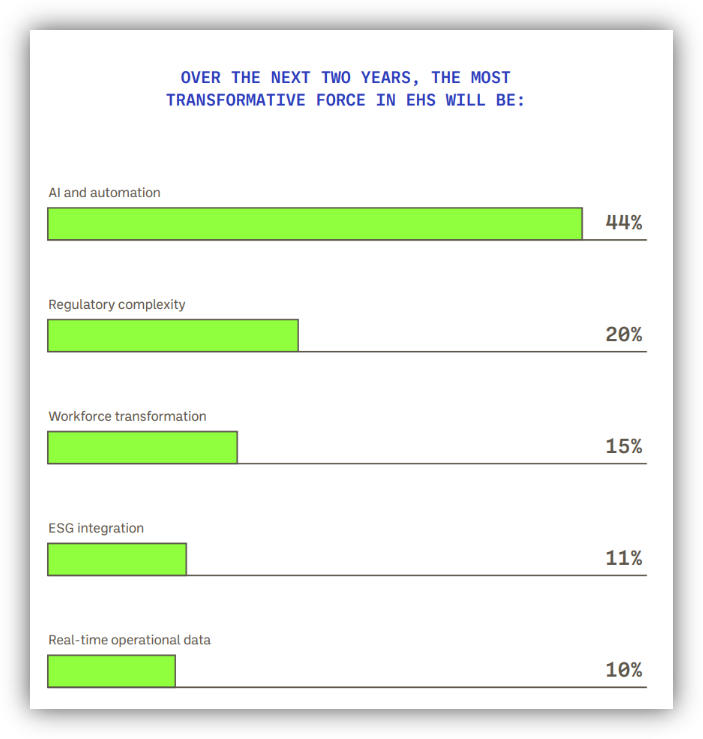
Figure 1: Respondent percentages on the most transformative force in EHS over the next two years.
In other words, while organizations are increasingly looking to technology to navigate challenges, they’re especially looking at the potential benefits of AI. That finding represents a major transition.
For years, discussions around AI often felt speculative, and many EHS professionals questioned the relevance of AI to their work. Today, many EHS professionals appear to view AI as an increasingly practical part of their toolkit. The question is no longer whether AI will influence EHS. The question is how organizations will use it during the transition.
The Influence of AI in EHS Processes in an era of transition
Within the findings is the belief that technology, especially AI, will increasingly shape how organizations manage compliance, risk, and safety performance moving forward. In fact, 76% of respondents agreed that AI will meaningfully reduce administrative burden on EHS processes.
This result is noteworthy because regulatory change has historically been one of the dominant drivers of EHS evolution. In other findings, most participants agreed with the statement that regulatory complexity is increasing faster than they can adapt. Even so, many professionals now believe advances in technology will have an even greater impact on the profession than changing regulations.
Not All AI Is Used the Same Way in EHS
The EHS 360 Benchmark Report also reveals an interesting distinction in how organizations are currently using AI. The figure below summarizes information about AI use cases as reported by respondents.
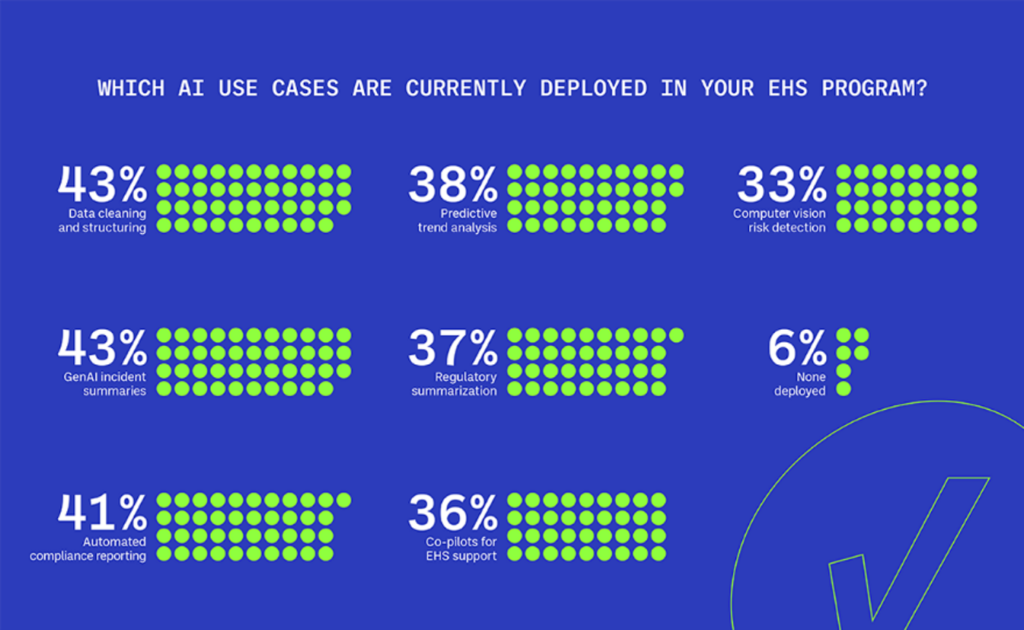
Figure 2: Respondent percentages on current AI use cases in EHS programs.
Many respondents report using AI for:
- Data cleaning and structuring
- Incident summaries
- Regulatory summarization
- Compliance reporting
These use cases suggest many organizations are starting out with broad, general-purpose applications of AI.
At the same time, more specialized EHS use cases are also emerging, including:
- Predictive trend analysis
- Risk detection
- Root cause analysis support
- Contractor safety workflows
- Ergonomic assessments
- PSIF identification
The distinction matters because different AI applications deliver different levels of value. General-purpose AI can improve efficiency and productivity.
Purpose-built AI, designed specifically for EHS workflows and trained on real EHS datasets, has the potential to improve safety outcomes directly by helping organizations identify, prioritize, and mitigate risks faster.
As AI adoption matures, the industry may increasingly transition from using AI for general purposes like content generation toward using AI to support better decision-making.
Trust Is the Gating Factor to AI Adoption
Of course, technology adoption isn’t just about capability. It’s also about trust.
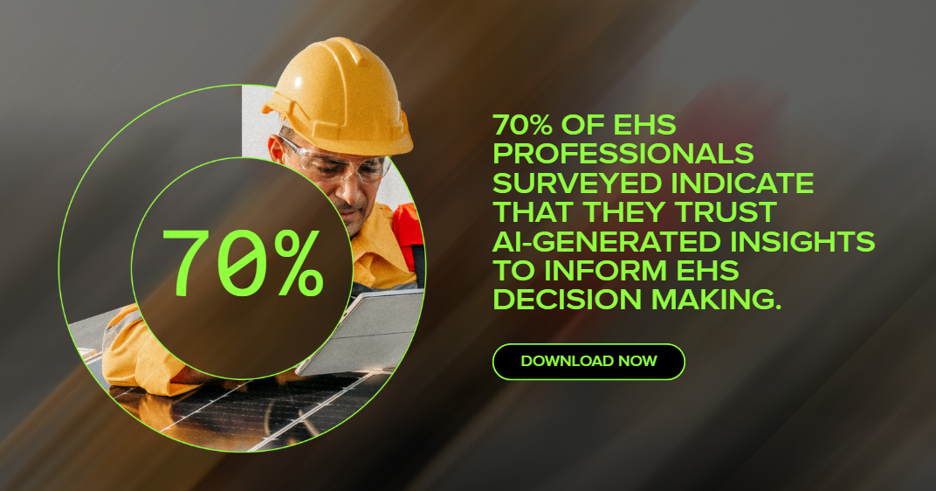
The report found that a strong majority of EHS professionals trust AI-generated insights to inform decision making.
At the same time, concerns remain. What is keeping EHS professionals who aren’t currently using AI from adopting it?
When asked about barriers to adoption, respondents consistently pointed to one issue: Accuracy. EHS professionals want assurance that AI can deliver accurate outputs before they start exploring use cases.
This finding makes sense. EHS professionals make decisions that affect people, operations, and risk. And in survey results in the EHS 360 Benchmark Report, EHS professionals say they do what they do because of a personal commitment to worker safety. For EHS professionals, the personal and the professional intertwine. They need confidence that the insights they receive are reliable and actionable because there’s too much on the line.
Organizations are also increasingly looking for measurable returns. Many respondents report that AI initiatives are already delivering either quantified ROI or observable operational benefits. That trend was particularly strong among larger organizations, which often have the scale needed to measure efficiency gains and process improvements more directly.
The takeaway is clear: Interest in AI is growing, but long-term adoption will depend on demonstrated value.
EHS professionals looking for AI they can trust to deliver measurable impact need to remember that not all AI is created equal. They should look to partner with a software provider that meets major benchmarks for trust, such as a certification to ISO 27001 by NSF-ISR for information management, and a proven track record in the EHS software space.
Technology Is the Means, Not the Goal
One of the most important insights from the report is that technology itself is not the destination as organizations continue to navigate the transitions. Organizations aren’t investing in AI just because they want more AI.
They’re investing because they want:
- Better data
- Better visibility
- Better decisions
- Better risk management
- Better safety outcomes
Technology is increasingly becoming the bridge between today’s challenges and tomorrow’s aspirations. And for many organizations, that bridge is still under construction.
Looking Ahead
The 2026 EHS 360 Benchmark Report paints a picture of a profession actively trying to adapt to change.
EHS professionals recognize that growing complexity requires new approaches. They see AI and technology as transformative forces. They are investing in modernization. And they increasingly view digital capabilities as critical to future success.
At the same time, many organizations are still navigating fragmented systems, incomplete integration, and uneven adoption.
The opportunity lies in closing those gaps.
In Part 3 of this series, we’ll move beyond perceptions and planned investments to examine what proactive safety management looks like in practice. Using benchmark data from real-world EHS software usage, we’ll explore how organizations are leveraging leading indicators, observations, near misses, and AI-powered insights to build more proactive safety programs.