
By Phil Molé, MPH
Environmental, Health, and Safety (EHS) has entered a period of transition.
For years, EHS was often viewed primarily as a compliance-driven function focused on inspections, audits, and keeping organizations aligned with regulatory requirements. Today, that role is evolving rapidly, and expectations are changing along with them.
Organizations increasingly expect EHS teams to contribute to broader business strategy, strengthen operational resilience, improve workforce engagement, and help organizations proactively manage risk.
At the same time, the challenges facing EHS professionals are growing. Regulatory complexity is increasing. Data becomes harder to manage as organizations grow, and increase their EHS maturity, because the amount of data increases. Resource constraints continue to limit progress. And emerging technologies like AI are reshaping expectations around how EHS work gets done.
The result is a profession in motion. EHS is gaining strategic influence, while simultaneously navigating uncertainty and operational friction.
That reality emerged clearly in the findings of our 2026 EHS 360 Benchmark Report, which surveyed more than 1,000 EHS professionals across industries and organizational sizes to better understand the current state of the profession and where it is heading next.
In this new three-part blog series, we’ll highlight different aspects of the 360 Benchmark Report findings. In this first installment, you’ll learn how respondents reported their outlook about EHS, and their perceptions about the ways their roles are changing.
Purpose-Driven Work in a Profession in transition
Despite the complexity of the modern EHS landscape, one thing remains remarkably consistent: EHS professionals are deeply motivated by the mission behind their work.
Nearly half of survey respondents (47%) identified personal commitment to worker safety as one of their primary motivations for working in EHS. Career growth, environmental impact, and strategic business influence also ranked highly, but protecting people remained the dominant driver across industries and company sizes.
That finding matters because it highlights an important truth about the profession: EHS has always been about more than compliance. At its core, it is mission-oriented work grounded in risk reduction, worker protection, and organizational responsibility.
One survey participant captured this sentiment directly:
“EHS is about managing workplace risks to protect people and the environment. We try to do that by following safety rules, training workers, and reducing hazards.”
That sense of purpose may also explain why EHS professionals continue pushing for progress even as operational challenges intensify, which makes for a nice segue to our discussion about sentiment.
Optimism Is High, But Unevenly Shared
Overall, EHS professionals remain optimistic about where the function is headed.
The survey found that 80% of respondents either agreed or strongly agreed that they are optimistic about the direction of EHS within their organization.
But beneath that headline number, the data reveals a more nuanced story.
Executives reported dramatically higher levels of optimism than managers and frontline contributors. More than 90% of executives expressed optimism about EHS direction, compared to just 73.4% of managers. Larger organizations and higher-revenue companies also tended to report greater confidence in the future of EHS.
This optimism gap reflects a dynamic many organizations may recognize immediately: Leadership sees progress. Frontline teams feel friction.
Executives often have visibility into long-term strategy, technology investments, and organizational initiatives designed to strengthen EHS maturity. Meanwhile, managers and operational teams are navigating staffing shortages, fragmented systems, rising reporting requirements, and day-to-day execution challenges.
Both perspectives can be true simultaneously.
In many organizations, EHS genuinely is becoming more strategic. But the transition itself can create pressure, especially when expectations evolve faster than processes, resources, or infrastructure.
Stress Levels Continue to Rise
That tension becomes especially visible when examining stress levels among EHS professionals.
More than half of respondents (51%) reported that their jobs are more stressful today than they were one year ago, as the figure below shows. Individual contributors reported the highest levels of increased stress, while executives reported somewhat lower levels.
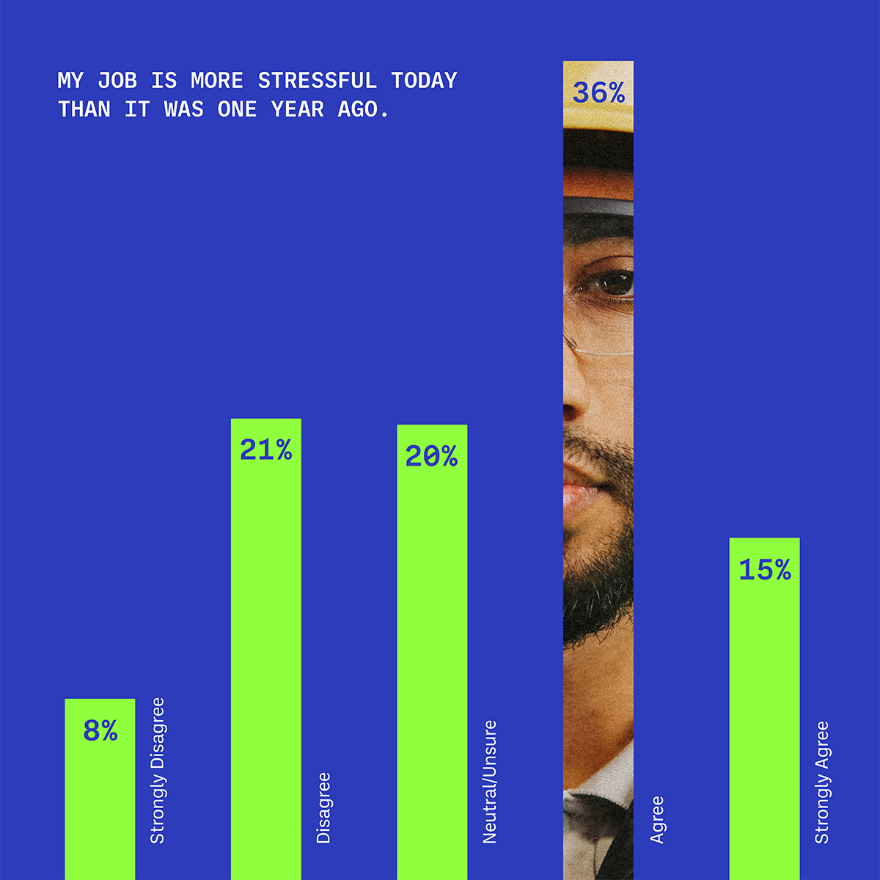
Figure 1: Responses by EHS professionals to the statement “my job is more stressful today than it was one year ago.” Transitions often come with stress.
Importantly, the stress described in the report is not simply about workload. It reflects the broader reality of managing EHS during a period of rapid transition.
Survey respondents identified several major contributors to stress, including:
- Resource constraints
- Technology change
- Workforce engagement challenges
- Perceived increase in regulatory complexity
In other words, many EHS professionals are simultaneously being asked to:
- Modernize systems
- Improve reporting
- Strengthen safety culture
- Adapt to new technologies
- Deliver strategic value
And they are asked to do all of this, in many cases, without significant increases in staffing or budget.
That pressure is reflected elsewhere in the report as well. Nearly two-thirds of respondents (64%) said limited resources significantly constrain EHS performance (see figure below), while 63% agreed that leadership expectations exceed available resources.
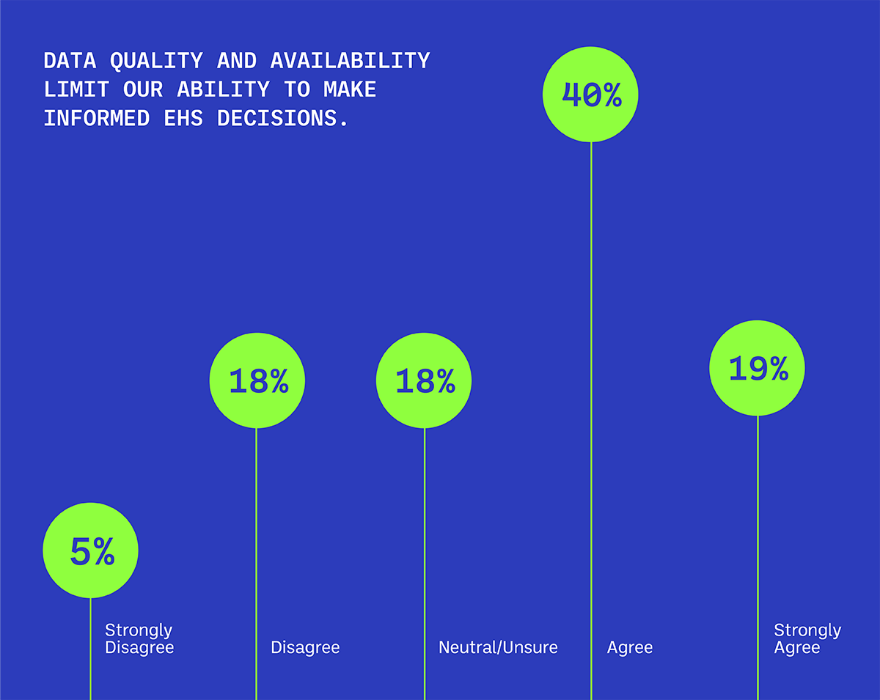
Figure 2: Responses by EHS professionals to the statement “data quality and availability limit our ability to make informed decisions.”
One respondent summarized the challenge bluntly:
“I think that the best way to get past what’s holding us back would be greatly enhancing or expanding resources. I am quite concerned with the lack of resources in the current landscape and believe that attention needs to be devoted to this issue.”
Data Problems Continue to Hold Organizations Back
Data quality and accessibility emerged as another major source of friction.
Overall, 59% of respondents agreed that data quality and availability hamper their ability to make informed EHS decisions.
This finding is particularly important because it shows that the challenge does not disappear at scale. In fact, larger organizations often report even greater struggles with data fragmentation and accessibility.
This makes sense operationally. Larger organizations typically manage:
- More facilities
- More employees
- More reporting obligations
- More disconnected systems
As EHS programs mature, they also generate significantly more data, including leading indicators like near misses, contractor activities, inspections, corrective actions, and hazard observations. Without integrated systems capable of turning that information into actionable insights, organizations can quickly become overwhelmed by the very data they hoped would improve performance.
The report suggests this challenge is one reason many organizations remain trapped in reactive safety management cycles. If EHS professionals cannot easily surface meaningful insights from their data, it becomes far more difficult to proactively identify risks before incidents occur.
One survey participant framed the opportunity clearly:
“Bridging the gap between incident data collection and proactive risk prevention by transforming fragmented, reactive reporting into actionable real-time predictive analytics would stop accidents before they occur.”
Regulatory Complexity and Volatility Are Adding Pressure
At the same time organizations are trying to modernize EHS operations, they are also navigating an increasingly complex regulatory environment.
Sixty percent of respondents agreed with the statement that regulatory complexity is increasing faster than their organization can adapt.
This pressure is especially pronounced in larger organizations and sectors with evolving compliance requirements around data governance, cybersecurity, chemical management, and operational risk. That’s not hard to understand because larger organizations use more chemicals, have more air emissions and water discharges, and operate in more regulatory jurisdictions, all of which complicates compliance.
Many respondents also expressed expectations that the broader EHS landscape itself will remain volatile over the next several years. Approximately one-third of surveyed professionals anticipate moderate or high volatility in the EHS environment during the next three years.
That perception likely reflects several simultaneous shifts happening across the profession:
- The growing role of AI
- Increasing technology consolidation
- Evolving regulatory expectations
- The expanding integration of EHS into enterprise risk management
The profession is in transition and EHS professionals know it.
EHS Is Becoming More Strategic
Despite these challenges, one of the clearest findings in the report is that EHS is gaining influence within organizations.
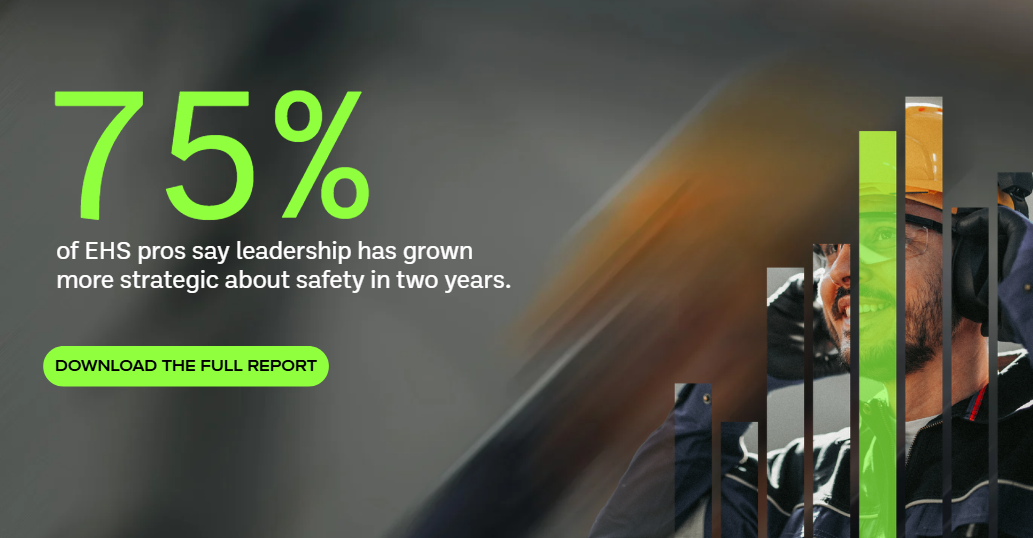
Three-quarters of respondents reported that executive leadership attitudes toward EHS have become more strategic over the past two years. Meanwhile, 82% agreed that EHS is gaining influence at the executive level.
Respondents in the survey also reported growing integration between EHS and broader enterprise risk discussions, reinforcing the idea that organizations increasingly view safety performance as connected to operational performance, resilience, and business continuity.
These results mark a meaningful shift in how EHS is positioned organizationally.
Historically, many organizations have viewed EHS primarily as a compliance obligation or cost center. Today, that mindset appears to be changing. EHS is increasingly being recognized as:
- A risk management function
- A source of operational intelligence
- A strategic contributor to organizational performance
But the transition is still underway, and growing pains are evident.
The same report that highlights growing influence also reveals persistent challenges around resources, data management, reactive workflows, and workforce strain. In many organizations, the strategic vision for EHS is evolving faster than the operational infrastructure needed to support it.
That tension may ultimately define the current moment in EHS more than anything else.
The New Reality of EHS
The 2026 EHS 360 Benchmark Report paints a picture of a profession in transition.
EHS professionals are optimistic about the future. Leadership increasingly recognizes the strategic importance of EHS. Organizations are investing in modernization and looking for ways to move beyond reactive compliance.
But at the same time, many teams remain constrained by fragmented systems, rising complexity, limited resources, and growing operational pressure.
The result is an EHS landscape defined by both opportunity and friction.
In Part 2 of this series, we’ll explore how organizations are increasingly turning to technology, AI, and integrated EHS platforms to address these challenges, and why AI fluency is quickly becoming one of the most important skillsets in modern EHS management.