










VelocityAI
888 results

Weathering the Storm: EHS Management in Today’s Offshore Oil & Gas Industry
A recent article published by the Society of Petroleum Engineers (SPE) recapped an important panel discussion which took place at the 2017 Offshore Technology Conference (OTC) in Houston earlier this month. A group of industry EHS professionals and government regulators had gathered to discuss the effects of continued low oil prices on worker safety in the […]

Chemical Spotlight: Ammonium Chloride
Note: OSHA has a substance-specific standard to protect employees from overexposure to Ammonium Chloride. Read on for an overview of the chemical’s health hazards and related safety information. Get access to the industry-leading database of MSDS / SDS documents by signing up for a free trial. Ammonium Chloride and its Uses A white crystalline chemical, ammonium chloride is […]

EPA Toxics Release Inventory (TRI) Reporting Deadline Is July 1
July 1 is the deadline for companies covered by Section 313 of the Emergency Planning and Community Right-to-Know Act (EPCRA) to submit Toxics Release Inventory (TRI) data to the EPA for chemicals manufactured, processed, or otherwise used during 2016. A facility must submit a TRI report if it: Is in an industry sector with a NAICS […]

Chemical Spotlight: Triclosan
Triclosan and its Uses Triclosan is a solid crystalline chemical used primarily as an antibacterial agent in a variety of consumer products. Originally used as a cleaning scrub in hospitals in the 1970s, triclosan is now present in soap, detergent, shampoo, deodorant, toothpaste, surgical cleaners, pesticides, and even toys, although its efficacy and safety have […]

Which Keyboard Style is Right for You?
The computer keyboard is not a one-size-fits-all piece of equipment. Using the wrong size may cause shoulder or wrist discomfort. Most people don’t know which style is right for them. Here are a few tips to help you choose: The standard (flat) keyboard is the most common, but isn’t the best choice for the non-number […]

Are Your JSAs Good Enough? Don’t Wait for a Workplace Incident to Find Out
You already know that workplace accidents can have devastating consequences. You understand that effective EHS management must involve active identification and control of hazards, which is the primary intention behind risk assessments. You may even use job safety analysis (JSAs), to perform formal risk assessments that break down jobs into their constituent tasks in order […]
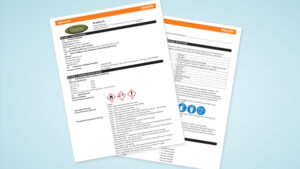
Have Questions about SDSs? Our Sample SDS in the GHS Format is a Great Place to Start!
According to OSHA, over 43 million workers in the United States are exposed to hazardous chemicals in the workplace each year. Employers are responsible for providing these workers with barrier-free access to safety data sheets (SDS) — in their work areas, during their work hours — for every hazardous chemical kept on-site. OSHA’s alignment of […]

The New EPA Final Rule on Refrigerant Management: How Does it Affect You?
EPA recently issued a final rule that updates refrigerant management requirements under Section 608 of the Clean Air Act. The rule, which was published in the Federal Register on November 18, 2016 and is now in effect as of January 1, 2017, extends existing requirements and sales restrictions for ozone depleting refrigerants to certain substitutes, […]
Engaging Your Engineers in Ergonomics: A Tough Nut to Crack
Ergonomics is an engineering discipline. The National Institute for Occupational Safety and Health (NIOSH) defines it as “…fitting workplace conditions and job demands to the capabilities of the working population.” Safety professionals apply ergonomics to, among other things, reduce exposure to the risk factors known to cause musculoskeletal disorders (MSDs). Research has proven that sound […]

Four Key Features of an Office Chair
If your coworkers rush to work each morning to snag the highly coveted office chair, it may be time to go shopping so that there are a few more chairs like it to pick from. Chances are the “favorite chair” isn’t the most-liked because it’s expensive, it’s because it’s adjustable! Here are some must-have features […]