











Environmental Compliance
139 results
A Look at the European Financial Reporting Advisory Group (EFRAG) Proposed ESG Disclosure Rules
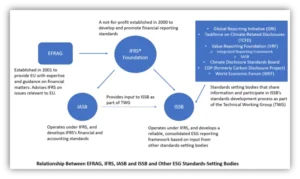
It’s been a busy year already for proposed Environmental, Social and Governance (ESG) reporting standards. The European Financial Reporting Advisory Group (EFRAG) has recently published a number of draft standards which would require tens of thousands of European companies not currently required to submit ESG disclosures to begin reporting on various aspects of sustainability. These […]

An Overview Of Iso 14001 Ebook
Wondering how ISO 14001 can help improve ESG and environmental management? This new guide has the information you need.
Naem Environmental Risk Auditing Report
This complimentary NAEM report, sponsored by VelocityEHS, takes an in-depth look at the strategies and methods that industry-leading companies are using to proactively audit their environmental risks. The analysis offers readers a benchmark to evaluate their own audit processes, along with best practices you can use to help develop and refine your own programs to more effectively […]

Hazardous Waste Lifecycle Guide
Whether you’re new to hazardous waste management or just looking for a quick overview of RCRA hazardous waste management requirements, our helpful guide covers the basics to help you get a handle on compliance.
Ergonomics Conference Session Re-Cap: How Machine Learning is Advancing Ergonomics Effectiveness
The March 2, 2022 VelocityEHS Ergonomics Conference featured a ‘dream-team’ of our very own ergonomics, industrial hygiene and EHS technology experts alongside leading ergonomics process owners from Cummins, W.L. Gore, Lear, and Southwire, who led conference attendees through a full day of sessions covering cutting edge topics in the field of ergonomics. During one of […]
ISSB’s Consolidation of ESG Reporting Frameworks: What You Need to Know
The International Sustainability Standards Board (ISSB), created in late 2021 to improve the global consistency of ESG reporting, has published its first two draft standards for public comment. One standard lays out a framework for general sustainability-related disclosures, while the other standard specifically addresses climate-related disclosures. Both standards are sure to attract a great deal […]

New Webinar On-Demand: Hazardous Waste Management for Small Quantity Generators
Many small businesses generate hazardous waste and must comply with federal hazardous waste management regulations. As a small business how are you supposed to know what hazardous waste you are producing and how are you supposed to manage it? Recently, Brad Micheel, P.E., Senior Solution Strategist, Environmental for VelocityEHS hosted a live webinar where he […]
Introduction to Hazardous Waste Management, Part Four: Generator Pre-Transport and Manifest Requirements
Welcome to Part Four of our ongoing series, “Introduction to Hazardous Waste Management.” In case you missed the previous installments, check out Part One to find out how to determine if your waste is hazardous, Part Two for a primer on how to determine your generator status and associated compliance obligations, and Part Three for an overview of managing […]

VelocityEHS & Urjanet Integration Automates Utility Data Analysis for More Efficient ESG Reporting
When it comes to Environmental, Social, and Governance (ESG) reporting, utility data is one of the most crucial and basic sources of information for evaluating your company’s GHG emissions, carbon footprint and other climate impacts—impacts that are essential indicators of overall ESG performance. With clear and increasing demand from investors, customers, workers and other stakeholders […]
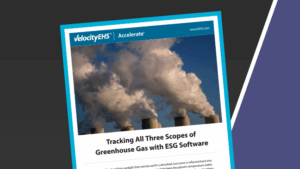
New Guide — Greenhouse Gas (GHG) Management of All Three Scopes with ESG Software
Let’s start with some facts about GHGs: GHGs continue to increase, and as they do, the earth’s temperature is rising contributing to melting of artic ice, rising sea levels, and changes in weather patterns, which can increase potential for extreme weather events such as hurricanes. As a result, both voluntary and mandatory reporting frameworks have […]