










Chemical Management
534 results

Management of Change: It’s About More Than Just Compliance…It’s About Best Practice
For many safety professionals, Management of Change (MOC) tends to conjure up thoughts of OSHA’s Process Safety Management (PSM) Standard, EPA’s Risk Management Plan (RMP) Rule, or other complex regulations intended to help prevent major accidents or environmental releases involving hazardous chemicals. While certainly required by numerous safety and environmental regulations, the value of MOC […]

Management of Change (MOC): Strategies for Compliance
For operations involving hazardous processes, change management can be a matter of life and death. Operational failures resulting from insufficiently planned changes can cause catastrophic events such as explosions or chemical releases that endanger human lives, and the environment. That is why OSHA developed the Process Safety Management (PSM) of Highly Hazardous Chemicals Standard, which […]

Health Canada Establishes New Policy for Submission of CBI Claims
On November 17, Health Canada published its Policy on Managing Incomplete Claims for Exemption Filed under the Hazardous Materials Information Review Act (HMIRA). The new policy is intended to prevent confidential business information (CBI) claims from being held up in the review process due to missing or incomplete claim information. Upon formal notice of incomplete […]

Make the Most of Your EHS Budget Before the End of the Year
As the year winds down, now is a good time to review your current EHS programs and identify gaps that software can help fix. If you have remaining funds in your 2017 budget, there’s still time to “use it before you lose it,” and risk lower future budgets. You might also be able to tap […]
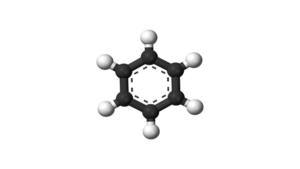
Chemical Spotlight: Benzene Hazards & Safety Tips in the Wake of Hurricanes Harvey, Irma , Maria and Other Heavy Storms
Record flooding in Texas, Florida and Puerto Rico, following Hurricanes Harvey, Irma and Maria, has caused a slew of secondary health and safety hazards. Among these issues is the high risk of exposure to hazardous chemicals in contaminated flood waters, including lead, arsenic, benzene, sulfur dioxide and nitrogen oxide. With damage to chemical manufacturing facilities, […]

“But What If I Don’t Have Ergonomics Injuries?” The True Cost of Inaction
October is National Ergonomics Month, and it’s the perfect time for employers everywhere to take a step back and revisit their ergonomic programs, especially in workplaces where ergonomic risks might not be so easy to see. You may think you don’t have to worry about workplace ergonomics because you’re not seeing the immediate costs and […]

October is Global Ergonomics Month!
In an effort to generate greater awareness and prevention of workplace musculoskeletal disorders (MSDs) and other ergonomics-related injuries and illnesses, the Human Factors and Ergonomics Society (HFES) along with occupational safety and health organizations around the world are celebrating October as Global Ergonomics Month. The Workers Health & Safety Centre of Ontario (WHSC) estimates the total […]
OSHA’s Top 10 Most Cited Violations of 2017
OSHA just named the Top 10 most cited violations of 2017 at the annual National Safety Council (NSC) Congress and Expo. For those involved in chemical management, it comes as no surprise that Hazard Communication continues to maintain the No. 2 spot on the list, as questions and confusion resulting from the adoption of GHS and […]

Chemical Hazards in the Wake of Hurricane Harvey
Unprecedented flooding in the Corpus Christi and Houston/Galveston Bay areas caused by Hurricane Harvey has left businesses, residents and first responders in one of the nation’s largest petroleum and chemical processing regions with more to worry about than rising waters. Secondary effects of the flooding have created high risk of exposure to hazardous chemicals in […]
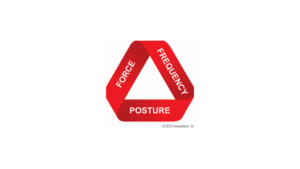
Risk Factors for MSDs: Focus on the Root Causes
Workplace assessments are one of the key steps to improving ergonomics, especially when the goal is to prevent musculoskeletal disorders (MSDs). However, it is our experience that many organizations assess for conditions which are not linked to causing MSDs. For an effective assessment of exposure to MSD risk factors, the bottom line is a need to […]