









Chemical Management
534 results
Why Machine-Interface Compatibility Matters
The engineering control “eliminate” is the most effective solution to reduce work-related musculoskeletal disorders (MSDs). When an operator is exposed to an extreme MSD risk factor, the most effective solution may be to automate or semi-automate the task – especially if that task involves high force and/or high repetition. As task automation and semi-automation increase […]

New OSHA Regulatory Initiatives Highlight Importance of Proactive Workplace Safety Management
If you’re like many EHS professionals, you’re already stretched pretty thin. Adding to the challenge is that 2021 has gotten off to a rapid start when it comes to EHS regulatory updates and enforcement priorities. Whether it’s OSHA’s proposed updates the HazCom Standard or the Biden Administration’s Executive Order (EO) on COVID safety and revised OSHA COVID-19 […]

VelocityEHS Launches New Industrial Hygiene Program Management Instructional Series
VelocityEHS is excited to announce the launch of our all-new EHS Blog series “IH 101: Introduction to Industrial Hygiene Program Management.” IH 101 is our comprehensive, seven-part study in industrial hygiene program management created and presented by our very own IH expert Dave Risi CIH, CSP and Principal Solution Strategist for Industrial Hygiene Solutions at […]

Employers & Employees Benefit from Home Office Ergonomics
Since working from home has become the modern way of business, we’re doing more office consults with customers who’d previously disregarded home-office ergonomics, with the hope that we’d return to our offices sooner rather than later. At this point in the game, even with the rapid development of vaccines, it’s likely that we’ll return to […]

US Department of Labor, OSHA Publishes Proposed Rule to Align HazCom Standard with GHS Revision 7
Earlier today, OSHA announced it has published a long-awaited proposed rule that will update its Hazard Communication Standard (HazCom) to align with Revision 7 of the UN’s Globally Harmonized System of Classification and Labeling of Chemicals (GHS). OSHA had indicated as early as Spring 2018 that updates to the HazCom Standard were a top regulatory […]

Executive Orders Announce Changes to COVID-19 Safety Priorities in US Workplaces
President Biden recently issued executive orders (EOs) directed at public and workplace safety, including a mandate for OSHA to assess the need for an emergency COVID-19 standard and potentially fast-track development of the standard in the coming weeks and months. Let’s take a closer look at the background of the new EOs, the changes we […]

Australia Begins Transition to GHS Revision 7 – Part 1
On January 1, 2021, Australia began a 2-year transition of its hazard communication regulations to align with Revision 7 of the UN’s Globally Harmonized System of Classification and Labelling (GHS). The transition, which will finish on December 30, 2022, brings a number of changes to the classification of chemical product hazards and the information that must […]

GHS/HazCom: Preparing for Upcoming Changes
Since OSHA completed its initial alignment of the Hazard Communication Standard (HazCom) with the UN’s Globally Harmonized System of Classification and Labelling of Chemicals (GHS) in 2016, the Agency has repeatedly expressed an interest in making further updates to the Standard to align it with a more recent revision of GHS. According to the OSHA’s […]

Ergonomics Truths and Myths – What You Need to Know
Over the years, I have consulted with many EHS professionals about the best way to implement and sustain a corporate-wide ergonomics program. One thing is clear: even though each program and approach has been different, most companies share the common goal of reducing musculoskeletal disorders (MSDs) in the workplace. The value of ergonomics is often […]
Polling Results: How has the pandemic affected workplace ergonomics?
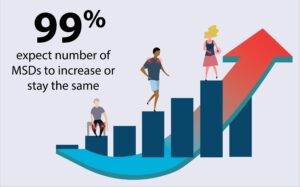
Since COVID-19, workplaces have changed enough to trigger an increase in musculoskeletal disorders at organizations that are not proactive with ergonomics. Here’s a summary of polling results from health and safety professionals who attended The VelocityEHS Short Conference in May and our MSD Tsunami webinar in December. Industrial Workplace Results • 60% of respondents said […]