



Pharmaceutical
47 results

Everyday Industrial Hygiene – Audio Edition
by Naomi German, Associate Industrial Hygiene Consultant I went on vacation to Fiji recently, and, during my stay, I met a lovely elderly couple named Toby and Ed, ages 80 and 83 respectively, both of whom wore hearing aids. During the group snorkeling adventures, my partner and I would stifle a laugh as Ed removed […]

Industrial Hygiene: The Next Generation
by Naomi German As a recent college graduate from Purdue University with a Bachelor’s in Industrial Hygiene, I often get the question at the Thanksgiving table, “So…what is industrial hygiene? Why did you choose it as a career? What do you actually do?” And then there’s the “Is it like a dental hygienist?” (If you’ve […]


DePuy Synthes
How DePuy Synthes Saved Costs and Increased Efficiency in Their Contractor Management Process
Cardinal Health
Cardinal Health Avoids $1 Million in Workers’ Compensation Costs with Ergonomics Headquartered in Dublin, Ohio, Cardinal Health, Inc. is a global, integrated healthcare services and products company, providing customized solutions for hospitals, health systems, pharmacies, ambulatory surgery centers, clinical laboratories, and physician offices worldwide. In 2012, ergonomics became one of Cardinal Health’s priorities when 50 […]
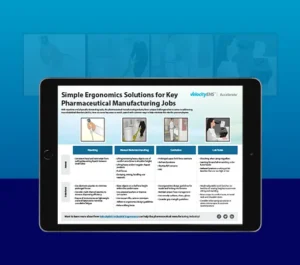
Simple Ergonomics Solutions For Key Pharmaceutical Manufacturing Jobs
Download the infographic to learn how to lower the risk of MSDs for pharmaceutical manufacturing workers.
What Is USP <800>?
Is your healthcare facility in compliance with USP <800>? Download our complimentary guide to learn more!

Ergonomics in the Pharmaceutical Industry
The pharmaceutical manufacturing industry is a unique environment in a number of ways, but especially when it comes to ergonomics and musculoskeletal disorder (MSD) risk. There are the typical manual material handling (MMH) tasks like lifting and moving product in a warehouse, but many injuries in this industry are actually from lab tasks. And while […]
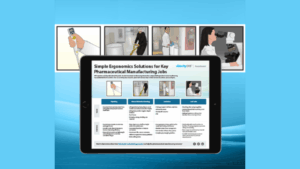
New Ergonomics Infographics for Pharmaceutical Manufacturing and Food & Beverage Industries
Many jobs in the pharmaceutical manufacturing and food & beverage industries are taxing on the body. With repetitive motions and long periods of time spent working in awkward positions, employees in these industries are at a high risk for developing musculoskeletal disorders (MSDs). Good thing we’ve got you covered. Here are 2 new infographics that break down the positions with the highest MSD risk in the pharmaceutical manufacturing and food […]

What is HAZOP?
HAZOP is another one of those environmental, health and safety terms that sounds like a big, scary deal. But like the EHS umbrella it falls under, risk management, HAZOP is simple to understand when you break it down. HAZOP is a type of risk analysis, and stands for Hazard and Operability study. “Study,” in this sense, means a structured examination of processes (existing or planned) to identify […]