








Chemicals
368 results
4 Steps to Creating an Effective Ergonomics Design Process
By: Rachel Zoky, CPE For a company to receive all of the benefits of an ergonomics program, they must not only address the existing equipment and work tasks but also integrate the risk evaluations into their new designs. What good is it to fix a risk factor within a current program, if the next version […]

Staying Ahead of Compliance: Integrating Trending Requirements into Your EHS Audit Program (Session ReCap)
VelocityEHS and STP ComplianceEHS recently teamed up to host a webinar offering EHS professionals with audit program best practices and updates on the most relevant regulatory changes affecting employers in the US and Canada. Below is a summary of key points from the session “Staying Ahead of Compliance: Integrating Trending Requirements into Your EHS Audit […]

EHS Pros are Asking About Machine Learning. Here’s the Scoop
By Phil Molé, MPH Welcome to the second blog in our ongoing series on AI and EHS! In our first post, we’d provided a general overview of the topic to introduce it to EHS pros curious to learn more about the ways AI can support their life’s work of keeping people safe. In this latest […]

AI for Workplace Safety: An Introduction
By Phil Molé, MPH We talk with a lot of EHS professionals, and we hear a wide range of opinions about artificial intelligence (AI). Many of them say they hear a lot about AI, but don’t know what to make of it. Some have told us they want to learn more about AI and its […]

Safe Can’t Wait. Neither Can AI
By Phil Molé, MPH EHS professionals can’t afford to ignore artificial intelligence (AI). Ask any EHS leader why they do what they do, and the answer is simple: it’s about getting people home safely at the end of every day. That’s not just a job description—it’s a calling. DOWNLOAD OUR NEW WHITE PAPER: “Why EHS […]
How Porter Logistics Scaled Safely and Smartly with VelocityEHS
By Phil Molé, MPH As supply chains grow more complex and regulatory expectations rise, third-party logistics providers are under increasing pressure to stay efficient, compliant, and responsive. For Porter Logistics, a fast-growing 3PL based in Atlanta, that challenge became very real as their footprint expanded to over 750,000 square feet and tens of thousands of […]
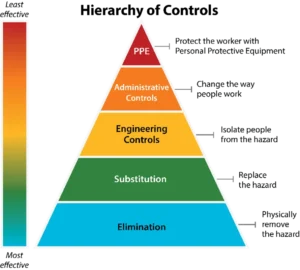
Job Safety Analysis (JSA): The Essential Occupational Health and Safety Management Tool
At the heart of every occupational health and safety (OH&S) regulation and management system standard is the goal of identifying and controlling workplace hazards. Job Safety Analysis (JSA) is one of the most valuable and essential tools for achieving this goal, providing safety professionals with a structured approach to identifying, assessing, and controlling job hazards […]
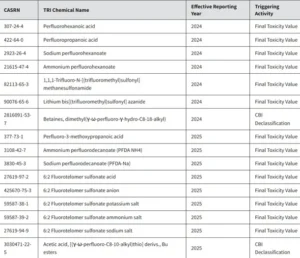
Managing PFAS: Here’s What You Need to Know
If you’ve read any newspapers or watched any news programs during the last 10 years, you’ve probably heard reports about a class of chemicals called perfluoroalkyl and polyfluoroalkyl substances, more commonly referred to as PFAS or “forever chemicals.” Managing PFAS is more important than ever. But what exactly are PFAS, why are they important, and […]

Johnson Matthey
Johnson Matthey reduced recordable ergonomic-related injuries 97% over a 5-year period with VelocityEHS Industrial Ergonomics.

Forever Chemicals, Real Consequences: What You Need To Know About Per- & Polyfluoroalkyl Substances (pfas)
Curious about ‘forever chemicals’? Download our infographic to learn more.