







Blog
402 results
Implementing Ergonomics Solutions: Gaining Employee Buy-in
The main goal of an ergonomics program is to implement engineering solutions that help fit the job to the person. In an ideal world these solutions are taken into consideration during the workstation design phase. However, this is not always the case. Many ergonomics teams find themselves assessing and modifying workstations that have already been […]
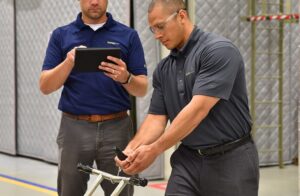
“Quantifying Forceful Exertions in Ergonomics” Webinar Summary
In our recent webinar, “Quantifying Forceful Exertions in Ergonomics,” one of our resident experts, Certified Professional Ergonomist and Principal Solutions Strategist, Rick Barker, broke down the formulas and equations that can help determine the amount of force in a movement. Force is a primary risk factor for musculoskeletal disorders in the workplace and is a […]

Ergonomics in the Pharmaceutical Industry
The pharmaceutical manufacturing industry is a unique environment in a number of ways, but especially when it comes to ergonomics and musculoskeletal disorder (MSD) risk. There are the typical manual material handling (MMH) tasks like lifting and moving product in a warehouse, but many injuries in this industry are actually from lab tasks. And while […]

How to Choose a Standing Desk
You’ve been working from your home office for a while now, and you’ve started to feel the effects on your body after roughly 2 years of sitting. You don’t walk around during the day as much, now that your parking lot is your own hallway and the coworker you need to catch up with is […]

Five Workstation Tips for the Hybrid Office Worker
As we’re all still determining the “new normal,” many workers have returned to the office in a hybrid model. Workers are opting to go into the office a few days of the week or month, while working from home the other days. Because of this arrangement, companies are replacing dedicated workstations with open desks and […]

Know Before You Go … 4 Key Measurements to Collect During an Ergonomics Assessment
When conducting an ergonomics assessment, collecting accurate and adequate data from a workstation is critical. Data collection consists of gathering measurements relating to the tasks being performed. These measurements will support in developing an effective ergonomics-driven improvement plan to reduce musculoskeletal disorder (MSD) risk. Knowing what data to collect prior to conducting your assessment can […]
Does Virtual Reality Make A Difference in Ergonomics and Safety Training?
As an ergonomist, I often get questions from site safety personnel and program managers regarding new and exciting technology coming onto the market, like exoskeletons, wearable sensors, and even virtual reality training systems. Although marketing claims from the companies producing and selling these products and programs are appealing, especially their promises to be the silver […]

The Perils of a Paper Permit to Work System
A key element of a strong risk management process is a centralized, electronic Control of Work system, and a solid Control of Work program can’t really “control” the work and ensure the safety of employees if it lacks an organized and efficient Permit to Work system. A Permit to Work system houses all the information on the types of work to be completed in […]

Key Processes Covered in “Ensuring 100% Certainty with Contractor Safety & Compliance”
Using contractors offers many benefits. You can offset labor costs, increase operational flexibility, and get quick access to highly-skilled workers, to name a few, but managing these contractors also creates challenges. It often involves extra administrative work and adds increased levels of uncertainty as to whether the people working at your site possess the training, […]

What Do Contractor Safety, Permit to Work and Control of Work Really Mean?
What is Control of Work? When contractors lack the proper qualifications, the results can be catastrophic, leading to serious accidents or fatalities. Control of Work is a system of safety management that acts as a gate for your workplace, mitigating risks by verifying the contractor’s documentation before they are allowed on-site. This proactive approach ensures […]