








Regulations & Compliance
711 results
Introduction to EHS Risks, Part One: You Don’t Need to Be Big to Benefit from Better Risk Management
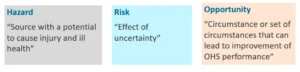
Not everyone who manages workplace risk is a professional risk manager, or needs to be one. If you’re an EHS manager at a facility of any size, you need to get a good handle on identifying and controlling all of your EHS risks. You may have trouble finding the guidance you need, especially given the […]

TWH Conference Summary: Integrating Psychosocial Risks into Safety
Psychosocial risks are organizational, management, and interpersonal aspects of the workplace that increase employee mental stress. Sources of psychosocial risks may include job content, workload, schedule, environment, interpersonal relationships at work, and the employee’s role in the organization. These risks work in tandem with environmental physical stressors of the workplace (e.g., noise); both independently and […]

The 5 Whys of Risk Analysis
What is the 5 Whys method of risk analysis? The best way to understand it might be by thinking about the famous (but true) trope of a child asking an adult “Why?” repeatedly, even after they’re given an answer. “Tie your shoes.” “Why?” “Because otherwise you’ll trip.” “Why?” “Because when shoelaces are left untied and […]
ISO 14001 Overview Pt. 1: Improving Environmental Management
More and more EHS professionals are realizing that environmental management is about more than just maintaining regulatory compliance and avoiding the unpleasantries of failure, like fines and reputational risks. Increasingly, industry leaders are finding the benefits of a robust environmental management system focused on achieving positives like resource conservation and cost savings— rather than just […]
Introduction to Hazardous Waste Part Two: Determining Your Generator Status
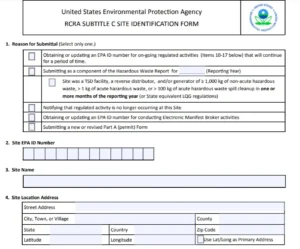
Welcome to the second installment of our ongoing blog series “Introduction to Hazardous Waste.” In this edition, we’ll cover the basics about how to determine your hazardous waste generator status, and describe the main requirements for each type of generator. If you missed the first post in this series and want to catch up on […]

Wilbur-Ellis Improves Employee Health with VelocityEHS Office Ergonomics Software
We’ve just published another new case study telling the story of how our Office Ergonomics® software has helped an organization improve the health of their employees. Wilbur-Ellis, a global leader in agriculture technology and products, worked with VelocityEHS to assess their workspaces for musculoskeletal disorder (MSD) risk and implement a participatory ergonomics program to reduce that […]
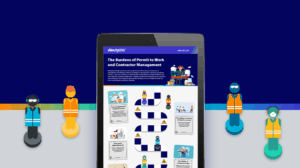
New Infographic for “The Burdens of Permit to Work and Contractor Management”
Even if you have a control of work or a permit to work system in place, having a slow or disorganized one doesn’t help you much—and it can add risk into your workplace instead of control it. With so many moving pieces in the process of hiring contractors and managing permits for contractor projects, it […]
GHS HazCom: A Webinar Spotlight on SDS Compliance
An employee works 35 years for a company operating a dip tank. He spends his days washing grease off equipment parts without protection, not knowing what types of chemicals are in the solvent he uses. After performing his job function over these 35 years, he learns his short-term memory has been heavily impacted due to […]

Implementing Ergonomics Solutions: Gaining Employee Buy-in
The main goal of an ergonomics program is to implement engineering solutions that help fit the job to the person. In an ideal world these solutions are taken into consideration during the workstation design phase. However, this is not always the case. Many ergonomics teams find themselves assessing and modifying workstations that have already been […]

Are You Ready for OSHA’s March 2 Injury Tracking Application (ITA) Deadline?
‘Tis the season for reporting deadlines, and a major approaching deadline is for employers that are subject to OSHA’s “electronic reporting rule” to complete and submit their electronic Form 300A (Summary of Work-Related Injury and Illness) data to OSHA via the Injury Tracking Application (ITA). Are you ready to report? Even more fundamentally, do you […]