


Artificial Intelligence (AI)
73 results

Why You Need More Than Just an Ergonomics App for Worker Health and Safety
There’s an app for just about everything these days—including workplace ergonomics. Ergonomics applications have become common tools for employees to take the ergonomics assessment process into their own hands and reduce musculoskeletal disorder (MSD) risk. This usually involves taking a video recording on a handheld device of an employee performing a job task, and then […]

Ergonomics Program Management: Best Practices and Strategies for Success
By Greg Duncan, MELP, ASP, Sr. EHS & ESG Content Manager Back in March, I attended the 2023 ProMat manufacturing and supply chain logistics conference in Chicago, Illinois and sat in on a session with three very accomplished ergonomics experts who provided some incredibly insightful and actionable guidance on how to improve workplace ergonomics program […]
Start an ESG Program by Stepping into It Through Ergonomics
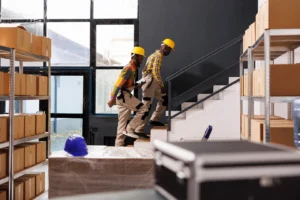
In Part 1 of this blog series, we examined how workplace safety is an ideal platform on which to build, manage, and mature an environmental, social, and governance (ESG) program. With a strong safety program, you can make ESG improvements to chemical management, incident management, and job safety analysis, all of which make significant contributions […]
The MSD Pledge: A Commitment to the Health and Wellbeing of your Workforce
Is your organization looking for a way to make meaningful improvements to workplace health and safety? Are you wondering what your organization can do to advance the maturity of your environmental, social and governance (ESG) program? Do you want to be part of a group of fellow industry leaders who are actively committed to enhancing […]

Key Takeaways from the Latest OSHA and BLS Injury and Illness Data
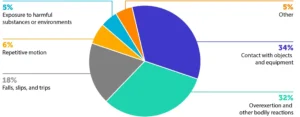
On March 31, OSHA published the latest injury and illness summary data collected from select establishments subject to electronic reporting requirements under the Recordkeeping Standard. This data for reporting year 2022 joins other data recently issued by the Department of Labor, including Bureau of Labor Statistics (BLS) data for 2021 released in late 2022, as […]
Using AI to Assess Risk and Solve Problems in Manufacturing – On-Demand Webinar Q&A
Our recent ergonomics webinar, Using AI to Assess Risk and Solve Problems in Manufacturing, presented by VelocityEHS board-certified ergonomists Rick Barker and Blake McGowan, discussed the seismic transition in the manufacturing industry from Industry 4.0 (technology-driven) to Industry 5.0, which is focused on value-driven technology. The technology that will be valuable in Industry 5.0 […]
Motion Capture Technology Makes Ergonomics Assessments Simple
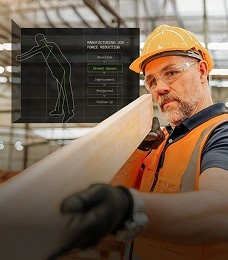
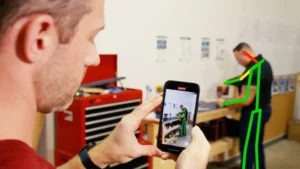
Motion capture software can sound like a complex thing to use and understand, but it can actually be quite simple. In this post, we’ll walk you through taking a video of a job task to upload into VelocityEHS Industrial Ergonomics software, which utilizes machine learning and sensorless motion capture technology. This is an easy and […]
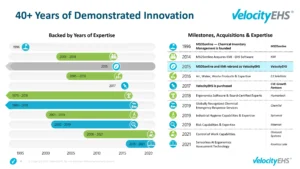
ActiveEHS® Tech Conference Summary: Future of Technology – The VelocityEHS Vision
In case you missed it, last week’s VelocityEHS ActiveEHS® Technology Conference featured a series of cutting-edge educational sessions led by our very own EHS & ESG experts alongside EHS & ESG leaders from Sims Lifecycle Services and Praedicat who convened to discuss some of the most innovative technologies shaping EHS & ESG today. The conference […]
A Summary: Future of Machine Learning in EHS & ESG
The ActiveEHS® Tech Conference recently held by VelocityEHS covered an array of topics, focusing on technology and how it can improve the ever-changing world of EHS & Environmental, Social, and Governance (ESG). During this event, the final session covered: The Future of Machine Learning in EHS & ESG. What is machine learning? Machine learning (ML) […]
Applying Artificial Intelligence and Machine Learning for More Effective MSD Risk Assessment and Reduction
Like many other EHS management processes, your ergonomics process should be built around three fundamental elements: identifying and assessing the risks to your people and workplace (in this case, musculoskeletal disorders [MSDs] and other ergonomics-related injuries), selecting and implementing the ideal controls and improvements to minimize those risks, and monitoring and refining the effectiveness of […]