







Artificial Intelligence (AI)
73 results
The Vital Elements of Design Ergonomics
Design ergonomics, or product ergonomics, refers to the application of ergonomics principles from the initial stages of product development. The main goal of design ergonomics is to develop end products that are intuitive, safe, efficient, and comfortable for users— whether that end product is a cellphone, tv remote, machine control panel or equipment like lift […]

VelocityEHS User Conference 2024 Digest – Risk Management: Align Tactics to Each Point Along the Maturity Curve
In the evolving world of risk management, understanding where your organization stands on the maturity curve is crucial for advancing your safety systems. At this year’s VelocityEHS User Conference, Jeff Sanford, Senior Global Enterprise Account Executive at VelocityEHS, moderated a panel discussion during, “Risk Management: Align Tactics to Each Point Along the Maturity Curve.” Featuring […]
Golf Cart Interviews: Where Golf and Ergonomics Meet
Author: Jennifer Sinkwitts, Sr. Director of Communications This week, Patrick Flavin, a VelocityEHS-sponsored professional golfer, and Velocity’s Jeff Sanford, a board-certified professional ergonomist, sat down to answer the question, “Does professional golf have anything in common with ergonomics?” Patrick and Jeff agreed, “It certainly does!” The pair met up at the Ambassador Golf Course in […]
Sustaining Your Ergonomics Process: What to Do AFTER Implementing Your Ergonomics Design Solutions
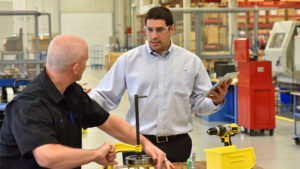
After going through all the work of assessing your workspaces for musculoskeletal disorder (MSD) risk, gathering the data and discussing possible positive changes to make, you’ve completed the initial steps of implementing an effective ergonomic process within your organization. GREAT! You and your team have selected a robust ergonomics software system that allows you […]
Regulatory Alert: OSHA Publishes Final Rule Revising the HazCom Standard
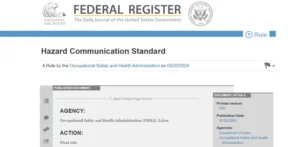
By Phil Molé, MPH It’s finally happened! OSHA has published its long-awaited final rule updating requirements in its Hazard Communication (HazCom) Standard. The publication of the final rule ends months of waiting and uncertainty by manufacturers and users of hazardous chemicals and aligns HazCom with updated versions of the UN’s Globally Harmonized System of Classification […]

New Case Study—Carhartt: Reduced OSHA Recordables by over 50% through Ergonomics & Engagement
Carhartt successfully reduced its OSHA recordables by over 50% through implementing an ergonomics program. Recognizing the importance of proactive safety measures, Carhartt’s U.S. Safety Manager, Scott Harper, and Safety Specialist, Ashley Arvin, spearheaded efforts to reduce musculoskeletal disorders (MSDs) resulting from poor postures, high forces, and repetitive movements in their stitching, sewing, and finishing manufacturing […]

Building Your JSA Team
EHS professionals know that completing comprehensive job safety analyses (JSAs) is vital to the safety of the workplace, but an important factor in the effectiveness of JSAs that often goes overlooked is making sure you have the right team of people working together to complete them. Yes, you need a team of people to complete […]

Thinking About Safety Management Software? Think About JSA Software, Too
by Phil Molé, MPH EHS professionals are always seeking out ways to improve their workplace safety management programs, and implementing a safety management software system represents a major milestone along that journey. Good safety software simplifies key tasks such as safety data sheet (SDS) management, completion and tracking of inspections, incident investigations, training, and management […]

Why You Need More Than Just RULA and REBA in Ergonomics Assessments
Since the 1990s, the field of ergonomics has experienced a remarkable evolution in assessing musculoskeletal disorder (MSD) risk using simple, paper-based assessment tools and helping organizations reduce MSDs in the workplace. For example, the Rapid Upper Limb Assessment (RULA) and Rapid Entire Body Assessment (REBA) have long been considered easy-to-use assessment tools. They’re simple and […]
How VelocityEHS and Fit For Work Are Revolutionizing Workplace Safety
Combining User-Friendly Tech with a Human Approach Liberty Mutual started publishing the Workplace Safety Index in 2000. This survey of workplace injuries has consistently identified overexertion as the leading cause of injury across all industry types. Overexertion injuries result from activities such as lifting, pushing, pulling, carrying, or throwing items. Awkward working postures, such as […]