




aiha connect 2026
Visit us june 1-3 at Booth 1119.
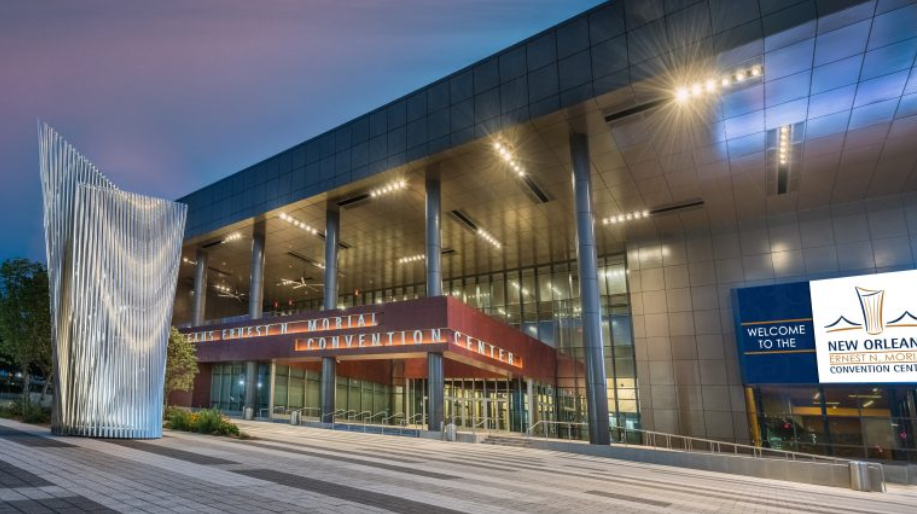
New Orleans, LA
2026 Top Read: Leveraging AI in EHS to Move Beyond Regulatory Compliance
Get the White PaperBy Product
Incident ManagementAuditsInspectionsObservationsCompliance ManagementAction ManagementSafety MeetingsTraining & LearningBY FEATURE
PSIF insights & Description Analyzer

Hazard Analyzer

Root Cause Identifier

Corrective Action Advisor
Resource Center
Explore the latest blogs, industry news, informative guides, and VelocityEHS updates.
Success Stories
See how customers use VelocityEHS software to solve their toughest EHS challenges.
Events & Webinars
Explore upcoming webinars, conferences, industry events, and more.
Hazcom & GHS Resource Center
View the hub for the latest updates about HazCom and GHS.
Join us for a deep dive into OSHA’s 2024 update to the Hazard Communication (HazCom) Standard and what it means for your organization. With the rule now in effect and key compliance deadlines approaching—May 19, 2026 for manufacturers and November 20, 2026 for downstream users—the clock is ticking across the entire chemical supply chain.
In this session, VelocityEHS subject matter expert Lauren Prost breaks down the regulatory background behind HazCom 2024, the alignment with GHS Revision 7 (and elements of Revision 8), and the specific classification, labeling, and Safety Data Sheet (SDS) changes you need to act on. We’ll also cover practical steps to prepare your program and how chemical management software can simplify and strengthen your compliance strategy.
Learning Objectives:
An Interactive Series for the Curious, the Skeptical, and Everyone In Between
AI is everywhere—but what does it actually mean for your work, your industry, and your day-to-day decisions as an EHS professional? This interactive forum is built to bring EHS pros like you together monthly to learn more about the relevance of AI, and why you can’t afford to ignore it. Each session will be hosted by industry-experts who will help drive conversation focused on different AI-related topics.
What You’ll Get:
Who Should Join?
No matter your role or experience level, this forum is designed to make space for open questions, live discussions, and honest takes on what AI can (and can’t) do.
Bring your questions. Let’s figure it out together.
Individual session topics will be announced via email beforehand. Space is limited—register today!
New Orleans, LA
EHS Software Empowering You to Act Faster.
Join us June 1 – 3, 2026 in New Orleans | Booth 1119
Learn how to build stronger, proactive safety programs and drive IH program performance. Stay up to speed with chemical hazards and discover how to turn ergonomics insights into action.
Event sessions

 Ai & safety: predict, prevent, protect
Date and Time: Monday, June 1 from 10:00AM-10:25AM
Speakers: Rick Barker, CSP, CPE, Head of Product, Ergonomics, Industrial Hygiene & Chemical Management, & Brian Larsen, Principal Solutions Consultant
Session Description: Serious injuries and fatalities remain difficult to predict despite strong safety efforts. This session explores how AI improves visibility by identifying potential SIFs, hidden hazards, and risk patterns. It also enhances Job Safety Analyses by strengthening hazard recognition and controls, helping organizations proactively reduce risk and better protect their workforce.
Elevating Well-Being in the Future of WorkDate and Time: Monday, June 1 from 2:00PM-3:00PM
Speaker: Rick Barker, CSP, CPE, Head of Product, Ergonomics, Industrial Hygiene & Chemical Management
Session Description: This presentation explores the intersection of Total Worker Health® (TWH) and psychosocial safety-two complementary approaches to advancing worker well-being. Drawing on NIOSH guidance, ISO 45003, and real-world case studies, it highlights how psychosocial risks such as high job demands, low autonomy, poor social support, and fatigue affect both physical and mental health outcomes, including musculoskeletal disorders. Participants will gain practical strategies for embedding psychosocial safety into safety management systems, strengthening leadership commitment, and enhancing worker engagement. Attendees will leave with actionable tools to build healthier, more resilient workplaces.
 How Ergonomics-Related Injuries Impact Your Corporate Financial Statements
Date and Time: Tuesday, June 2 from 2:00PM-3:00PM
Speaker: Blake McGowan, CPE, Head of Product Marketing, Ergonomics
Session Description: This session quantifies the financial impact of ergonomics-related injuries such as musculoskeletal disorders [MSDs) within the workplace. It links these injuries to specific line items across an organization’s financial statements, including, income statement, balance sheet, and cash flow statements, revealing detrimental effects on cost of goods sold, operating margins, productivity, and equity. It will demonstrate how proactive ergonomics programs significantly reduce injuries and associated costs while improving productivity and financial performance. Recommendations are provided to help IH professionals communicate these insights effectively to business stakeholders and financial shareholders.

Venue information
900 Convention Center Blvd
New Orleans, LA 70130
Change is everywhere in your operation: new processes, shifting teams, evolving regulations. But every change introduces risk. Without a strong Management of Change (MOC) process, those risks remain hidden.
For EHS and operations leaders working within ISO 45001, whether you’re certified, pursuing certification, or using the framework to guide your safety management system, MOC is more than a requirement. It’s how you maintain control when everything else is moving.
ISO 45001 makes this clear: organizations must establish processes to manage both temporary and permanent changes that impact health and safety. However, change is still too often treated as routine—pushed through quickly, inconsistently reviewed, or disconnected from broader risk management efforts.
That’s where gaps form, and those gaps matter. Investigations into major incidents repeatedly point to breakdowns in MOC as a contributing factor, especially when risk assessments aren’t fully integrated into the change process. Even short-term or “temporary” changes can lead to lasting consequences if risks aren’t properly identified and controlled. This webinar explores how to close those gaps by building a more robust, connected approach to MOC that supports both compliance and performance.
You’ll learn how to:
Because the goal isn’t to slow change down; it’s to make sure every change moves you forward. Safely, confidently, and with purpose.
BONUS: This webinar is CEU-eligible. Attendees will receive a certificate of completion for attending the entire 60-minute session, which they can submit to professional associations for credit, including BCPE, BCSP, ABIH, and others.
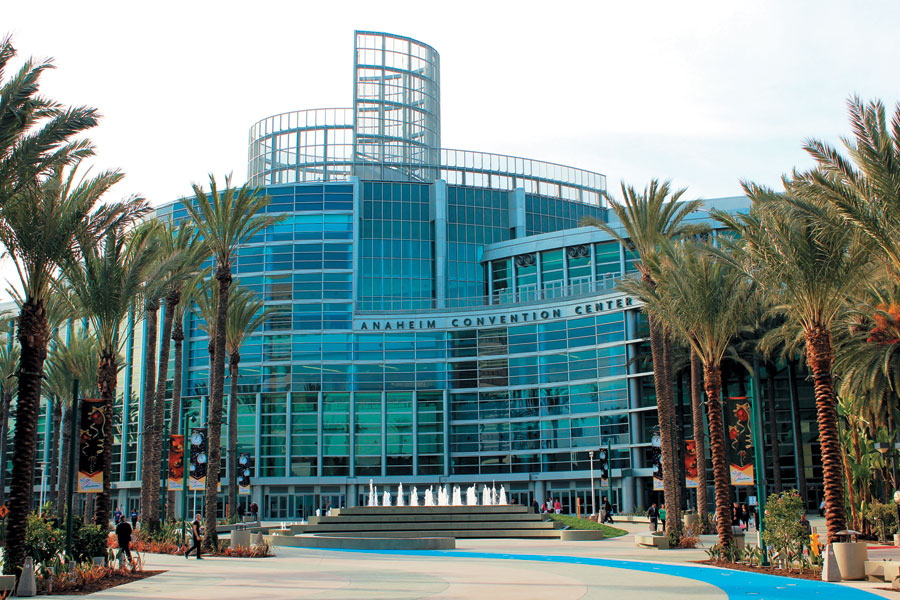
Anaheim, CA
ehs software that moves as fast as you do.
Join us June 15 – 17, 2026 at the Anaheim Convention Center|Booth 5725.
See powerful EHS software up close, easy enough for anyone to use. Discover how advanced AI turns early signals into faster decisions. Find out how one platform connects critical capabilities. And see how a single system offers integrated intelligence built for speed and clarity.
Event sessions
 The Power of Advanced Dashboards
Date and Time: Monday, June 15 at 12:30 PM in Booth 5725
Speaker: Julia Wong, Senior Director, Head of Product
Session Description: Advanced Dashboards provide real time visibility into risk activities and trends across risk programs. In this session, we’ll learn how to track control effectiveness, measure performance across sites and regions, and use data driven insights to reduce risk and improve operational consistency.
 EHS In Transition: 2026 Benchmark Insights
Date and Time: Monday, June 15 at 3:30 PM in Booth 5725
Speaker: Marc Juaire, Senior Director, Head of Product, Safety
Session Description: Explore key findings from the all-new 2026 EHS 360 Benchmark Report based on insights from more than 1,000 EHS professionals and aggregated data from more than 15,000 customers and 10 million global users. This session examines the realities shaping EHS today, from resource constraints and evolving technology ecosystems to growing expectations for strategic impact. Walk away with a clearer understanding of the trends, challenges, and investment priorities defining the future of EHS.
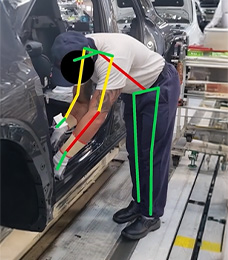
Stop Reacting. Start Preventing: AI for Incidents and Job Safety AnalysisDate and Time: Tuesday, June 16 at 9:30 AM in Booth 5725
Speaker: Marc Juaire, Senior Director, Head of Product, Safety
Session Description: Most safety programs separate incident investigations from proactive risk assessments – missing opportunities to prevent what’s next. In this session, you’ll see how AI enhances both Incident Management and Job Safety Analysis by accelerating investigations, identifying high-risk scenarios and improving hazard and control selection. Walk away with a practical approach to connecting reactive and proactive safety into a single, prevention-driven strategy.
In Your Hands: Expanding Safety Access with MobileDate and Time: Tuesday, June 16 at 11:30 AM in Booth 5725
Speaker: Julia Wong, Senior Director, Head of Product
Session Description: Safety happens in the field, not behind a desk. This session explores how mobile access, QR Code reporting, and Mobile Risk Verification empower workers to report hazards, verify controls, and complete risk activities from anywhere, even offline. Learn how improving accessibility drives faster reporting, more accurate data, stronger workforce participation, and quicker response to risk in real time.
AI Hands and Wrists Asssessment: Turn Ergonomic Insights Into ActionDate and Time: Tuesday, June 16 at 2:30 PM in Booth 5725
Speaker: Rick Barker, CSP, CPE, Head of Product, Ergonomics, Industrial Hygiene & Chemical Management
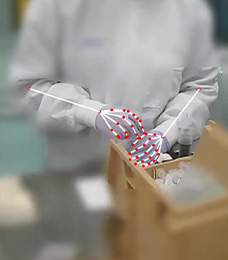
Session Description: Learn how our one-of-a kind AI-powered Hands & Wrist assessments can help organizations identify injury risks, improve ergonomics programs, and drive measurable business impact. This session explores how ergonomic insights can support proactive prevention, operational efficiency, and stronger safety outcomes. Attendees will gain practical strategies for turning assessment data into meaningful action.
Driving Safety Culture with ISO 45001: Leadership, Engagement, and ResultsDate and Time: Tuesday, June 16 at 4:15 PM in Ballroom A
Speaker: Marc Juaire, Senior Director, Head of Product, Safety
Session Description: Safety leaders today face increasing complexity; from evolving regulations to the need for stronger employee engagement and proactive risk management. This session explores how ISO 45001, the global standard for safety management systems, provides a structured, risk-based framework to help organizations move beyond compliance and build a more resilient safety culture.
Attendees will learn practical, real-world approaches to applying ISO 45001, including integrating the Plan-Do-Check-Act cycle into daily operations, improving hazard identification and risk reduction, and leveraging both leading and lagging indicators to drive performance. The session will also highlight strategies for strengthening employee involvement, addressing common challenges like incident tracking and corrective actions, and using technology to improve visibility, accountability, and overall safety outcomes.
Why SME-Validated Training WinsDate and Time: Wednesday, June 17 at 10:00 AM in Booth 5725
Speaker: Marc Juaire, Senior Director, Head of Product, Safety
Session Description: Training shouldn’t just check a compliance box – it should change behavior. In this session, we’ll explore how leading organizations are modernizing training to improve engagement, retention and real-world application. See how SME-driven content and smarter delivery methods lead to stronger safety performance.
Venue information
800 W. Katella Ave.
Anaheim, CA 92802
We’ve surveyed EHS professionals like you about AI, and the results show that EHS professionals are curious about AI, but are often not using it yet, or if they are, they’re not exploring specific use cases in EHS management. If you’re one of the many EHS pros who want to better understand how AI can support your mission to keep people safe, this is the webinar for you.
There’s never been a more urgent time. Bureau of Labor Statistics (BLS) and OSHA data in the US show that rates of severe injuries and fatalities (SIFs) have stayed flat over the last 20 years, even as rates of less serious injuries have fallen. EHS professionals are doing their best, but the injuries keep happening. The good news is that AI is part of EHS today, and it’s transforming how EHS leaders protect their people and shift to preventing injuries, rather than just documenting them.
In this webinar, Phil N. Molé, MPH, Principal of Marketing Content for VelocityEHS and a veteran EHS professional, will give you the information you need to understand why you can’t afford to ignore AI.
Register for our webinar to learn about:
June 23, 2026

EHS professionals don’t get the luxury of slowing down. You’re expected to prevent incidents, stay compliant, and make the right call fast — all while the workload keeps stacking.
Is your current approach keeping up with the risks you face?
Are you getting the insights you need to make the right calls?
Do you have the tools to distill the noise, act with intent, and be successful?
This June, VelocityEHS Demo Day gives you a front-row seat to what’s new, what’s smarter, and what actually moves the needle. You’ll see how our latest AI-driven capabilities help you cut through complexity, surface real risks, and take action without the usual delays.
In this half-day virtual event, we’ll show you how our solutions are evolving to automate more, predict more, and guide you with precision. You’ll also see how Vēlo, our AI assistant, is getting even better at delivering insights and recommendations exactly when you need them.
Experience practical innovation built for real EHS challenges, combining human expertise with AI to help you move faster, act smarter, and stay ahead.
Event sessions
 JSA Software that Makes Smarter Safety the Standard: From Local to Global
Date and Time: Tuesday, June 23, 2026 from 9:00-9:35am ET
Speaker: Josiah Allen, CPE, CSP, Senior Solution Consultant, VelocityEHS
Session Description: Managing Job Safety Analyses (JSAs) in paper forms or spreadsheets slows you down, and it opens the door to lost records, inconsistent data, and gaps in critical information.
In this session, you’ll see how VelocityAI-enhanced JSA software brings structure and clarity to the entire process, helping you to identify hazards faster and control risk confidently. Powered by Vēlo, the built-in workflow enhances job task descriptions, hazard identification, and control selection. Multi-language support further helps you localize JSAs to ensure consistent, accurate execution across teams.
The result: a more consistent JSA process, reduced manual effort, and a stronger, more effective safety program that preserves standardized risk terminology, controls, and risk understanding across sites.
 Industrial Ergonomics, AI Assessments and Beyond: Making MSD Risk Visible and Solvable
Date and Time: Tuesday, June 23, 2026 from 9:45-10:15am ET
Speaker: Jaclyn Faraci, CPE, CSP, Senior Solution Consultant, VelocityEHS
Session Description: Musculoskeletal disorders remain the leading cause of workplace injury and illness. Addressing them takes more than a one-off fix. It requires an ergonomics process that’s consistent, sustainable, and clear.
VelocityEHS Industrial Ergonomics, on the Accelerate Platform, gives teams a complete, proven system to reduce MSD risk. It brings together interactive eLearning, advanced 3D motion capture assessments powered by VelocityAI, and expert-backed risk controls, so your team can take action with confidence and show measurable results.
At the core is an enhanced risk assessment model grounded in the latest research. The 3D assessment analyzes posture in three dimensions to deliver more accurate insights, faster processing, and a fuller picture of risk for body movements. The new, first-of-its-kind AI Hands & Wrists Assessment makes this once-complex analysis easy for anyone to do, auto-identifying grip types and exposure patterns and quantifying risk in minutes.
Attend this session to see how the whole system works together for verifiable, scalable MSD risk reduction.
 Training & Learning: Expert-Built Content, Powered by AI
Date and Time: Tuesday, June 23, 2026 from 10:25-10:55am ET
Speaker: Brian Larsen, Principal Solution Consultant, VelocityEHS
Session Description: Generic training doesn’t cut it—and building your own content takes time most teams don’t have. You’re left choosing between outdated, one-size-fits-all courses or investing hours creating and maintaining training from scratch. But it doesn’t have to be that way anymore.
Join us for a live demo of the VelocityEHS Training & Learning capability within the Safety solution. See how it can help you deliver training that your workforce actually understands, applies, and retains.
You’ll also get a closer look at a course from the new library—nearly 150 courses expertly developed by our AI team and reviewed by VelocityEHS subject matter experts—designed to keep your training current, practical, and aligned with evolving risks and regulations.
 Incident Management: Faster Insights, Smarter Analysis, Better Outcomes
Date and Time: Tuesday, June 23, 2026 from 11:05-11:35am ET
Speakers: Tristan Lockard, Senior Solution Consultant, VelocityEHS
Session Description: See how the newly AI-enhanced VelocityEHS Incident Management helps safety teams complete incident reports faster and more accurately by automatically suggesting hazards, root causes, and corrective actions.
Less time on forms, more time on safety.
In this demo, we’ll show how your team can capture and manage everything from near misses to serious incidents in one mobile-friendly system—including using QR codes to make reporting faster and easier for anyone on site. With AI-powered PSIF Insights to flag high-risk events, built-in root cause analysis, and streamlined reporting workflows, you’ll gain the proactive visibility needed to prevent serious injuries, ensure compliance, and build a safer, more resilient workplace.
Chemical Management: Chemical Insights at the Speed of NowDate and Time: Tuesday, June 23, 2026 from 11:45am-12:15pm ET
Speaker: Brian Larsen, Principal Solution Consultant, VelocityEHS
Session Description: As GHS protocols evolve, chemical management requirements keep shifting worldwide. In May 2024, OSHA’s adoption of GHS Revision 7 into HazCom raised the bar for compliance across U.S. manufacturers and downstream users.
That’s where the VelocityEHS Chemical Management solution, built on the Accelerate® Platform, keeps you ahead of the curve. From SDS and inventory management to container labeling and regulatory reporting, Chemical Management cuts through complexity. Features like ingredient indexing, chemical risk assessments, Levels of Concern (LoC) summaries, and the PFAS Indicator turn raw data into instant insight, simplifying compliance, reducing risk, and freeing up your team’s time.
Chemical insights at the speed of now. Protect people. Stay compliant. Outpace risk.
 Contractor Safety: AI-Powered Compliance That Keeps Work Moving
Date and Time: Tuesday, June 23, 2026 from 12:25-12:55pm ET
Speaker: Jessica Gildersleeve, CSP, Solutions Consultant, VelocityEHS
Session Description: Contractor safety starts before work begins. But when contractor qualification relies on manual or paper-based processes, it becomes easy for delays, blind spots, inconsistent reviews, and compliance gaps to slow everything down.
In this session, you’ll see how VelocityEHS Contractor Safety helps organizations move beyond spreadsheets, emails, and paper-based systems by centralizing oversight, automating onboarding, and tracking contractor readiness in real time. You’ll also get a closer look at AI powered workflows for COI assessment and OSHA log review. These capabilities help reduce manual effort, improve consistency and accuracy, and accelerate approvals without cutting corners.
See how smarter contractor management can provide clearer visibility across sites, stronger compliance, more standardized contractor qualification processes, and greater control before contractors step on site.
The Ergo Cup® competition, created by the Institute of Industrial & Systems Engineers, celebrates smart, effective solutions to real ergonomics challenges. Bringing that concept in-house is a simple way to get your team involved in improving the work they do every day.
An internal “Ergo Cup”-style competition gives people a clear opportunity to share ideas, solve problems, and make meaningful changes. The result? Practical improvements that help reduce MSD risk while making work more comfortable and productive.
In this high-impact webinar, you’ll learn how leading companies are transforming ergonomics from a compliance activity into a business performance engine—driving measurable gains in productivity, quality, and engagement. Built on proven frameworks like the “Find-It / Fix-It” model, this session reveals how to activate frontline teams, surface high-value improvements, and create a repeatable pipeline of scalable wins that leadership can see, measure, and celebrate.
Attendees will learn:
From securing executive sponsorship and designing meaningful recognition, to establishing dual metrics that prove both employee impact and business value, you’ll gain a clear blueprint for building momentum and credibility across functions.
Managing contractor safety can be one of the most complex challenges for EHS professionals, especially as reliance on contractors and temporary workers continues to grow. Slow, manual administrative processes for evaluating contractor compliance and onboarding workers and uncertainty around safety training, certification, and performance contribute to significant risks for organizations.
The key to overcoming these challenges is implementing a systematic, standardized approach to contractor safety management that is supported by the right tools and technologies. In this session, we’ll walk you through a proven five-step process for contractor safety that provides a clear, actionable strategy for contractor safety management framework. You’ll also learn best practices to ensure every contractor and temporary worker on site meets your organization’s safety standards and compliance requirements, and how emerging AI capabilities are driving new levels of efficiency and control over contractor safety.
What You’ll Learn:
Join us for this in-depth webinar and strengthen your contractor safety management program with practical strategies you can start using right away.
During this session, Ricardo Massola, Founder and Principal Consultant for EPIC (Ergonomics, Productivity & Innovation Consultancy), explores the application of artificial intelligence to support decision-making in ergonomics risk management under international standards, such as Mexico’s NOM-036 standard for manual materials handling. Using an AI-powered ergonomics platform, risk assessments can be automated, standardized, and aligned with regulatory requirements. The session will present methods, examples, and expected outcomes, including faster evaluations, improved consistency, and proactive risk prevention. Attendees will gain insight into how AI technologies can enhance compliance while reducing musculoskeletal disorder risks and improving workplace efficiency.
Learning Objectives: