For decades, safety performance has been measured by one simple idea: fewer incidents mean a safer workplace. Lagging metrics measuring numbers and rates of actual injuries and illnesses have become the standard, shaping how organizations evaluate risk, benchmark performance, and make decisions. Even so, serious injuries and fatalities (SIFs) continue to occur at stubbornly consistent rates.
This uncomfortable fact reveals a gap between what traditional safety metrics show, and where the most significant risks exist. This gap is forcing organizations to rethink how safety is measured and managed.
Increasingly, leading companies are shifting their focus toward Potential Serious Injuries and Fatalities (PSIFs), which are events that may not result in severe outcomes, but carry the potential to do so under slightly different circumstances. By identifying and addressing these high-risk scenarios early, organizations can move from reactive reporting to proactive prevention.
But this shift introduces a new challenge.
In Part 1 of this series, we’ll explore the core problem: why SIF rates have remained consistently high, why only a small percentage of incidents carry PSIF risks, and why those critical signals are so difficult to identify within traditional safety data.
We’ll also examine how AI is emerging as a powerful tool to help organizations surface and prioritize these hidden risks at scale.
The Problem with “Good” Safety Performance
For more than two decades, organizations have worked to drive down recordable injury rates. On paper, the progress often looks impressive. TRIR and DART rates trend downward, dashboards turn green, and safety performance appears to improve year over year.
And yet, something doesn’t add up.
Serious injuries and fatalities (SIFs) have remained stubbornly persistent. In many regions, fatality rates have plateaued, and serious injury claims are even rising despite reductions in overall incident frequency.
This disconnect reveals a critical flaw in how safety performance is traditionally measured.
Most organizations are still relying on lagging indicators that prioritize frequency over severity. Metrics like TRIR reveal how often incidents happen, but not how bad they could have been.
Near misses, in which no one was hurt this time, still have major risks behind them. And they will likely go unaddressed due to the lack of perceived urgency. One day, these risks may manifest into a more serious incident. As a result, companies can appear safe, while still being exposed to life-altering or fatal risks.
The lesson here is that “good” safety performance isn’t good enough, because it falls short on identifying and controlling risks. The risk is that thinking your management system is good enough can keep you from putting in the work to get to the next level. This is probably what business author Jim Collins had in mind when he observed that “good is the enemy of great.” In fact, “good” isn’t even in the same zip code as “great.”
Why We’re Missing the Most Important Risks
There are really three major, interconnected reasons why EHS professionals don’t succeed at identifying and controlling the most severe workplace risks.
The Problems with Heinrich’s Safety Triangle
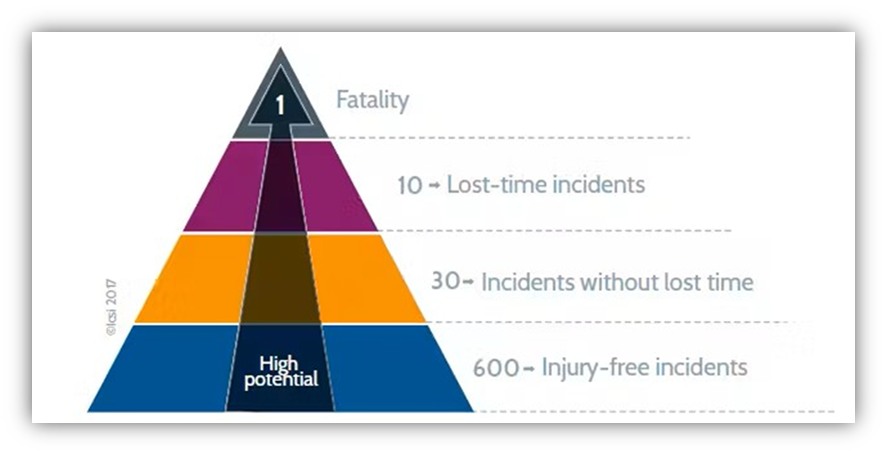
The long-standing assumption behind many safety programs is rooted in Heinrich’s Safety Triangle, shown in the image below.
The triangle posits that there is a definite proportion between the numbers of injury-free incidents, incidents without lost time, lost time or days away from work (DAFW) incidents, and fatalities. The follow-up assumption is that if you make progress preventing less serious incidents, you’ll also reduce the numbers of more serious incidents by consistent amounts.
In reality, this relationship is weak. Only about 20% (or less) of lower-severity incidents carry the potential for serious injury or fatalities (SIFs). That means the vast majority of incidents that organizations track and trend are not connected to the outcomes they care about most.
Even more importantly, the causes of SIFs are different. Serious events are typically driven by:
High-energy hazards
Weak or missing critical controls
Complex, high-risk tasks
These are not the same factors behind minor cuts, slips, or low-severity injuries. So, when organizations focus broadly on reducing all incidents, they dilute attention away from the small subset that matters most.
The result?
Plenty of activity is tied up in general injury prevention, but it has a very limited impact on preventing catastrophic outcomes.
The Reactive Safety Management Cycle
Another reason that EHS professionals don’t make enough progress reducing the most serious workplace risks is due to lack of efficient systems and tools. Simply put, it’s hard for EHS pros to get enough done. They have a lot to do, and the tools they have don’t facilitate cooperation with other team members.
Worse, the tools don’t communicate with each other. EHS professionals often have as many ways to do things as they have things to do. For example, their incident records live in a different place than their corrective actions, even when the corrective actions are associated with the incidents.
As a result, they find themselves trapped in the reactive safety management cycle, always focused on follow-up of yesterday’s incidents instead of preventing tomorrow’s incidents.
There are two consequences to this:
A Compliance-First Mindset
There are many regulatory compliance obligations in the EHS world, including widely applicable regulations, including OSHA’s Recordkeeping Standard for occupational injury and illness documentation and reporting, and the HazCom Standard for hazardous chemical management.
There are also consequences for noncompliance, such as formal violations and associated fines. For that reason, it’s understandable that EHS professionals who have a to-do list that never seems to get any shorter would focus on regulatory tasks, especially when you factor in potential pressure and prioritization from management.
Because we all want to believe we’re acting rationally and prioritizing the right things, a narrow focus on compliance tends to justify itself in our minds. In other words, it’s a short conceptual jump from focusing on compliance for pragmatic reasons to believing that compliance is all that really matters. This conclusion is abetted by the perception that regulations address all of the “important” workplace risks, and therefore, if risks are unaddressed by specific regulations, they must not be significant.
The reality is that compliance is just the baseline. While it’s true that regulations exist to address common risks associated with specific job tasks, industries or stressors, like chemicals or occupational noise exposure, regulations can never address all the specific hazards and risks that may be present across all workplaces.
What’s more, outside of North America, regulatory agencies don’t delineate all or even most workplace risks. Instead, they task employers with the primary responsibility to identify and control workplace risks based on the realization that no two workplaces are alike as prescriptive granularity can go only so far.
What this means, in a nutshell, is that a solitary focus on compliance can easily lead to overlooking major hazards and risks, which can further ensnare you in the reactive safety management cycle. Regulatory compliance is the floor for safety management, not the ceiling.
Loss of Workplace Engagement with Safety Programs
Why does a reactive safety management approach lead to loss of workplace engagement in safety? It’s not hard to understand from the perspective of an average employee in the workplace.
Your friends, your co-workers, or maybe you have been injured. But you hear the EHS Department and plant management constantly talk about the importance of safety. Occasionally, you’ve tried to bring hazards and improvement suggestions to their attention. But management seems to spend so much time responding to previous incidents that it doesn’t have time to focus on preventing new ones, which inevitably happen.
Employees caught in this cycle will likely start to feel demoralized and discouraged from trying to participate in safety because their participation doesn’t lead to progress. That’s very harmful to your entire safety program because you need the input of frontline employees who understand the risks of their jobs better than anyone else possibly can.
The PSIF Identification Challenge
Consider this a corollary and a kind of special case of the central problem in the reactive safety management cycle. If only a small fraction of incidents has PSIF potential, the obvious question becomes:
How do you find that subset of incidents so you can address the risks?
This is where many safety programs struggle, because PSIF identification requires:
Analyzing incident and near-miss data in detail
Evaluating hazard severity independent of outcome
Applying consistent criteria across teams and locations
Prioritizing high-risk events for deeper investigation
In practice, this is incredibly difficult for multiple reasons. It’s not easy to make accurate determinations about whether a specific incident involved PSIF risks, especially if it’s a less serious incident like a near miss. Accurate assessments of PSIF risks need to be based on familiarity with trends from a huge dataset of incidents, their root causes, and the severity of outcomes. And very few people either have that data at their fingertips or have the means to analyze it. In the absence of reliable objective methods, subjectivity reigns.
Even when the data exists, identifying PSIFs depends heavily on:
The quality of incident descriptions
The experience of the reviewer
Time and resource availability
Ironically, building EHS management maturity does not necessarily fix these problems, because maturity is built in part on larger, better datasets. Mature organizations, as a result, often have too much data: thousands of incident reports, near misses, and observations, but limited ability to extract meaningful patterns. On the flipside, less mature organizations may struggle with underreporting, inconsistent data quality, or lack of expertise.
In either case, organizations lack reliable ways to carve into their data and extract meaningful insights on risks, and significant risks remain hidden in plain sight.
How AI Changes the Equation
These are major problems, but they’re the kind of problems artificial intelligence is built to solve.
AI can analyze large volumes of incident and near-miss data at scale, identifying patterns and risk signals that would be much more difficult to detect manually.
For example:
AI can evaluate incident descriptions to infer hazard severity, even when outcomes are minor
AI can flag potential PSIF events automatically based on known high-risk conditions
AI can assess the strength of an incident description and offer suggestions for improvement to reduce the potential to miss key details
AI can improve root cause analysis (RCA) by finding the causes most likely to be associated with the incident description and surfacing the most relevant ones.
AI can improve the selection of corrective actions based on the improved incident description and RCA to select actions that are relevant and effective, so you can mitigate the risks involved in the incident
Let’s think about how all of this may work together by examining an example of workplace chemical exposure. Suppose that your initial incident description indicates “worker was sprayed with a chemical.” Is that a PSIF? You don’t know yet because the incident description doesn’t convey enough information. You can engage AI incident management features to assess the description and offer recommendations, and following them, you revise the description to read:
“Worker was connecting a hose to a tank, the hose ruptured, and worker was sprayed by 150°C hydrochloric acid on the face. The worker was wearing the required PPE (hardhat, face shield, goggles, chemical apron, and chemical gloves).”
Now you can engage the AI to conclude if this is a PSIF, and this time, you have enough information for it to make the call. Yes, it is a PSIF because the AI notes the extreme hazard posed by 150°C hydrochloric acid, despite the worker wearing required PPE. Based on its training on incident datasets and EHS context, the AI correctly concludes that exposure could potentially cause severe chemical burns, permanent disfigurement, or even fatal injuries if a similar incident were to occur.
This example highlights a key point: PSIF identification is not about what happened. It’s about what could have happened.
AI helps organizations make the shift toward proactive, anticipatory safety management by:
Scaling expertise across the enterprise
Reducing reliance on manual review
Enabling faster, more consistent decision-making
As you can see in this example, AI doesn’t replace human safety expertise. Itenhances it, doing the heavy lifting in data management tasks, so teams can focus on investigation, controls, and prevention.
Moving from Lagging to Leading Indicators
Many organizations associate AI with predictive analytics, but still assume it relies primarily on historical, lagging data, like recordables, lost-time incidents, and compliance metrics. Also, while EHS professionals recognize the importance of leading indicators, they often aren’t tracking leading indicators with meaningful potential to lead to major improvements in safety. Part of the reason why is because of the difficulty involved in getting and tracking the most relevant data.
The reality is thatAI can unlock the value of leading indicators by breaking down barriers to getting the data that matters most.
To understand why, we first need a better understanding of the difference between leading and lagging indicators, and the difference between effective and ineffective leading indicators on the other.
Lagging indicators tell you what has already happened. Leading indicators help you prevent what hasn’t happened yet.
It’s important to understand that not all leading indicators are equally effective though. OSHA has provided SMART principles for selecting good leading metrics, which translate to:
Specific: Does the leading indicator spell out details on the actions you’ll be taking to improve safety? Details are critical and you won’t likely be able to use leading indicators successfully without that level of specificity.
Measurable: You need to be able to measure and track your leading indicators to assess their impact.
Accountable: Think of “accountable” as a synonym for “relevant” here. In fact, think of relevance as the engine of accountability. If you don’t select leading indicators that influence safety outcomes, you’re not going to get the results you’re hoping to see.
Reasonable: Is it feasible to complete the actions your leading indicators say you’ll complete? If not, there’s no point in selecting them.
Timely: Can you measure your leading indicator often enough, with regularity, to spot important trends?
Based on these criteria, you can think about examples of leading metrics that would check all the boxes. One leading indicator would be potential for severe injury and fatality (PSIF) risks. Rates of severe injuries and fatalities have fallen only slightly in comparison to declining rates for all other injuries, which is a good indication that despite the earnest efforts of safety professionals, many significant risks go unaddressed.
Further, it can be very hard to pinpoint these PSIF risks within incident data because only 20% or less of all incidents have associated PSIF risk, and those risks often exist in the records of less severe incidents like near misses/close calls.
If you could identify and track PSIFs easily, taking subjectivity and time burdens out of the equation, you could track PSIF risk trends over time, and confirm that your safety program is identifying and controlling the most significant workplace risks. In other words, the leading indicator would be as accountable as can be, it would be timely, it would be measurable, and it would be specific. However, it would not necessarily be reasonable because in the absence of tools, it would be very difficult to assess and track PSIF risks.
That’s where AI can help. AI-supported tracking of PSIFs represents a fundamental shift in safety strategy. Instead of asking the usual questions, like:
“How many injuries did we have?” and “How much money did those injuries cost us?”
Organizations can start asking:
“Where are we exposed to serious risk and are we controlling it?” and “How many serious injury costs did we avoid by addressing risks before incidents could happen?”
This moves safety from reactive measurement to proactive risk management. The same best-in-class AI for EHS software capabilities that make it easy to identify and track PSIFs also provide advanced reporting and dashboards for tracking PSIFs and other key incident management data, which you’ll learn more about next time.
Looking for More Information?
In Part 2 of this series, you’ll learn how organizations can operationalize PSIF insights by:
Integrating PSIF tracking into dashboards alongside incident, root cause, and corrective action data
Connecting PSIF trends to control effectiveness and risk reduction
Measuring the ROI of addressing serious risk exposure
Building a unified view of safety performance that goes beyond traditional metrics
Be sure to follow our blog for more information about AI and EHS, as well as the latest news and insights about the world of EHS, generally.
Ready to See VelocityAI in Action?
VelocityAI capabilities are human-centered and purpose-built for EHS, designed to integrate with core workflows, surface actionable insights, and support safety leaders in driving measurable outcomes.
There’s never been a better time to check out VelocityAI because Advanced Reporting and Dashboards now can compile data from the AI incident management features, including AI PSIF Insights, AI Description Analyzer, AI Root Cause Identifier, and AI Corrective Action Advisor. They even provide ROI data on addressed PSIF risks.
If you’re ready to explore how AI can elevate your EHS program, VelocityEHS can help you take the next step. Reach out to us today to set up a meeting so you can see our capabilities in action.
By Phil Molé, MPH
In Part One of this series, we addressed six of the most common myths shaping the AI conversation in EHS—from the idea that AI replaces human expertise to the belief that it’s only useful for large enterprises.
The common thread? Most concerns stem from misunderstanding what AI is designed to do in a safety context. In this second installment, we’re tackling five more myths, each one rooted in a very real question EHS leaders are asking right now.
Let’s continue separating hype from reality.
Myth 1: AI Doesn’t Impact Core EHS Management Tasks
One common perception is that AI is a nice-to-have add-on in EHS management, useful for dashboards or executive summaries, but not deeply connected to day-to-day EHS management.
Reality: AI has the potential to directly support core EHS workflows.
Think about the foundational tasks that safety teams manage every day:
Incident reporting and investigation
Root cause analysis
Developing effective corrective actions
Job safety analyses (JSAs)
Contractor safety management
Hazardous chemical management
Regulatory documentation
AI can accelerate and enhance each of these.
AI can analyze incident narratives to identify recurring contributing factors. It can surface overdue corrective actions that carry the highest risk. It can flag trends across sites that may not be visible in isolated reports. It can help prioritize audits based on historical patterns.
These aren’t peripheral activities. They are the backbone of EHS management.
When AI is purpose-built for safety, it doesn’t just sit on top of your program. It strengthens it from within.
Myth 2: AI Only Helps with Lagging Indicators
Many organizations associate AI with predictive analytics, but still assume it relies primarily on historical, lagging data, like recordables, lost-time incidents, and compliance metrics. While EHS professionals recognize the importance of leading indicators, they often aren’t tracking those indicators with meaningful potential to yield major safety improvements. Part of the reason for this is the difficulty involved in getting and tracking the most relevant data.
The reality is thatAI can unlock the value of leading indicators by breaking down barriers in getting the data that matters most.
To understand why, you first need to recognize the difference between leading and lagging indicators and then understand the distinction between effective and ineffective leading indicators.
Lagging indicators tell you what has already happened. Leading indicators help you prevent what hasn’t happened yet. It’s important to understand that not all leading indicators are equally effective, though. OSHA has provided SMART principles for selecting good leading metrics, which translate to:
Specific: Does the leading indicator spell out details on the actions you’ll be taking to improve safety? Details matter most, however, and you won’t likely be able to use leading indicators successfully without that level of specificity.
Measurable: You need to be able to measure and track your leading indicators to assess their impact.
Accountable: Think of “accountable” as a synonym for “relevant.” In fact, think of relevance as the engine of accountability. If you don’t select leading indicators that influence safety outcomes, you’re not going to get the results you’re hoping to see.
Reasonable: Is it feasible to complete the actions your leading indicators say you’ll complete? If not, there’s no point in selecting them.
Timely: Can you measure your leading indicators often enough, with regularity, to spot important trends?
Based on these criteria, you can think about examples of leading metrics that would check all the boxes. One leading indicator would be potential for severe injury and fatality (PSIF) risks.
For one thing, rates of severe injuries and fatalities have fallen only slightly in comparison to declining rates for all other injuries. This is a good indication that despite the earnest efforts of safety professionals, many significant risks continue to go unaddressed. For another, it can be very hard to pinpoint these PSIF risks within incident data because only 20% or less of all incidents have associated PSIF risk. Those risks also often exist in the records of less severe incidents, including near misses and close calls.
If you could identify and track PSIFs easily, taking subjectivity and time burdens out of the equation, you could track PSIF risk trends over time and confirm that your safety program is identifying and controlling the most significant workplace risks.
In other words, the leading indicator would be as accountable as it can be. It would be timely, it would be measurable, and it would be specific. But it would not necessarily be reasonable because, in the absence of tools, it would be very difficult to assess and track PSIF risks. That’s where AI can help.
AI PSIF identification tools can detect and amplify the signals for high-risk events by analyzing incident records because algorithms are trained on immense sets of real EHS data. With AI, you’ll no longer have barriers to collecting and tracking one of the leading metrics most central to safety improvement.
AI can also analyze or produce data that also can be material for strong leading indicators, including:
Root cause analyses (RCAs): A root cause is the underlying, systemic reason why an incident happened. You should conduct RCAs for every injury, occupational illness, or serious near miss that occurs, so you can identify and correct the risks that led to them. It follows that the more high-quality RCAs you do, the more positive impact you can expect to make on your safety program. AI for EHS incident management capabilities can improve your RCA through its training on incident data, giving you a more reliable basis for risk reduction.
Corrective actions: A corrective action is the technical name for what you do to address identified risks, especially those identified through RCA for workplace incidents. AI for EHS capabilities can accurately identify relevant corrective actions based on the improved RCA, and you can then track corrective actions as a leading indicator.
Job safety analyses (JSAs): A JSA is a risk assessment involving a stepwise breakdown of the tasks involved in a job to facilitate better identification and control of associated hazards and risks. Tracking JSAs can be a great leading indicator, but only if you’re completing JSAs accurately and consistently. For example, similar jobs get assessed with similar risks and corrective actions. AI for EHS can help by assessing job task descriptions and offering improvement suggestions, as well as by identifying hazards and recommending good controls.
Ergonomic assessments: Some EHS professionals and facility managers rarely conduct ergonomics assessments, possible due to the perception that musculoskeletal disorders (MSDs) pose little workplace risk. MSDs are not only common, but also are frequently serious, resulting in days away from work (DAFW) or restricted duty cases. AI-enhanced ergonomics software can help you complete 3-D motion assessments for jobs using a mobile device and then offer suggestions for root MSD causes and effective controls via machine learning (ML). You can then track numbers of ergonomics assessments completed, numbers of root causes identified, or numbers of controls implemented as leading indicators because each would have expected correlations with reduced MSD rates.
By improving key safety activities and the data generated from them, AI can facilitate management of better leading indicators you can use to head off emerging risks before they escalate into recordable incidents.
Instead of reacting to injury rates, safety leaders can proactively address trends in unsafe conditions or behaviors.
Myth 3: If We’re Compliant, We Don’t Need AI
Compliance is a baseline requirement in EHS. For many organizations, meeting regulatory standards is the primary benchmark of success. But it doesn’t follow that complying with applicable regulations is sufficient for risk management.
You can find a deeper dive into this misconception and how to move past it in the Leveraging AI in EHS to Move Beyond Regulatory Compliance white paper. In short, some EHS professionals seem to believe that any relevant risks in their workplace are addressed by regulations. This type of thinking leads to the mindset that “If we’re compliant, there’s nothing left to fix and nothing to change.”
The reality is that compliance is the floor, not the ceiling. Regulatory standards define minimum expectations. They don’t guarantee optimal performance. They don’t automatically reduce risk to the lowest achievable level, and they certainly don’t ensure operational excellence.
AI helps organizations move beyond check-the-box compliance toward continuous improvement. It can bolster incident investigations and JSAs and provide actionable intelligence from ergonomics assessments. It can pinpoint chemical ingredients in your products posing specific concerns, including chemicals on specific regulatory lists, and evolving concerns, such as poly and perfluoroalkyl substances (PFAS), or flag PSIF risks obscured within the details of near misses and close calls.
Compliance keeps you within regulations. AI can help you move beyond them and build resilience.
Myth 4: AI Makes Safety Less Human
This myth strikes at the heart of EHS culture. It’s also related to some of the earlier myths discussed in this blog series, including the idea that AI is a black box. An opaque process that generates outputs from inputs in a process that seems mysterious.
Because of that opacity, EHS professionals may doubt they can trust AI outputs, especially when worker safety is at stake. That fear and uncertainty also make the whole process seem cold, or less human, which further adds to the mistrust and unwillingness to adopt AI.
It’s easy to empathize with these concerns, especially considering that protection of people is the whole reason EHS professionals do what they do. Safety is personal. It’s about people going home safely. It’s about trust between frontline workers and leadership. The fear is that introducing AI will make programs feel automated, impersonal, or detached. With all that said, the reality is that when implemented thoughtfully, AI can make safety more human, not less.
Think about this: By reducing manual data analysis and administrative burden, AI gives safety professionals more time to engage with people on the floor. Instead of spending hours collecting and analyzing data or processing contractor documents, teams can:
Coach supervisors
Lead safety conversations
Reinforce positive behaviors
Strengthen safety culture
AI handles data-heavy lifting, so humans can handle relationships.
In fact, AI can surface insights that help leaders maximize protection of human life, such as by detecting PSIF risks, or flagging chemical ingredients with high risks. It’s also worth pointing out that the best AI for EHS has human subject matter expertise baked in. And human EHS professionals like you still have choices about whether to use or accept the AI-generated insights.
Technology should never replace empathy, and in the best AI for EHS capabilities, it doesn’t. Instead, it carves out a space for more of it.
Myth 5: We Can Wait to Adopt AI Because It’s Still New
AI can still feel like an emerging trend: Something to monitor, but not to urgently prioritize. Some organizations assume they can afford to wait until technology matures. The reality is that AI adoption in EHS is already underway, and the competitive gap is widening.
VelocityEHS is seeing this happen in real time in the surveys conducted on perception and adoption of AI by EHS professionals. In August 2025, 70% of EHS professionals reported at least some usage of AI in their workflows.
But full survey results from late 2025 show that overall adoption of AI increased by 26% and is now nearly universal among the survey population. One clear implication of these findings is that AI adoption for EHS isn’t future tense. AI is already here, and the urgent corollary is that if you’re not already using it, you’re already behind your peers.
The good news is that there’s a real opportunity to catch up and even get ahead of many EHS professionals who are already using AI. That’s because while many EHS professionals are using AI, they’re still not using it for EHS-specific use cases.
EHS professionals in our survey self-report using mostly commercially available general-purpose AI tools like ChatGPT or AI features within office software, such as Microsoft. Most frequently, they use them for drafting reports or summarizing data. However, the use cases discussed here, including PSIF detection, strengthening incident descriptions, providing better RCA, and selecting more effective risk controls in ergonomics assessments and JSAs, represent the most substantial opportunities.
By adopting best in class AI for EHS, EHS professionals can:
Identify and control risks earlier, including some of the most severe workplace risks
Reduce time spent on manual analysis or admin time, such as the time needed to extract chemical ingredient information from SDSs, or to process contractor documentation
Access, via reporting and dashboards, the insights and metrics most useful for better, more impactful decision making
Move from a reactive management approach to a proactive approach that builds and sustains resilience.
As mentioned earlier, serious injury and fatality rates in many industries have stayed stubbornly high. Traditional approaches alone are unlikely to drive the next step-change improvement, but AI capabilities can be a difference maker.
With the stakes high, waiting doesn’t pause risks. It simply delays potential progress. AI doesn’t need to replace your current program. It can start by enhancing it, incrementally, strategically, and responsibly.
From Myth to Measurable Impact
Across both parts of this series, one theme stands out: AI in EHS is not about replacing professionals, chasing trends, or automating safety culture. It’s about enabling better decisions, faster insights, and stronger prevention.
It’s about giving safety leaders the clarity and confidence to act before small risks become serious incidents.
The myths surrounding AI often focus on loss of control, loss of humanity, or loss of relevance. The reality is the opposite: when designed and governed properly, AI strengthens the role of the EHS professional.
Looking for More Information About AI in EHS?
Stay tuned for more data and insights from VelocityEHS. In the meantime, check out other AI in EHS resources on demand, including:
Also, make sure you follow our blog for more information on the latest EHS news and insights.
Ready to See AI in Action?
VelocityAI capabilities are purpose-built for EHS, designed to integrate with core workflows, surface actionable insights, and support safety leaders in driving measurable outcomes.
If you’re ready to move beyond myths and explore how AI can elevate your EHS program, VelocityEHS can help you take the next step, with purpose. Reach out to us today to set up a meeting so you can see our capabilities in action.
By Phil Molé, MPH
Over the past few months, VelocityEHS has hosted a wide range of webinars designed to empower EHS professionals to stay ahead of regulatory changes, explore emerging technologies, and strengthen their safety programs. From OSHA recordkeeping and HazCom updates to AI, ergonomics, and operational risk, these webinars delivered practical insights and real-world strategies. We’ve also continued our ongoing AI in Safety Coffee Chat series.
EHS professionals are busy, so if you couldn’t keep up with the Q1 webinar and Coffee Chat lineup, we’ve got you covered. Here you can get a recap of what you may have missed, along with opportunities to dive deeper into the topics that matter most to you.
OSHA Recordkeeping
OSHA’s Recordkeeping Standard is one of the agency’s oldest and most widely applicable regulations, and one of the most difficult standards to follow. EHS professionals often have questions about the criteria for classifying occupational injuries and illnesses as recordable, and about how to properly complete the required OSHA forms.
Difficulties have compounded in recent years due to OSHA’s 2016 final rule to require some establishments to electronically submit their 300A injury and illness summary data directly to OSHA each year via the Injury Tracking Application (ITA).
We kicked off 2026 with a webinar covering basic Recordkeeping obligations and delving into the recent changes due to the 2023 final rule.
OSHA’s 2024 final rule, which updates its Hazard Communication Standard (1910.1200) to align with Revision 7 and elements of Revision 8 of the United Nations’ Globally Harmonized System of Classification and Labeling of Chemicals (GHS), is already in effect. And its first deadlines will start hitting in May 2026.
This webinar covered the background of HazCom, while also unpacking the most recent changes and how users of hazardous chemicals across the supply chain can ensure they are compliant.
The Emergency and Hazardous Chemical Inventory Report, commonly known as the Tier II report, is due on March 1 of each year for all facilities that stored hazardous chemicals in quantities above reporting thresholds during the previous calendar year. Yet many who are subject to Tier II reporting continue to make common mistakes that may affect their compliance status and result in violations and monetary penalties.
This webinar, one of the most popular events each year, gives you all the information you need to ensure you’re aligned with federal and state reporting requirements.
Section 313 of the Emergency Planning and Community Right to Know Act (EPCRA) establishes the obligation for certain facilities to prepare and submit a Toxic Release Inventory (TRI) Report, aka a Form R report, if their usage of TRI-listed chemicals exceeded applicable thresholds.
The deadline for Form R reports is July 1 of each year for the previous calendar year’s data. If you’re the owner or operator of an affected facility, you need to be aware of current reporting obligations to ensure the accuracy and completeness of your upcoming TRI submissions. This is critical because the EPA continues to update the TRI chemicals list and has recently added more poly- and perfluoroalkyl substances (PFAS) to the list, requiring you to determine if you use them and then to track them.
This webinar reviews the basics of Form R reporting, with a deep dive into applicability, and covers the most important reporting changes over the last few reporting cycles.
Many safety managers know ergonomics is a major driver of injuries, lost time, and rising costs, but struggle to explain its true impact in a way leadership understands. While some might view ergonomics as an operational or safety sidecar, it is a non-negotiable business imperative, given its impact on risk, cost, productivity and workplace sustainability.
The Q1 Ergonomics webinars advanced understanding in the true value of ergonomics, best practices for identifying and controlling musculoskeletal disorders (MSDs), and revealed how to make a clear business case for ergonomics programs.
Job safety analyses (JSAs) are a common and effective operational risk management tool because they break a job down into constituent tasks to facilitate better identification and control of risks. Still, EHS professionals often don’t use JSAs to their full potential.
For example, they should make every effort to standardize their JSA process and improve hazard and control selection. They should also reassess the JSA whenever a workplace incident happens to determine if limitations in the JSA may have caused risks to go unaddressed and led to the incident occurring.
This webinar, hosted by Safeopedia, highlighted the ways that AI-powered capabilities can improve JSAs and drive adoption of a more prevention-focused safety management system.
Organizations that conduct high-risk work often face fragmented data, inconsistent qualification processes, and limited visibility into who is onsite, especially when contractors and vendors conduct much of this work. These gaps create compliance exposures and slow an organization’s ability to respond when risks arise.
The Q1 webinar partnering with J.S. Held shared best practices for improving governance of this work to achieve stronger contractor visibility and management.
EHS professionals all have something in common: A passionate dedication to safety and a desire to make the biggest positive impact possible. Unfortunately, some EHS professionals continue struggling with basic compliance tasks due to huge workloads and inefficient tools that lock them into a reactive safety management cycle.
To help EHS professionals understand how AI for EHS capabilities can help, the following webinars were offered in Q1:
We also continued the popular AI Coffee Chat series, intended to bring EHS pros together to learn more about the relevance of AI and why you can’t afford to ignore it.
Each installment of the AI Coffee Chat is hosted by Blake McGowan, CPE, and Director & Head of Product Marketing, and features a special guest to discuss specific aspects of EHS and AI.
In Q1, the AI Coffee Chat covered the following:
January AI Coffee Chat: Arianna Howard, Managing Partner & Co-founder of Syncra Group, talked about implementation of AI for EHS software, including common challenges that EHS professionals are looking to solve, how implementation connects with organizational strategy, and the biggest mistakes EHS leaders are making with AI.
February AI Coffee Chat: Mark Benden, Chief Technology Officer of Humanate Digital, discussed what students in college EHS programs are currently learning about AI and effective use cases for AI, including how to transition from general applications (including use of common commercial tools like ChatGPT) to EHS-specific use cases.
March AI Coffee Chat: Dan Grinnell, Owner and Founder of AI 4 EHS, discussed the importance of a governance-first approach to AI, the most dangerous and underrated things EHS teams can do with AI, and how to show the value of AI to company leadership within 90 days.
Be sure to register here so you don’t miss any future Coffee Chat installments.
Join VelocityEHS for the Q2 Webinar Line-Up
Now you have plenty of viewing to catch up, so take your time and watch as many times as you need. And remember, the best way to make sure you don’t miss any of our live webinars is to register for them now. Join us for the upcoming digital events:
For a full view of VelocityEHS resources, view the resources page or blog for thought leadership to keep pace with the evolving world of EHS.
See How VelocityEHS Can Empower Your Safety Programs
View the AI and EHS page to learn more about purpose-built, human-centered AI woven into the VelocityEHS Accelerate® Platform. Or if you’re ready to see for yourself how Velocity AI and Vēlo can empower safety professionals to act faster, with greater clarity and consistency, set up a meeting with us today.
By Phil Molé, MPH
Artificial intelligence (AI) is everywhere right now. You’re reading about it in headlines, hearing about it in conference rooms, and maybe even seeing it in product roadmaps.
As an EHS professional, you’re probably also hearing a lot about “AI and EHS” or “AI for EHS.” The buzz has come so quickly that it can be hard to tell what’s behind all of it. Is the talk about AI for EHS just hype? Or are there real use cases that help EHS professionals improve workplace safety?
There are more questions that support this:
• Can we trust AI?
• Will AI replace human expertise?
• Is AI secure?
• Is AI only for massive enterprises with massive budgets?
There’s a nuanced conversation required here. For EHS pros to take advantage of the benefits of AI, they need to separate myths from reality.
In this two-part series, we’ll do exactly that. By the end of it, you’ll have the clarity you need to understand why AI represents a generational opportunity to break out of old, reactive safety management approaches and start building resilience.
Let’s start with six of the most common myths about AI in EHS.
Myth 1: AI Replaces Human Expertise
This is the loudest myth, and the one that probably causes the most resistance to using AI. One reason for that is that it embodies one of the deepest fears we have about whether we are needed and valued, especially as technology continues to advance.
Another reason is that it’s not entirely a myth. That’s why this is a good place to start our discussion.
But given all of that, a couple of conclusions follow:
1) AI upskilling is a leading way to avoid job displacement: Many stakeholders are reaching that conclusion, which is why, as one example, Singapore’s Ministry of Digital Development and Information recently announced that the National AI Impact Programme seeks to train 100,000 Singapore workers to be “fluent” in applying AI in their jobs, to reduce risks of job loss.
If it’s true that use of AI will increase job insecurity, running from AI isn’t the answer. Those who learn how to apply AI to their jobs will be in a better position than those who haven’t.
2) AI augments human expertise: On some levels, the question about whether AI will displace human expertise presents a false dichotomy, overlooking the potential for human experts to work with AI to better leverage their expertise. The reality is that in EHS, AI works best as an accelerator, not a substitute. EHS-specific use cases for AI, built by human experts using real EHS data for use by real EHS professionals, can make a real difference in improving safety outcomes by surfacing actionable insights into the most serious workplace risks.
Putting these two points together, the real reason that AI upskilling matters is that it can give you the support needed to improve your ability to meet your core responsibility of getting people home safely every day.
It’s worth pointing out the best AI-enhanced EHS software still depends on human EHS professionals to decide whether or when to accept its output. For instance, it will present a curated list of applicable root causes for a specific incident based on the incident description, but you as the EHS professional still can decide if you’re going to use those suggestions.
The real power of AI is in reducing the noise, so experts can focus on what matters. It gives you faster access to insights, so you can apply your judgment where it counts most.
Myth 2: AI Is All the Same
You often see AI in news stories as if it’s all one thing. But the reality is that there are countless AI models created by different companies, and not all AI is created equal. The value of AI depends on how it’s built, trained, and applied, and on who built and trained it.
An AI model is a mathematical algorithm trained on datasets to perform a task, often involving analysis of user inputs to provide specific outputs. In other words, it’s flexible “intelligence” that processes information and provides insights faster than humans would be able to do in the same circumstances, which is what makes it theoretically valuable. But of course, the design and training of the model is completely central to its ability to deliver that value.
Commercially available AI models designed for general productivity, including common generative AI tools or AI applications within office software suites, are fundamentally different from AI that is purpose-built for EHS. Context matters. Data matters. Domain expertise matters.
An AI tool trained on generic data won’t, for example, be able to accurately select the most appropriate corrective actions for specific incidents, given their root causes. Generic AI models also can’t pinpoint the subset of incidents that contain potential for severe injuries and fatalities (PSIF) risks, especially when clues to the existence of those risks might be lurking in the details of less severe incidents, like near misses.
But purpose-built AI for EHS can do all those things because it’s built by people who know all the logic and special considerations to do it right. Make sure you’re not undercutting the potential value of AI to your EHS management needs with the “it’s all the same, anyway” mindset.
If you do start evaluating vendors and software platforms, ask for a look “under the hood.” If you see generic tools bolted on, say “thanks, but no thanks” and keep looking until you find AI-enhanced EHS software that’s right for you.
Myth 3: AI Can’t Understand Safety Context
EHS professionals know better than anyone that safety is nuanced. It’s layered. It’s often site-specific and industry specific. So, it’s understandable that they might assume that AI can’t possibly grasp that complexity.
The reality is that AI can analyze safety context, but only when it’s trained and structured correctly. Think of this as a specific refinement of the previous myth, that all AI is created equal.
When you have modern, purpose-built AI software for EHS applications, the model can understand the context because it’s been trained on the context. That’s how it can accurately identify root causes and associated corrective actions, or flag PSIF risks.
In fact, the best AI software for EHS not only understands context, but also improves context. For example, consider incident investigations. A common failure is that whoever is conducting the investigation often leaves out crucial pieces of information, so the incident description lacks the level of detail needed to support good root cause analysis and selection of corrective actions.
However, AI-powered description analyzers can assess the strength of your existing description, and offer targeted improvement suggestions, so you’ll be able to use your incident description to identify and control risks.
With EHS management, context is key, and the right AI-powered EHS software can enrich context and empower you to apply it to the improvement of safety performance.
Myth 4: AI Decisions Are a “Black Box,” So We Can’t Trust Them
Trust is everything in EHS. If you can’t explain how a recommendation was generated, it’s hard to defend it, whether to front-line workers, company leadership or regulatory inspectors. For these reasons, it’s understandable that some people would be concerned about the perceived “black box” aspect of AI. Inputs go in, outcomes come out, but the process seems opaque to many people, who don’t understand how the AI model does what it does and so lack trust in the end results.
Our own surveys confirm these apprehensions. In our results, 69% of respondents indicate that the biggest downside to AI, as they perceive it, is inaccurate output from AI models.
The truth is that some AI can be a black box, namely, the AI you don’t want to use, which also tends to be same AI built from general tools trained on general datasets. On the other hand, responsible AI in EHS is transparent, explainable, and governed.
Modern AI systems can provide traceability into how outputs are generated, in a way that can be explained by the human subject matter experts who designed it. In fact, the best software providers commit to continuous improvement and are always seeking input from end users they can use to further improve the capabilities.
The most important factor to remember is that AI for EHSs supports human decision-making. You remain accountable. You remain in control.
The right AI platform is designed to augment your expertise with explainable insights, not override it with opaque automation. Trust isn’t assumed. It’s built, through governance, validation, and clear visibility into how the system works.
Myth 5: AI Inevitably Involves Cybersecurity and Data Governance Issues
It’s common to assume that introducing AI automatically introduces new vulnerabilities. This is an increasingly relevant concern considering a growing number of regulations, including EU’s General Data Protection Regulation (GDPR) and California’s Consumer Privacy Act (CCPA), which establish requirements for cybersecurity and protection of personally identifying information (PII).
The reality is that AI doesn’t inherently create security problems, but AI lacking good planning, implementation and governance can and often does.
The additional challenge with AI for EHS is that so much of the data is PII, such as injury and illness records or ergonomics assessments containing biometric data. That means that you need to be extra cautious when selecting a vendor to make sure the software platform operates within strong cybersecurity frameworks, clear data governance policies, and defined access controls.
Look for EHS software vendors who are GDPR-compliant and attest to SOC 2, undergoing vigorous annual third-party audits of their data protection protocols.
When built on secure infrastructure and aligned with enterprise-grade standards, AI can meet the same security expectations as the rest of your EHS technology stack.
Security isn’t optional in EHS. Neither is governance. The best AI for EHS aligns with both.
Myth 6: AI Is Only Useful for Large Enterprises
There’s a perception that AI only makes sense for companies with massive datasets, advanced data science teams, and enterprise-level budgets. There’s also a perception that only large, enterprise-level companies have a significant enough risk profile or long enough to-do lists to benefit from AI. That perception can leave many small or mid-sized organizations assuming AI isn’t for them.
The reality is that organizations across the size spectrum can benefit from AI. There’s no minimum size requirement, and the great thing about AI is that it easily scales with the growth of your organization.
While large enterprises may have more historical data, organizations of all sizes generate meaningful safety information, including incidents, observations, audits, corrective actions, training records. And the amount of that data can quickly reach levels where human effort alone will struggle to extract meaningful insights from the noise of datasets.
A perfect example is PSIF detection. Bureau of Labor Statistics (BLS) data shows that rates of severe injuries and fatalities have declined much less than rates of total injuries, which speaks to the difficulty of detecting signals for PSIF risks within incident data. Most organizations of all sizes have struggled with that challenge, but AI with PSIF detection capabilities is the difference maker that can help break these decades-long cycles.
In fact, AI can help any organization:
• Identify trends earlier
• Strengthen incident descriptions
• Improve RCA and corrective actions
• Reduce manual analysis time
• Level up job safety analysis (JSA)
• Do better ergonomics assessments that yield actionable intelligence
• More quickly and effectively process contractor documents
• Identify chemical ingredients in products, including PFAS, and flag concerns
You don’t need to be big to benefit from AI, and you don’t need data scientists on staff, either. You just need the right platform, designed to translate data into practical, actionable insight.
Safety excellence isn’t reserved for the largest companies. Neither is AI.
Moving from Myth to Momentum
One of the biggest takeaways from the discussion is that trust is the gating factor to using and adopting AI in EHS. This message is clear in VelocityEHS survey data, and it’s being echoed by customers and other organizations who say they want proof before adopting AI for EHS applications.
To build that trust, EHS professionals first need to remember that not all AI is created equal. AI purpose-built for EHS and trained on real EHS data by real human experts should demonstrate the reliability and efficiency EHS professionals demand.
AI in EHS, at its best, isn’t about hype. It’s about outcomes. It’s about identifying risks sooner. The right AI for EHS software empowers you and your team to act with clarity, arming you with better information, faster.
In Part Two of this series, we’ll explore additional myths shaping the AI conversation in EHS and the realities leaders need to understand as adoption accelerates.
In the meantime, check out other AI in EHS resources on demand, including:
VelocityAI and Vēlo deliver AI capabilities designed specifically for safety and operational leaders, grounded in real workflows, built with purpose, and focused on measurable impact.
If you’re ready to move beyond myths and see how AI can strengthen your EHS program, VelocityEHS is here to help. Set up a meeting, so you can see our software in action for yourself.
By Phil Molé, MPH
For decades, environmental, health, and safety (EHS) programs have been built around a single goal: compliance. Pass the audit. Submit the report. Avoid the citation.
Compliance still matters. But in today’s volatile, interconnected operating environment, it’s no longer enough. Incidents escalate faster. Supply chains are fragile. Regulations evolve quickly. Emerging risks like PFAS, severe injuries and fatalities (SIFs), and contractor management gaps expose organizations to liabilities that checklists alone can’t prevent.
Regulations are important because they establish a baseline for minimally acceptable EHS management. Agencies create regulations to address specific workplace risks, but that doesn’t mean regulations are sufficient to address risks. Regulations can never address all the specific risks that exist in your workplace.
A compliance-first mindset often traps EHS teams in a reactive safety cycle, focused on documentation, inspections, and post-incident corrections. On paper, everything looks fine, but the same risks resurface.
This type of risk-centered approach to EHS management is a necessary foundation for resilience, which is the ability to withstand internal or external stressors. Putting all of this together, resilience begins where compliance leaves off.
What Resilience Really Means
To effectively build resilience, you first need to understand what resilience isn’t. Resilience isn’t avoidance of failure and isn’t rigid resistance to change. True resilience means learning from failures and adapting and changing when review of current operations and risk management practices identifies areas for improvement.
Building resilience involves sharpening your abilities to:
Anticipate and control risks
Limit impact when incidents occur
Recover quickly
Adapt and improve based on lessons learned
This latest white paper introduces practical frameworks, including the risk bowtie model and the resilience maturity curve, showing how prevention and mitigation form the foundation, but learning and adaptation are what make organizations truly resilient. Organizations that bend, learn, and improve outperform those that simply try to stand firm.
Practical Examples of Resilience in Action
The white paper explores real-world EHS scenarios where resilience makes the difference, such as:
Emergency Planning
Beyond written procedures, resilient organizations conduct drills, test assumptions, evaluate gaps, and continuously refine response plans.
Chemical Management
Ingredient-level visibility, awareness of poly and perfluoroalkyl substances (PFAS) in your inventory, updated SDS access, and regulatory foresight reduce both compliance risk and operational risk exposure.
Severe Injury & Fatality (SIF) Prevention
Only a small subset of incidents has the potential for catastrophic harm. Identifying potential SIF (PSIF) events early is critical, and increasingly achievable with AI-powered tools.
Contractor Safety & Permit-to-Work
Without strong governance, contractor risks can undermine even the best safety programs. Visibility, qualification verification, and formal permit systems are essential resilience enablers.
Building a Resilient EHS Program: Where to Start
The white paper outlines the following practical steps EHS leaders can take immediately, including:
#1: Standardizing Key Processes
Consistency reduces confusion during high-pressure events and enables learning across sites. Standardization of risk assessment tools also gives you the ability to compare apples with apples when comparing risks and controls across locations.
#2: Engaging the Entire Workforce
Resilience depends on distributed awareness, not centralized authority. You need the insights of frontline workers to be able to accurately identify workplace risks and select effective controls.
#3: Strengthening Emergency Planning
Data shows many businesses never reopen after major disruptions, and most of those that don’t reopen lack emergency plans. Emergency response planning is, therefore, a business continuity and resilience strategy, not just a safety requirement.
#4: Improving Data Visibility
Fragmented spreadsheets and disconnected systems prevent proactive risk management.
#5: Turning Data into Insight
AI-driven EHS management tools can cut through the noise of data and amplify the signals you most need to receive. Some of the EHS-specific use cases for AI software discussed in the white paper include:
Identification of potential for severe injury and fatality (PSIF) risks, even within the details for less serious incidents like near misses and close calls
Improving root cause analysis (RCA), so you can develop effective corrective actions
Strengthening selection of corrective actions based on your incident description and RCA
Flagging chemical ingredients in your inventory with specific concerns, such as poly and perfluoroalkyl substances (PFAS) and chemicals on specific regulatory lists like EPA’s list of extremely hazardous substances and Toxic Release Inventory (TRI) reportable chemicals.
Improving and standardizing job safety analysis (JSAs) across locations
#6: Integrating EHS Into Operations
Safety must be embedded into procurement, change management, maintenance, and production decisions, not bolted on afterward.
#7: Establishing Clear Ownership
“Safety is everyone’s responsibility” only works when roles are clearly defined. Clarifying roles and building in accountability will help ensure an effective safety management system.
#8: Committing to Continuous Improvement
Resilience isn’t a single final state. It’s an evolving condition developed over time, and it requires a commitment to continuous improvement to sustain.
Why 2026 Is a Turning Point
The white paper asserts that we’re at a generational inflection point. That’s because AI-enhanced EHS software now makes it possible to:
Surface serious injury risks earlier
Gain ingredient-level chemical visibility
Automate contractor document review
Strengthen incident investigations
Improve ergonomics assessments
Build scalable risk governance
In short: EHS leaders no longer must choose between managing compliance and building resilience. They can, and must, do both.
The Bottom Line
Compliance keeps you legal. A proactive, risk-focused approach to safety management keeps you resilient.
In a world defined by regulatory complexity, stakeholder scrutiny, and constant disruption, resilience is no longer optional. It’s the next evolution of EHS leadership. And the good news is that best-in-class, AI-powered EHS software makes it more attainable than ever.
If you’re ready to move beyond reactive safety management and build a proactive, insight-driven program, download our new white paper for the roadmap and start your journey toward a safer, stronger, more resilient organization.
Check out the AI and EHS page to learn more about purpose-built, human-centered AI woven into the VelocityEHS Accelerate® Platform. Or, if you’re ready to see for yourself how Velocity AI and Vēlo can empower safety professionals to act faster, with greater clarity and consistency, set up a meeting with us today.
EHS compliance in 2026 demands more than policy updates and periodic audits. Regulators worldwide are increasing enforcement, expanding reporting requirements, and raising expectations for documentation.
For EHS and Sustainability leaders, the question is no longer whether regulations will change. It’s how prepared your organization is to adapt when they do. That’s why we created the executive guide, Smarter Compliance: Staying Ahead of Regulatory Shifts in 2026. It’s a practical resource to help organizations anticipate risk, strengthen compliance programs, and build resilience in a regulatory environment defined by constant change.
The 2026 regulatory landscape reflects a consistent global trend: broader scope, stronger enforcement, and higher standards for auditable compliance. Across regions, three themes are shaping expectations:
• Expanded chemical oversight, particularly PFAS
• Climate and sustainability disclosure requirements
• Greater scrutiny of worker health and safety programs
In the United States, regulators are expanding focus beyond acute hazards to include systemic and long-term risks. EPA PFAS reporting continues to grow in scope, while OSHA’s updated Hazard Communication (HazCom) Standard introduces phased compliance deadlines beginning in 2026.
In the European Union, sustainability reporting under CSRD and ESRS is redefining compliance expectations. Organizations must not only report ESG data but demonstrate data lineage, governance controls, and operational consistency.
Canada and several APAC markets are advancing ISSB-aligned sustainability disclosure frameworks, increasing pressure on multinational organizations to produce defensible, standardized EHS and ESG data.
The global message is clear: compliance must be documented, verifiable, and consistent across jurisdictions.
Key U.S. Compliance Priorities for 2026
For U.S.-based organizations, several regulatory themes deserve immediate attention.
PFAS Reporting and Chemical Transparency
Expanded TRI reporting and growing integration of PFAS requirements across environmental regulations are transforming chemical management into a strategic business issue. Companies must identify PFAS across products, waste streams, and supply chains while maintaining defensible monitoring and documentation.
Hazard Communication (HazCom) Updates
OSHA’s alignment with GHS Revision 7 modernizes hazard classifications, labeling requirements, and Safety Data Sheets. Employers must update classifications, training, and workplace hazard communication programs to meet upcoming deadlines.
Heat Illness Prevention
With a federal heat standard anticipated and enforcement already increasing, organizations are expected to implement formal Heat Illness Prevention Programs, monitoring protocols, and documented mitigation strategies.
Ergonomics, Workplace Violence, and PPE Fit
Regulators and state agencies are strengthening expectations around structured ergonomics programs, written workplace violence prevention plans, and proper PPE fit. The emphasis has shifted toward proactive risk identification and documented program effectiveness.
Collectively, these priorities signal a shift from reactive compliance to structured, repeatable governance.
Building an Agile Compliance Framework
As regulatory demands accelerate, agility becomes essential. An effective compliance framework includes:
• Risk-based, proactive audit programs
• Standardized processes across sites
• Integrated regulatory intelligence to ensure current applicability
• Closed-loop corrective action tracking
Manual systems, spreadsheets, and siloed programs create blind spots that increase enforcement risk. Modern EHS leaders are embedding compliance into operational workflows, linking regulatory requirements, audits, findings, and corrective actions into a single system that supports documentation and continuous improvement.
This approach aligns with standards like ISO 45001 and reflects what regulators increasingly expect: evidence of implementation, not just policy.
Turning Compliance into Competitive Advantage
When managed reactively, compliance creates friction and cost. When managed proactively, it becomes a source of stability, insight, and differentiation.
Organizations with mature compliance programs benefit from:
• Reduced enforcement exposure
• Improved operational consistency
• Stronger ESG reporting confidence
• Greater stakeholder trust
• Better enterprise risk management
In 2026, compliance maturity will separate resilient organizations from those constantly reacting under pressure.
Download the 2026 EHS Compliance Guide
If you’re responsible for EHS, Environmental Compliance, or Sustainability strategy, Smarter Compliance: Staying Ahead of Regulatory Shifts in 2026 provides a concise global regulatory outlook, key U.S. compliance deadlines and priorities, guidance for building agile compliance governance, and practical strategies for operationalizing compliance at scale.
But here’s the next critical question: Is having access to a large library of safety courses enough?
The short answer: No.
While a robust catalog of expert-designed EHS courses is essential, organizations that rely on content alone without a true Learning Management System (LMS) are leaving enormous value and opportunities on the table.
It’s not hard to understand the benefits of an LMS. As workforces grow more specialized and operational complexity increases, managing training manually, or with disconnected tools, becomes inefficient, risky, and unsustainable.
Here are seven key reasons why pairing a comprehensive course library with a purpose-built LMS creates exponentially greater impact.
#1: Move from Content Access to Structured Competency Management
A course library is important because it gives you the ability to quickly schedule a wide variety of different modules to the right employees when you need to, whether for regulatory reasons or just to ensure people have the right knowledge base for their roles.
An LMS supplements your course library by giving you structure, visibility, and control.
According to Verdantix, LMS platforms streamline workflows for creating, assigning, scheduling, delivering, tracking, and reporting on training programs at scale. That’s a major shift from simply making courses available.
With a true LMS, you can:
-Map training requirements to job roles using skills matrices
-Automatically assign required courses
-Track certifications and expirations
-Maintain defensible records for audits
-Identify competency gaps before incidents occur
Without the infrastructure provided by an LMS, training becomes reactive. With it, training becomes strategic.
#2: Automate Compliance in a Changing Regulatory Landscape
Regulatory training requirements are extensive and ongoing. OSHA alone contains over 100 standards with training mandates. Adding to the challenge, regulations change, certifications expire, and roles evolve.
In its report, Verdantix highlights that modern LMS platforms increasingly automate training assignments by integrating with HR systems and other EHS tools. As employee roles shift or new regulations take effect, required training can be automatically scheduled and tracked.
This delivers several key benefits:
-Faster onboarding of new hires and contractors
-Reduced risk of non-compliance
-Automated refresher training
-Real-time visibility into workforce readiness
#3: Connect Training to Real-World EHS Workflows
One of the most important insights from the Verdantix report is that LMS platforms are most powerful when integrated with broader EHS software ecosystems.
Training doesn’t happen in isolation. It supports key EHS program elements, including:
-Control of Work processes, including the proper awareness level of highly hazardous job tasks, such as hot work (welding, torch cutting, brazing), or working at heights
-Contractor safety management
-Incident investigations, including the methodology to be followed in the aftermath of an injury, near miss or other workplace accidents
-Occupational health workflows
-Site access controls
For example, LMS data can support permit-to-work systems to ensure only qualified employees perform high-risk tasks. That’s not just training. That’s operational risk prevention. A standalone course library can’t trigger workflows or restrict unsafe access, but a fully integrated LMS can.
#4: Personalize Learning for a Diverse Workforce
Effective training isn’t one-size-fits-all. Verdantix emphasizes that modern LMS platforms are evolving to accommodate different learning styles, including visual, auditory, read/write, and kinesthetic, and to support flexible delivery formats, such as mobile access, microlearning, VR simulations, and text-to-speech AI.
An LMS enables you to tailor your training delivery, so you can:
-Deliver training in multiple modalities
-Offer just-in-time learning
-Allow self-enrollment for proactive development
-Support accessibility and neuro-inclusion
-Customize training pathways by role and experience level
A large content catalog matters. But without a platform that can tailor delivery, engagement suffers and so does retention.
#5: Move Beyond Completion to Competency
Checking a box that someone completed a course is no longer sufficient. Truthfully, it never was sufficient because effective training programs confirm that employees have understood the training.
Verdantix notes that forward-looking LMS platforms are evolving beyond simple completion tracking to support more comprehensive competency management.
That includes:
-Recording training history
-Assessing knowledge retention
-Linking training performance to incident data
-Identifying systemic skill gaps across departments
This is critical in high-risk environments, where demonstrating competency, not just attendance, may be a legal requirement.
A course library provides your workforce with knowledge. An LMS provides proof that they’ve absorbed it.
#6: Leverage Technology to Improve Your Training Program
The best LMS solutions harness the full power of technology on the front end, during the creation of the content, and on the back end, in terms of capabilities available to end users.
On the front end, there is tremendous opportunity for EHS software providers to use AI to generate training content. This is because it can bypass the dependency on third party training content developers and potential issues with keeping training materials current and accurate, especially as regulations change.
And it’s why VelocityEHS has developed all-new content modules to meet the needs of EHS professionals. Our internal subject matter experts (SMEs) review all the AI-created content for accuracy and relevance, so all the modules available to end users are top quality and deliver real value to EHS teams. In fact, our new Training and Learning (TAL) course library is now live and available.
But there are also benefits on the back end for EHS teams using a true LMS. Some of these benefits include:
-Seamless ability to schedule evaluations and store results
-Quickly assigning training modules when employees take on new roles
-Ability to chart training progress across courses for different employees, with specific records of training assigned to individual employees at specific times
These features transform an LMS from static repositories into adaptive learning engines. Organizations that rely only on content, without a dynamic platform, won’t benefit from these innovations.
#7: Scale Training for Contractors and High-Growth Industries
Industries with large contractor workforces or rapidly evolving risk profiles require sophisticated training coordination. An LMS can:
-Assign required training before work begins
-Track contractor readiness in real time
-Issue refresher training automatically
-Maintain historical qualification records
-Integrate with contractor management systems
This is especially critical in sectors like construction, oil and gas, energy, and manufacturing, where training gaps can lead to catastrophic outcomes.
The Bottom Line: Combining Content with the Right LMS Empowers Your Safety Performance
A robust training library is foundational. It ensures you have expertly designed, regulation-aligned content covering OSHA and broader EHS requirements. But without a true LMS to manage, personalize, automate, integrate, and optimize that content, you’re only addressing part of the equation.
The combination of the following transforms training from a compliance obligation into a strategic driver of safety performance:
-Comprehensive course content
-Structured assignment and tracking
-Workflow integration
-Automated compliance management
-Personalized learning pathways
-Data-driven insights
As the Verdantix report makes clear, the LMS market is rapidly evolving, with integration, automation, and AI-driven functionality defining the next generation of platforms.
Organizations that adopt both a deep content library and a robust LMS infrastructure will be best positioned to meet growing regulatory complexity, workforce specialization, and operational risk.
Closing Thoughts: Build a Training Ecosystem, Not Just a Library
If training is the backbone of your EHS management system, then your LMS is the central nervous system. Courses deliver knowledge. An LMS delivers coordination, visibility, and improvement.
Together, they create a scalable, defensible, and future-ready training ecosystem, one that strengthens safety culture, protects your people, and supports long-term operational excellence.
Let VelocityEHS Support Your Training and Learning Initiatives
Ready to take your EHS training program to the next level? VelocityEHS Training & Learning software helps you deliver engaging courses, track compliance in real time, and ensures every employee gets the training they need when they need it. Empower your workforce, strengthen your safety culture, and simplify compliance with an LMS solution built for modern EHS teams.
With the new VelocityEHS AI-created, human-SME reviewed TAL library, you’ll get courses built for real-world applications, not just box-checking of compliance. Best of all, training modules are continuously updated as regulations and best practices evolve, ensuring your training will evolve with them.
Set up a meeting with us to learn more about how VelocityEHS can transform your training strategy and program effectiveness.
The High Cost of Hand and Wrist MSDs
Musculoskeletal disorders (MSDs) of the hands and wrists remain one the most persistent and costly injury types in industrial work settings. One example is carpal tunnel syndrome (CTS). CTS is one of the most common MSDs, affecting 7.8% of industrial workers, noted in a large research study. Direct medical treatment costs for CTS are estimated to exceed $2 billion annually. When indirect costs, such as lost productivity, restricted duty, absenteeism, job reassignment, and turnover are included, the financial burden rises exponentially.
The operational impacts of hand and wrist MSDs are equally stark. According to National Safety Council analysis of BLS data, U.S. employers recorded:
• 25,680 MSD-related wrist injuries requiring days away from work (DAFW), representing 44% of all work-related wrist injuries between 2023-2024.
• 13,970 MSD-related hand injuries resulting in DAFW, representing 5.9% of all hand injuries recorded in the same period.
In virtually every occupation, if workers suffer hand or wrist injuries, they simply can’t work. Based on the National Safety Council data, hand and wrist injuries resulted in 15 DAFW per incident, while Days Away, Restricted or Transferred (DART) cases averaged 25 days. For organizations operating in industries with repetitive, manually-intensive processes, these statistics represent more than numbers. They represent lost productivity, rising costs, and preventable risk.
The persistence of these injuries has highlighted a critical gap in ergonomics process management. Traditional assessment methods are labor-intensive, inconsistent, and difficult to scale across enterprise operations. It is this gap that has driven VelocityEHS to invest in AI-powered ergonomics innovation as a strategic response to a long-standing industry challenge.
From early motion capture technology partnerships to patented AI-driven 3D motion capture analysis, breakthrough hand grip research and beyond, each advancement has moved forward the science and practice of ergonomics and supported EHS professionals to move from reactive assessment and control toward prediction and prevention.
The Challenge in Quantifying MSD Risks to Hands and Wrists
Safety leaders and ergonomics professionals are keenly aware of hand and wrist MSD risks, but efforts to address and prevent them are often overlooked or challenging to address. This is largely because MSD risks for hands and wrists injuries have historically been difficult to quantify, especially at scale.
Manual methods of observation and assessment require significant amounts of time and ergonomics expertise. Even then, assessment results can also display high levels of variability depending on who is performing them. Without reliable data, it becomes even harder to prioritize risks, select the most effective controls, and justify investment in job improvements. VelocityEHS is changing ALL of this.
Turning Ergonomics Insights into Action
VelocityEHS has been at the forefront of ergonomics innovation for decades. And in the past several years, has led the way in human-centered AI. VelocityEHS Ergonomics software empowers organizations to take advantage of AI-driven risk analysis and move from assessment to action, fast. This means leveraging:
• AI-powered insights that turn assessments into clear, actionable priorities without the need for extensive ergonomics expertise
• AI root cause analysis that enables ergonomics programs to assume a proactive rather than reactive approach for addressing MSD risks
• AI-suggested improvements that tap into deep expertise from our in-house professional ergonomists and proven MSD risk controls
Before examining how VelocityEHS is solving the challenge of MSD risks for hands and wrists, let’s look back at how previous ergonomics innovations are influencing technological advances today.
Strategic Partnership with Kinetica Labs | 2018
The VelocityEHS AI journey in ergonomics formally accelerated in 2018 through a strategic partnership with Kinetica Labs, a group with roots at the University of Michigan and focused on video-based, sensorless motion capture, and advanced computer vision.
As early as 2015, Kinetica Labs was developing groundbreaking technology capable of capturing human movement using standard RGB video, eliminating the need for wearable sensors or laboratory-grade motion tracking systems. The partnership focused on integrating this AI-powered motion capture technology into VelocityEHS Industrial Ergonomics software, combining biomechanics expertise with emerging machine learning models.
At a time when most MSD risk assessment tools relied on in-person observation and manual scoring, the Kinetica Labs partnership positioned VelocityEHS at the leading edge of AI-driven movement analysis.
Accelerating Artificial Intelligence in Ergonomics | 2021
VelocityEHS solidified its AI foundation with the formal acquisition of Kinetica Labs in 2021. This acquisition accelerated the integration of AI into ergonomics workflows and enhanced automated movement analysis capabilities. It also enabled real-time video-based posture analysis, expanded simulation capabilities, and established the technological backbone for future AI ergonomics innovations.
Harnessing AI and Machine Learning in Industrial Ergonomics Software | 2022
In 2022, VelocityEHS formally embedded artificial intelligence and machine learning into its Industrial Ergonomics solution as part of the Accelerate® Platform, marking a strategic shift from digital assessment tools to intelligent, process-based ergonomics systems. This new capability introduced AI as a practical tool to better predict and prevent MSDs, enhance risk scoring consistency and accuracy, accelerate and simplify assessments, and support enterprise-wide deployment of ergonomics processes.
In 2024, VelocityEHS launched its next-generation AI-driven 3D motion capture model, capable of analyzing human movement in three dimensions using standard, monocular video. Powered by deep neural networks trained on extensive motion datasets, the system improved posture detection accuracy, further reduced assessor variability, and enabled scalable, sensorless motion capture for comprehensive ergonomics risk assessment. Recently, VelocityEHS published a peer-reviewed research study titled, 3D Human Pose Keypoints and Corresponding Joint Angle Calculation for Vision-based WMSD Risk Assessments, which details the 3D motion capture data set, model, and validation.
Providing Breakthrough AI Research in Hand Grip Recognition | 2025
In 2025, VelocityEHS published a peer-reviewed research study titled, Vision-Based Computing Pipeline for Recognizing Hand Grip-Types During Tool Handling, which demonstrated successful AI-based hand grip classification using standard RGB video. This research validated the ability of machine learning models to detect and classify grip types, track exposure patterns, and analyze fine motor hand movements, laying the foundation for automated hand and wrist risk detection.
Strengthening AI Innovation Leadership Through U.S. Patents | January 2026
In early 2026, VelocityEHS secured a U.S. patent for its vision-based 3D human pose estimation and ergonomics assessment system. The patent reinforced the proprietary, research-backed nature of VelocityEHS AI-powered ergonomics technology and underscored its long-term commitment to innovation leadership in workplace safety.
Introducing the AI Hands & Wrists Assessment: The Next Evolution in Industrial Ergonomics Technology
The VelocityEHS AI Hands & Wrists Assessment is the first-of-its-kind AI innovation in ergonomics software, designed to transform how organizations assess, prioritize, and control hands and wrists MSD risks.
Using any standard mobile device video, the AI Hands & Wrists Assessment leverages our patented machine learning (ML) technology that is purpose-built to detect fine motor tasks and generate accurate, consistent assessments in mere minutes instead of hours. This marks a giant leap forward in ergonomics program scalability and cost effectiveness, while further expanding the scope and pace of MSD injury prevention.
AI Hands & Wrists Assessment builds on patented technologies and cutting-edge ergonomics research from the team of Certified Professional Ergonomists, AI data scientists, and in-house EHS experts at VelocityEHS. This state-of-the-art capability transforms what was once an arduous, manual, and inconsistent process into an intelligent, scalable system that delivers faster insights and earlier interventions.
The AI Hands & Wrists Assessment empowers organizations to conduct detailed hands and wrists MSD risk assessments using standard monocular video, automatically detects and classifies grip types, estimates grip forces, reduces assessment errors compared to manual scoring, and accelerates corrective action prioritization.
Stay Tuned for the Official Launch of the AI Hands & Wrists Assessment
With hand and wrist MSDs continuing to rank among the highest contributors to workplace MSDs and injury costs, it’s essential for EHS professionals and ergonomists to address this critical problem. VelocityEHS is committed to supporting companies in solving real-world challenges and pushing the boundaries of AI in ergonomics risk assessment.
VelocityEHS is excited for the upcoming launch its one-of-a-kind AI Hands & Wrists Assessment, combining AI-driven motion capture technology, peer-reviewed hand strain research, patented pose estimation technology, and enterprise-grade ergonomics software to eliminate the administrative and logistical barriers to comprehensive MSD risk.
If your organization is focused on accelerating MSD risk assessment workflows and strengthening your own hands and wrists MSD prevention programs, there has never been a better time to explore AI-powered industrial ergonomics with VelocityEHS. Keep watching for more information on this exciting release from VelocityEHS. In the meantime, reach out to us for a conversation on this incredible new capability.
By Phil Molé, MPH
If you work in EHS, you already know that your mission is to get people home safely every day. But you’re probably also dealing with the reality that your workload often keeps your teams stuck in compliance mode.
Between OSHA recordkeeping, HazCom updates, Tier II/TRI reporting, contractor documentation, inspections, and incident follow-up, it can feel like every day is spent doing homework, with little time left for proactive risk reduction.
How can EHS professionals break the cycle and start moving beyond compliance?
Here’s a summary of recent guidance from VelocityEHS subject matter experts, including the latest white paper and webinar panel discussion.
Why So Many Teams Feel Trapped in Compliance
Here’s a blunt EHS management reality check: Many EHS teams are under-resourced, using disconnected tools, and carrying too much responsibility on too few shoulders. That probably isn’t news to you. It’s also probably unsurprising that the problems compound when you factor in the burdens of maintaining regulatory compliance, given all the data collection and reporting tasks, and the consequences of noncompliance in the form of violations and fines.
The strain of just keeping up with basic EHS management tasks, especially those focused on compliance, forces EHS professionals into a reactive posture. The white paper calls this reactive safety management approach, a pattern where urgent follow-ups and documentation demands crowd out prevention and planning.
The result certainly causes stress for EHS teams, but it also creates risk. When incident data is inconsistent, chemical inventories lack ingredient-level visibility, and high-hazard work oversight is fragmented, organizations can meet minimum requirements, while still missing the signals that prevent serious harm.
Compliance Pressures Aren’t Getting Any Easier
Several regulatory areas are broadly applicable and consume significant time and resources to manage:
Hazard Communication (HazCom) for chemicals stored and used onsite to maintain compliance, including inventory, labels, SDS access, and training.
OSHA Recordkeeping for occupational injuries and illnesses, maintaining quality data for compliance reasons, and surfacing usable insights into workplace risks to prevent future incidents.
Chemical Reporting, including EPA Tier II and Form R/Toxic Release Inventory (TRI), and the ongoing challenge of keeping pace with regulatory changes, such as updates to the TRI chemicals list.
You also need to know whether you have products containing TRI chemicals or Extremely Hazardous Substances (EHSs) as ingredients in your products to assess your reporting obligations. For example, the Tier II reporting thresholds quantities for EHS chemicals are much lower than the 10,000-pound threshold for most other chemicals. AI-powered chemical ingredient indexing can help here.
PFAS, known as forever chemicals, and the growing need for ingredient-level insight to understand obligations and stakeholder expectations. For instance, the EPA adds new PFAS to the TRI reporting list at the beginning of every year, and all TRI-listed PFAS have a reporting threshold of only 100 pounds, whether manufactured, processed, or otherwise used. Getting AI insights into the PFAS in your inventory can help you stay ahead of these evolving regulatory requirements and better anticipate and control risks.
Three Key Regulatory Principles to Remember
1) Regulations Aren’t Static.
The regulatory world changes and sometimes the changes come quickly, which can catch you by surprise if you’re not following closely.
For example, OSHA in the U.S. recently updated two of its most widely applicable regulations: The Recordkeeping Standard and the HazCom Standard. A 2024 final rule updated chemical classifications for aerosols and flammable gases under HazCom, while also creating new categories for desensitized explosives and chemicals under pressure. In addition, updating information for safety data sheets (SDSs) is required, and these changes impact all users of hazardous chemicals across the supply chain.
In the case of Recordkeeping, the second reporting cycle under updated electronic injury and illness reporting requirements recently passed, which now require some establishments to annually submit Form 300 and Form 301 data via the Injury Tracking Application (ITA) in addition to 300A data they’d already been submitting.
2) Regulatory Compliance Can Be Time-Consuming Work.
It takes time to complete all your regulatory to-dos, additional time to research whether regulations have changed, and further time to determine how the changes may affect you. These tasks take even longer if you don’t have easy ways to share responsibility for key safety program activities, whether compliance-focused or otherwise.
3) Regulations Address Risk, But Risk Goes Beyond Regulations.
The entire reason that agencies create regulations is to address specific areas of workplace risks. For example, OSHA created the HazCom Standard to ensure that employees had access to information about the hazards of chemicals in their workplace, so they could safely store and use those chemicals. As a result, failure to comply with regulations increases safety risks in your workplace.
However, the converse is not true: Regulatory compliance does not imply the absence of risks. That’s because regulations can’t possibly identify and proscribe correctives for all of the risks that may potentially exist in a specific workplace. Too much focus on maintaining compliance can cause you to overlook risks outside of specific regulatory scopes. And difficulty keeping up with compliance tasks can put you in the worst of both worlds, falling behind on addressing risks addressed by regulations, while also failing to assess and control many other workplace risks.
AI Empowers You to Manage Risk Proactively
The key message across our white paper and our webinar is simple: AI isn’t just about doing tasks faster. It’s about improving the quality of EHS work and unlocking the bandwidth and insight needed to manage risk proactively.
Key practical and EHS-specific AI use cases include:
Incident Management Improvement via AI-assisted incident descriptions, smarter root cause analysis (RCA) support, better corrective action selection, and potential for severe injury and fatality (PSIF) risk detection to surface serious risk potential earlier. These improvements help EHS professionals shift toward a more prevention-focused approach. For example, AI-enhanced RCA identifies systemic underlying causes beyond common placeholders like human error.
Chemical Ingredient Indexing services that use machine learning to make inventories visible at the ingredient level enable you to cross-reference regulatory lists and flag chemicals of concern, including poly and perfluoroalkyl substances (PFAS).
Job Safety Analysis (JSA) Improvements using AI for more complete task descriptions and better hazard and control recommendations make it easier to compare sites and get frontline participation.
Ergonomics enhancement enables faster, more actionable assessments, with guidance on causes and controls, so the focus shifts from assessment to solutions.
Contractor Safety + Permit-To-Work provides streamlined onboarding, better visibility into high-hazard work, and automated processing of contractor documents to reduce admin drag.
Another key takeaway is that not all AI is equal. Look for purpose-built AI trained on real EHS data and supported by real subject matter expertise, not generic tools bolted onto workflows.
The Bottom Line: Simplify Compliance to Move Beyond It
The white paper’s throughline is that you can only move beyond compliance by simplifying compliance workflows, improving visibility, and turning data into actionable insight.
Effective AI integration, with purpose-built solutions and human expertise, ensures regulatory compliance and safer work environments. That’s how you build risk governance, and shift from reactive to proactive safety management.
Get On-Demand Resources to Support Your Journey
If you want the full breakdown, including regulatory pain points, practical AI applications, and the roadmap for moving from compliance-heavy work to proactive risk governance, check out the complete white paper here.
If you’d like additional perspective, check out our on-demand recording of a recent webinar in which EHS Professionals Phil Molé and Marc Juaire discuss these themes and answer questions from attendees.
Let VelocityEHS Help
Check out the AI and EHS page to learn more about purpose-built, human-centered AI woven into the VelocityEHS Accelerate® Platform. Or, if you’re ready to see for yourself how Velocity AI and Vēlo can empower safety professionals to act faster, with greater clarity and consistency, set up a meeting with us today.
By Phil Molé, MPH
Ensuring a safe, healthy, and compliant workplace isn’t just about policies and procedures. It’s about people. At the heart of every effective Environmental, Health, and Safety (EHS) program lies ongoing, meaningful training that empowers employees and leadership alike to understand risks, act, and contribute to a safer workplace culture.
Take a moment to learn why training is central to not only regulatory compliance, but also to the overall health of your EHS programs and safety culture.
Training Is a Foundational EHS Regulatory Requirement
From a regulatory standpoint, training often isn’t an optional extra. It’s a core part of EHS compliance. For example, the Occupational Safety and Health Act of 1970 explicitly aims to assure safe and healthful conditions by supporting education and training in occupational safety and health.
More than 100 OSHA standards contain specific training requirements designed to equip workers with the knowledge they need to do their jobs safely and in compliance with regulations. Some of the specific OSHA standards with training requirements include:
Hazard Communication (HazCom): OSHA’s HazCom Standard affects all users of hazardous chemicals in the U.S., throughout the supply chain, starting with requirements for chemical manufacturers and importers to classify their chemicals and use the results to author safety data sheets (SDSs) and created shipped container labels.
Employers at sites covered by HazCom, which is most sites using hazardous chemicals, must provide all employees who work with chemicals HazCom training, covering the general purpose of the HazCom Standard, the methods for providing access to SDSs on site, the specific chemicals or chemical hazards present, and the workplace labeling system used on site.
Employers need to make sure that employees don’t just receive training, but also understand the training, a concept called Right to Understand, part of OSHA’s main criterion for assessing whether employers have met their obligations. The main takeaway here is that it’s very important to maintain and access records demonstrating employee training comprehension, including quizzes or other evaluations.
Powered Industrial Trucks (PITs): Employers must certify all employees who operate PITs, including forklifts, order pickers, pallet jacks, and walkie stackers, after providing formal instructions. The training must cover the specific types of PITs the employee will operate, including how to conduct pre-shift safety inspections and how to safely operate the vehicle.
Emergency Action Plans/Fire Prevention: Most employers covered by OSHA need to maintain a written Emergency Action Plan (EAP), describing their procedures for responding to different emergency scenarios, including emergency response equipment present onsite, evacuation procedures when applicable, and types of emergency notification systems and communication devices used at the site.
Personal Protective Equipment (PPE): In the hierarchy of controls, PPE is the last resort after employers have tried more effective methods, such as hazard elimination, substitution, engineering, and administration controls, and exposure risks are still significant. PPE effectiveness depends on both the selection accuracy by the employer and the proper use and maintenance by employees, and proper PPE training is essential to the latter. Employers need to train their employees on the specific types of PPE they’ll be using, the limitations and use cases for PPE, and how to properly store and maintain the PPE.
These are just some of the many training requirements in different OSHA standards. For a more comprehensive dive into those requirements, check out Training Requirements in OSHA Standards.
While the focus of this piece is on U.S. regulations, keep in mind that many requirements around the world have specific training obligations.
Five Ways Training Matters Beyond Compliance
Meeting regulatory requirements is critical, but the value of effective EHS training extends far beyond checking a compliance box. Here are some of the major ways that training is central to safety management, over and above regulatory compliance.
#1: Training Reduces Rates of Injuries and Illnesses
When employees understand how to identify hazards, properly use safety equipment, and follow safe procedures, the likelihood of injuries, illnesses, and lost-time incidents drops significantly. A workforce trained in hazard awareness becomes a proactive first line of defense in preventing accidents.
#2: Training Strengthens Safety Culture
Training reinforces the idea that safety is a shared responsibility. Through learning, employees contribute to a culture where safe behavior is expected, recognized, and encouraged, not just enforced. This collective commitment helps prevent complacency and encourages continuous improvement in safety practices. And it is a recognized hallmark of effective safety management systems identified in international standards, such as ISO 45001.
#3: Training Improves Safety Training Performance and Engagement
Engagement in training, especially when it is tailored, interactive, and accessible, empowers workers to feel more confident and competent. Organizations that invest in training often see improvements in productivity, morale, and overall performance.
As a result, employees are more likely to want to participate in key safety management tasks, which means you’ll have more consistent feedback on hazards and potential safety improvements from the frontline workers who know workplace risks better than anyone else.
#4: Training Supports Leadership and Accountability
Training isn’t just for frontline workers. Managers and supervisors benefit from understanding their role in safety leadership, risk assessment, incident investigation, and communication, all of which strengthens organizational safety outcomes.
#5: Training Ensures You’re Actually Doing What You Should
You can think of this as an overarching benefit that intersects with the others discussed above. For example, you can’t help your employees understand workplace risks or play key roles in safety unless you train them.
Further, you won’t be able to build and sustain an effective safety culture long-term. This is because workplace safety policies are about doing things right, while culture is about doing things right every time. Lack of awareness about safety and health risks and the perception that management doesn’t prioritize safety are two of the most common reasons that workplaces fail to establish healthy safety cultures. And in both cases, better training is the cure.
You Need Training That Evolves with Your Workforce
By now, you should have a good understanding of why training programs matter. Now, it’s time to think about the qualities you should look for in a training program, and one of the most important characteristics to look for is adaptability.
Today’s EHS training needs to go beyond compliance checklists and static sessions. Modern learning management systems (LMSs), like VelocityEHS Training & Learning, provide tools to manage, deliver, and track training programs from one centralized system. You’ll get:
A library of engaging, expert-designed courses covering OSHA and broader EHS topics
Support for multiple languages and learning styles
Tools for tracking completion and performance
Analytics to spot training gaps and compliance risks
Customization capabilities to tailor content to unique workplace hazards and roles
Benefits like these are the reason that software analyst Verdantix, in its recent guide, The Future of Learning Management Systems, concluded that LMSs have a key role to play in “managing all aspects of training, development, and continuous learning.”
Closing Thoughts: Training as the Backbone of Your EHS Management System
Training isn’t just a regulatory obligation. It’s the backbone of a successful EHS program. Properly trained employees are more aware, confident, and capable of recognizing hazards, following safe practices, and contributing to a culture of safety. Investing in thoughtful, engaging training helps protect people, reduce risk, and build workplaces where safety and productivity go hand in hand.
By embracing modern training tools and approaches, organizations can ensure their EHS training efforts are comprehensive, measurable, and continuously improving, which ultimately leads to healthier, safer workplaces.
Stay tuned for Part 2 of this series, where you’ll learn more about the importance of selecting a software partner who offers both a full course library and an agile LMS.
Let VelocityEHS Help
Ready to take your EHS training program to the next level? VelocityEHS Training & Learning software helps you deliver engaging courses, track compliance in real time, and ensure every employee gets the training they need, when they need it. Empower your workforce, strengthen your safety culture, and simplify compliance with a solution built for modern EHS teams.
Set up a meeting with us to learn more about how VelocityEHS can transform your training strategy and program effectiveness.