









By Phil Molé, MPH
Ensuring a safe, healthy, and compliant workplace isn’t just about policies and procedures. It’s about people. At the heart of every effective Environmental, Health, and Safety (EHS) program lies ongoing, meaningful training that empowers employees and leadership alike to understand risks, act, and contribute to a safer workplace culture.
Take a moment to learn why training is central to not only regulatory compliance, but also to the overall health of your EHS programs and safety culture.
Training Is a Foundational EHS Regulatory Requirement
From a regulatory standpoint, training often isn’t an optional extra. It’s a core part of EHS compliance. For example, the Occupational Safety and Health Act of 1970 explicitly aims to assure safe and healthful conditions by supporting education and training in occupational safety and health.
More than 100 OSHA standards contain specific training requirements designed to equip workers with the knowledge they need to do their jobs safely and in compliance with regulations. Some of the specific OSHA standards with training requirements include:
Hazard Communication (HazCom): OSHA’s HazCom Standard affects all users of hazardous chemicals in the U.S., throughout the supply chain, starting with requirements for chemical manufacturers and importers to classify their chemicals and use the results to author safety data sheets (SDSs) and created shipped container labels.
Employers at sites covered by HazCom, which is most sites using hazardous chemicals, must provide all employees who work with chemicals HazCom training, covering the general purpose of the HazCom Standard, the methods for providing access to SDSs on site, the specific chemicals or chemical hazards present, and the workplace labeling system used on site.

Employers need to make sure that employees don’t just receive training, but also understand the training, a concept called Right to Understand, part of OSHA’s main criterion for assessing whether employers have met their obligations. The main takeaway here is that it’s very important to maintain and access records demonstrating employee training comprehension, including quizzes or other evaluations.
Powered Industrial Trucks (PITs): Employers must certify all employees who operate PITs, including forklifts, order pickers, pallet jacks, and walkie stackers, after providing formal instructions. The training must cover the specific types of PITs the employee will operate, including how to conduct pre-shift safety inspections and how to safely operate the vehicle.
Emergency Action Plans/Fire Prevention: Most employers covered by OSHA need to maintain a written Emergency Action Plan (EAP), describing their procedures for responding to different emergency scenarios, including emergency response equipment present onsite, evacuation procedures when applicable, and types of emergency notification systems and communication devices used at the site.
Personal Protective Equipment (PPE): In the hierarchy of controls, PPE is the last resort after employers have tried more effective methods, such as hazard elimination, substitution, engineering, and administration controls, and exposure risks are still significant. PPE effectiveness depends on both the selection accuracy by the employer and the proper use and maintenance by employees, and proper PPE training is essential to the latter. Employers need to train their employees on the specific types of PPE they’ll be using, the limitations and use cases for PPE, and how to properly store and maintain the PPE.
These are just some of the many training requirements in different OSHA standards. For a more comprehensive dive into those requirements, check out Training Requirements in OSHA Standards.
While the focus of this piece is on U.S. regulations, keep in mind that many requirements around the world have specific training obligations.
Five Ways Training Matters Beyond Compliance
Meeting regulatory requirements is critical, but the value of effective EHS training extends far beyond checking a compliance box. Here are some of the major ways that training is central to safety management, over and above regulatory compliance.
#1: Training Reduces Rates of Injuries and Illnesses
When employees understand how to identify hazards, properly use safety equipment, and follow safe procedures, the likelihood of injuries, illnesses, and lost-time incidents drops significantly. A workforce trained in hazard awareness becomes a proactive first line of defense in preventing accidents.
#2: Training Strengthens Safety Culture
Training reinforces the idea that safety is a shared responsibility. Through learning, employees contribute to a culture where safe behavior is expected, recognized, and encouraged, not just enforced. This collective commitment helps prevent complacency and encourages continuous improvement in safety practices. And it is a recognized hallmark of effective safety management systems identified in international standards, such as ISO 45001.
#3: Training Improves Safety Training Performance and Engagement
Engagement in training, especially when it is tailored, interactive, and accessible, empowers workers to feel more confident and competent. Organizations that invest in training often see improvements in productivity, morale, and overall performance.
As a result, employees are more likely to want to participate in key safety management tasks, which means you’ll have more consistent feedback on hazards and potential safety improvements from the frontline workers who know workplace risks better than anyone else.
#4: Training Supports Leadership and Accountability
Training isn’t just for frontline workers. Managers and supervisors benefit from understanding their role in safety leadership, risk assessment, incident investigation, and communication, all of which strengthens organizational safety outcomes.
#5: Training Ensures You’re Actually Doing What You Should
You can think of this as an overarching benefit that intersects with the others discussed above. For example, you can’t help your employees understand workplace risks or play key roles in safety unless you train them.
Further, you won’t be able to build and sustain an effective safety culture long-term. This is because workplace safety policies are about doing things right, while culture is about doing things right every time. Lack of awareness about safety and health risks and the perception that management doesn’t prioritize safety are two of the most common reasons that workplaces fail to establish healthy safety cultures. And in both cases, better training is the cure.
You Need Training That Evolves with Your Workforce
By now, you should have a good understanding of why training programs matter. Now, it’s time to think about the qualities you should look for in a training program, and one of the most important characteristics to look for is adaptability.
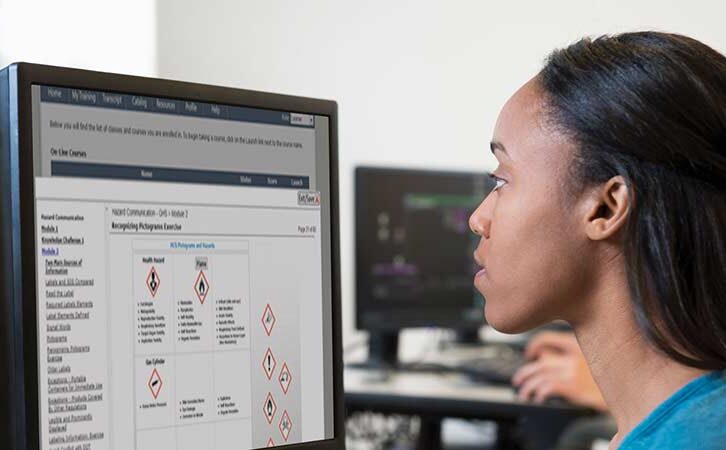
Today’s EHS training needs to go beyond compliance checklists and static sessions. Modern learning management systems (LMSs), like VelocityEHS Training & Learning, provide tools to manage, deliver, and track training programs from one centralized system. You’ll get:
- A library of engaging, expert-designed courses covering OSHA and broader EHS topics
- Support for multiple languages and learning styles
- Tools for tracking completion and performance
- Analytics to spot training gaps and compliance risks
- Customization capabilities to tailor content to unique workplace hazards and roles
Benefits like these are the reason that software analyst Verdantix, in its recent guide, The Future of Learning Management Systems, concluded that LMSs have a key role to play in “managing all aspects of training, development, and continuous learning.”
Closing Thoughts: Training as the Backbone of Your EHS Management System
Training isn’t just a regulatory obligation. It’s the backbone of a successful EHS program. Properly trained employees are more aware, confident, and capable of recognizing hazards, following safe practices, and contributing to a culture of safety. Investing in thoughtful, engaging training helps protect people, reduce risk, and build workplaces where safety and productivity go hand in hand.
By embracing modern training tools and approaches, organizations can ensure their EHS training efforts are comprehensive, measurable, and continuously improving, which ultimately leads to healthier, safer workplaces.
Stay tuned for Part 2 of this series, where you’ll learn more about the importance of selecting a software partner who offers both a full course library and an agile LMS.
Let VelocityEHS Help
Ready to take your EHS training program to the next level? VelocityEHS Training & Learning software helps you deliver engaging courses, track compliance in real time, and ensure every employee gets the training they need, when they need it. Empower your workforce, strengthen your safety culture, and simplify compliance with a solution built for modern EHS teams.
Set up a meeting with us to learn more about how VelocityEHS can transform your training strategy and program effectiveness.